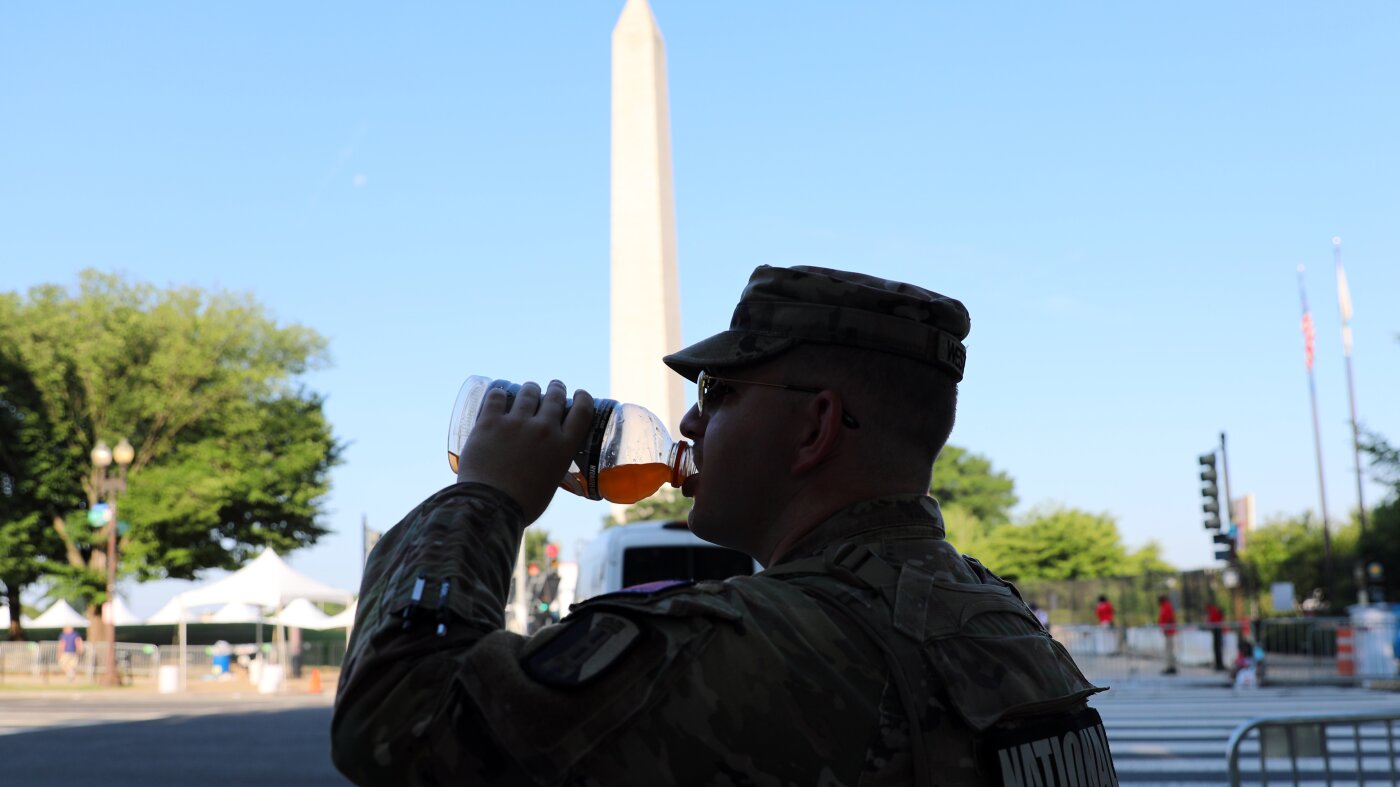
Extreme Heat Forces Cancellation of Washington’s National Independence Day Parade
As the nation gears up to celebrate its 250th birthday, extreme weather conditions have led to significant disruptions. Washington’s National Independence Day Parade, a hallmark event, has been canceled due to severe heat forecasts.
Organizers of the parade announced the cancellation late Friday after consulting with the National Park Service, D.C. city officials, and the nonprofit Freedom 250. Todd Marcocci, president of Under The Sun Productions, stated, “This decision was made after extensive and careful consideration of the safety of our participants, spectators, and staff as the top priority.”
The National Weather Service (NWS) issued an extreme heat warning for the D.C. area, effective from 10 a.m. to 9 p.m. ET on Saturday. Temperatures are expected to reach between 110°F and 115°F, with high humidity levels exacerbating the conditions. The NWS warned that such conditions significantly increase the risk of heat-related illnesses.
In addition to the heat advisory, a Code Purple air quality alert has been issued, indicating “very unhealthy” air conditions. The heat wave has already caused disruptions in D.C., including the temporary closure of the Great American State Fair on Friday and delayed entry to the “A Capitol Fourth” concert.
Washington recorded its hottest day in decades on Friday, with temperatures at Reagan National Airport reaching 102°F, breaking a record from 1966. Saturday’s temperatures could potentially match or exceed this, making it the hottest July Fourth on record for the city.
Nationwide Cancellations and Disruptions
Other parts of the country are also feeling the impact of the heat wave. Philadelphia canceled its Salute to Independence Semiquincentennial Parade and postponed a fireworks display. In Colorado, cities like Durango and Vale have canceled fireworks shows due to wildfire risks.
In New Jersey, Haddon Township’s parade was canceled, as were events in Leesburg and Fairfax, Virginia, as well as in Takoma Park and Laurel, Maryland, due to the oppressive heat and humidity. The heat wave extends across the eastern and southern U.S., affecting around 120 million Americans.
Despite these challenges, the White House has planned a large-scale fireworks display on the National Mall, set to begin at 10:30 p.m. after a speech by President Trump. However, the NWS has warned of potential severe thunderstorms that could bring destructive winds.
This article was originally written by www.npr.org