As Election Day approaches, Americans are weighing questions that go far beyond the ballot — questions about religious freedom, institutional accountability, who represents them in office, and whether they can trust the systems that govern their lives. This week’s most significant stories from the intersection of faith and public life offer a window into those very concerns, touching on military conscience, civic courage, community safety, and the spiritual dimensions of democratic participation.
A Military Archbishop Draws a Line of Conscience
In a moment that tests the boundaries of religious liberty within America’s public institutions, the Catholic archbishop for the U.S. military has formally asked that Catholic service members be excused from participating in a firing squad execution scheduled to be livestreamed from Fort Hood. The request, reported by Fiona André, raises pointed questions about how the military — a public institution funded by taxpayers and governed by federal law — accommodates sincere religious objections from the very people it asks to serve.
The case is a reminder that institutional accountability and religious freedom are not abstract values. For Catholic soldiers, the Church’s teaching on the sanctity of human life creates a direct conflict with an order to pull a trigger in a state-sanctioned killing. Whether the military honors this request will signal how seriously it takes conscience protections — a principle with implications that extend well beyond the barracks and into public trust in government institutions more broadly.
When Faith Leaders Run for Office
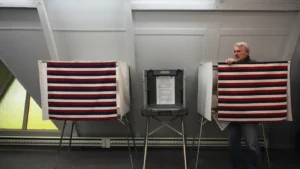
With Election Day drawing near, Jack Jenkins has identified 11 races where faith leaders are on the ballot — a trend that raises important questions for voters about representation, democratic trust, and the role of religious identity in public office.
When clergy members or religious leaders run for elected positions, voters face a distinct set of considerations. Does a candidate’s faith background signal their values in ways that matter for constituents? Does it create concerns about the separation of church and state? And crucially, does religious identity affect who turns out to vote — either mobilizing communities of faith or, in some cases, creating barriers for voters who feel unrepresented by religiously defined candidates? These races are worth watching not just for their outcomes, but for what they reveal about how religious identity shapes democratic participation and voter access to representatives who reflect their communities.
FBI Hate Crime Data Is Leaving Communities Behind
A coalition of Jewish, Muslim, Hindu, and Sikh organizations is challenging the FBI’s hate crime statistics, arguing the federal data significantly undercounts the bias incidents their communities actually experience — a reporting gap, André notes, that has serious consequences for how government responds to vulnerable populations.
The stakes here connect directly to democratic participation. When communities do not trust that government institutions — including law enforcement — are accurately recording and responding to threats against them, that erosion of trust can suppress civic engagement and voter participation. People who feel unseen by official data are less likely to believe their voices matter at the ballot box either. Accurate, transparent data collection is not just a bureaucratic concern; it is a foundation of the public trust that healthy democracy requires.
Voting With Love, Not Fear
Perhaps the most direct challenge to democratic participation this election season comes from an op-ed by Bridget Moix, published at Religion News Service. In a piece that speaks plainly to voters, Moix argues that a climate of fear is one of the most corrosive forces a democracy can face — and that voters should not surrender to it.
Moix writes that President Trump’s rhetoric and actions have contributed to an atmosphere of doubt and intimidation heading into Election Day. The tone democratic participation requires, she argues, is not one of anxiety but of courage. Research on voter behavior consistently shows that when voters feel intimidated — whether by aggressive poll-watching, hostile rhetoric, or misinformation campaigns — turnout drops, particularly among already-marginalized communities. The antidote, Moix suggests, is showing up anyway.
Her call is grounded in a faith-based conviction, but its implications are civic: eligible American voters have the right to cast their ballots and have them counted, and no political climate should be allowed to undermine that. Election officials, civil society groups, and faith communities all have a role to play in ensuring that fear does not become a de facto barrier to the ballot box.
Faith, Technology, and the Long Arc of Adaptation
A broader reflection from The Conversation explores how artificial intelligence is reshaping the experience of religious pilgrimage — and how sacred journeys have always evolved alongside new tools, from the printing press to smartphone apps. While the subject may seem distant from Election Day concerns, the underlying theme is one of institutional adaptability: how communities of meaning update their practices without losing their core commitments. That same challenge faces democratic institutions navigating AI-generated misinformation, digital voter outreach, and new forms of civic engagement.
Churches and the Weight of War
Michel Abs of the Middle East Council of Churches has called on religious institutions across the region to protect children orphaned by conflict in Gaza, Lebanon, and the West Bank. While geographically removed from U.S. elections, the story speaks to a principle that resonates in any democracy: that institutions — whether churches, governments, or civil society organizations — bear a responsibility to the most vulnerable among them. How America’s faith communities engage with global humanitarian concerns shapes the moral imagination voters bring to the polls.
Podcasts Worth Your Time
For listeners looking to go deeper this week, Religion News Service offers several podcasts worth exploring. Saved by the City tackles an unlikely coalition of thinkers who argue that saving Western civilization requires replacing democracy with a monarchy — a conversation with direct relevance to anyone who values elected government. The State of Belief, hosted by Rev. Paul Brandeis Raushenbush, features Civic Nation CEO Kyle Lierman and filmmaker Rev. Dr. Otis Moss III discussing how to vote despite obstacles — a timely and practical conversation about democratic access. And Money Meet Meaning asks whether artificial intelligence can make us richer, freer, and more human — or whether it simply becomes the newest object of worship in a culture already prone to idolizing efficiency.
On Martini Judaism, host Jeffrey Salkin facilitates a conversation drawing on the work of Tomer Persico, who explores what it means to be made in God’s image — described as the most important one-liner in the history of Western civilization. It’s a deceptively simple question with profound implications for how we value every human being who walks into a voting booth.
More From the Religion News Beat
In other developments: Southern Baptist seminaries are seeing a generational shift in leadership, with R. Scott Pace installed at Southeastern Baptist Theological Seminary. And in Rome, Pope Leo XIV has been diagnosed with lung cancer following surgery to remove part of his right lung; the Vatican confirmed the procedure was successfully completed. The pope’s health carries significant weight for the world’s 1.3 billion Catholics — including the millions of Catholic voters heading to the polls in the weeks ahead.
For readers who want to stay current on the intersection of faith and democratic life, Religion News Service offers a range of resources: newsletters, columns, Love Thy Neighbor coverage, and even a religion news quiz for those who want to test their knowledge. Organizations interested in sharing coverage can explore article republication, wire subscriptions, and image licensing.