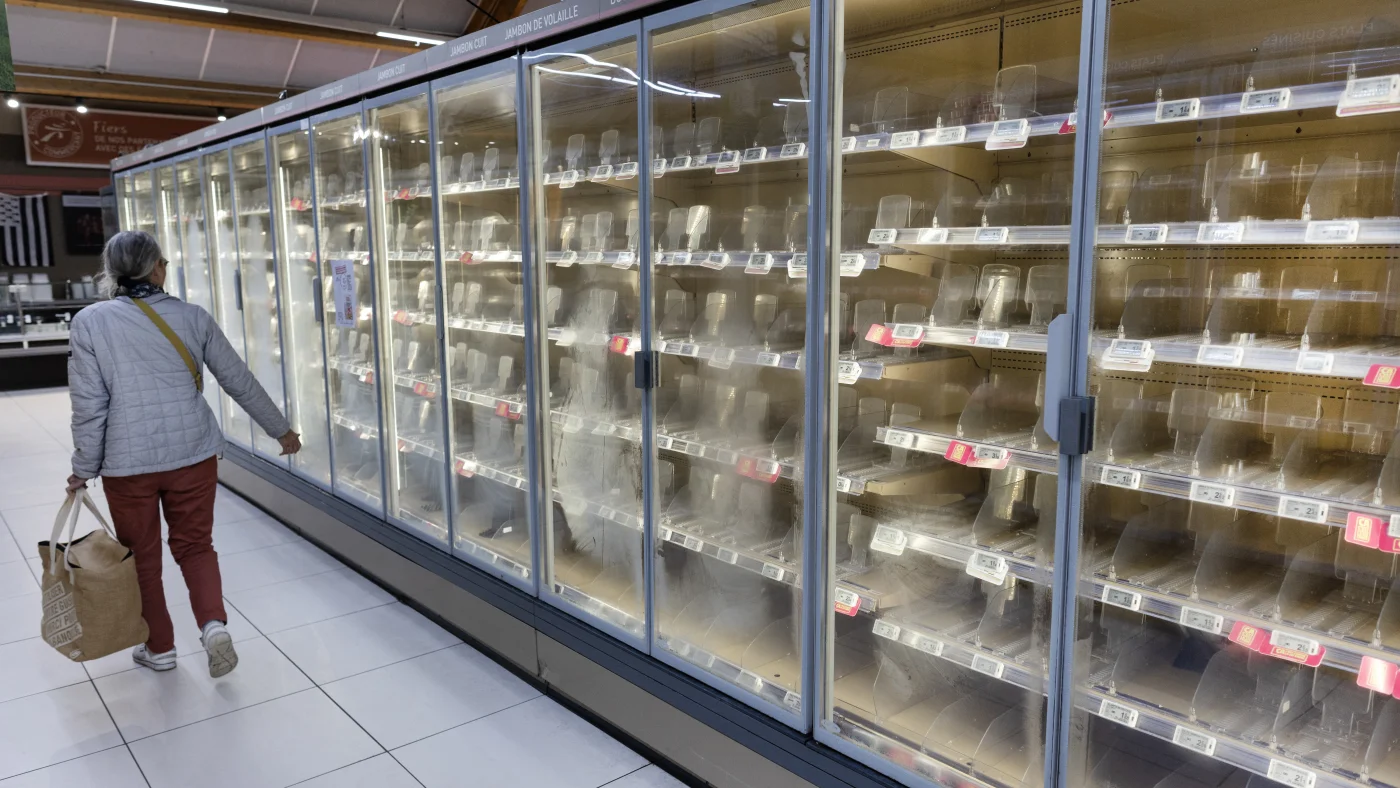
French Supermarkets Thrown Into Chaos Amidst Alleged Iranian Cyberattacks
In a bold move that has sent shockwaves through Europe, France has charged Iran with executing a series of cyberattacks designed to sabotage its critical infrastructure, particularly targeting refrigeration systems.
FRED TANNEAU/AFP via Getty Images
According to the French National Cybersecurity Agency, ANSSI, Iranian hackers infiltrated refrigeration controllers at approximately 700 retail locations across France. This attack, described as “unprecedented in both its scale and its level of aggression” by French Foreign Minister Jean-Noël Barrot, led to the spoiling of millions of dollars’ worth of food.
Not limited to supermarkets, these cyber intrusions also impacted small hydroelectric power plants, causing moderate disruptions, as stated in the ANSSI press release.
A Pattern of Refrigeration Attacks
This form of cyber aggression is part of a growing trend. 2026 has seen similar attacks on refrigeration systems from Europe to the United States. Supermarkets in Sweden and Ireland were targeted just last week, and a major French blood bank’s refrigeration system was compromised, raising alarms globally about securing sensitive health-related products.
In Israel earlier this year, the “Cyber Isnaad Front,” believed to be linked to Iran, claimed responsibility for attacking an industrial food processing plant, complicating operations with malware and propaganda. This was shortly before the attacks on French supermarkets, hinting at a coordinated strategy.
Meanwhile, commissaries on U.S. military bases experienced similar disruptions during the summer, with food spoilage attributed to sudden temperature increases. However, the Pentagon has not officially confirmed these incidents as cyberattacks.
Tracing the Culprits
French investigators have made strides in identifying those responsible, linking the digital traces to Iranian military hackers. The probes have uncovered a web of connections, including digital infrastructure, propaganda outlets, and linguistic evidence pointing towards Iran.
In response, the Paris Prosecutor’s Office has launched an investigation into the Iranian cyber unit Shahid Kaveh, associated with Iran’s Islamic Revolutionary Guard Corps. They are considering international arrest warrants for those involved.
Iranian Cyber Tactics
Experts suggest these attacks align with Iran’s established cyber tactics. Alex Orleans of Sublime Security noted, “Iran’s cyberattacks against refrigeration systems likely represent the IRGC attempting to reassert Iranian power abroad.” He added that the Shahid Kaveh unit has a history of refining its methods on Israeli targets before shifting focus to Western systems.
Ari Ben Am, from the Foundation for the Defense of Democracies, identified Shahid Kaveh as a key player in Iranian cyber operations, with ties to other groups like the Cyber Av3ngers, known for targeting critical infrastructure globally.
Challenges in Securing Infrastructure
The recent attacks underscore ongoing difficulties in securing operational technology. Many systems controlling physical processes, such as refrigeration, are outdated and vulnerable, often left exposed online due to vendor maintenance requirements. Securing these systems remains a complex challenge.
While Iran has not officially responded to these allegations, France’s accusations could prompt further actions by other affected nations. During a G7 meeting, U.S. Secretary of State Marco Rubio refrained from commenting on U.S. involvement in the investigation, affirming instead the French capability in the matter.
Rubio expressed disdain for the attackers, stating, “What kind of sickos are these people? They attack refrigerators. France is not even involved in this, really,” hinting at the broader geopolitical tensions at play.