Gary Tyler’s Journey from Wrongful Imprisonment to Artistic Expression
Imagine spending your entire adult life in prison for a crime you didn’t commit and emerging at the age of 58. Now, imagine being an artist whose work has caught the attention of the Smithsonian. This is the remarkable story of Gary Tyler, whose first solo art exhibition is now on display.
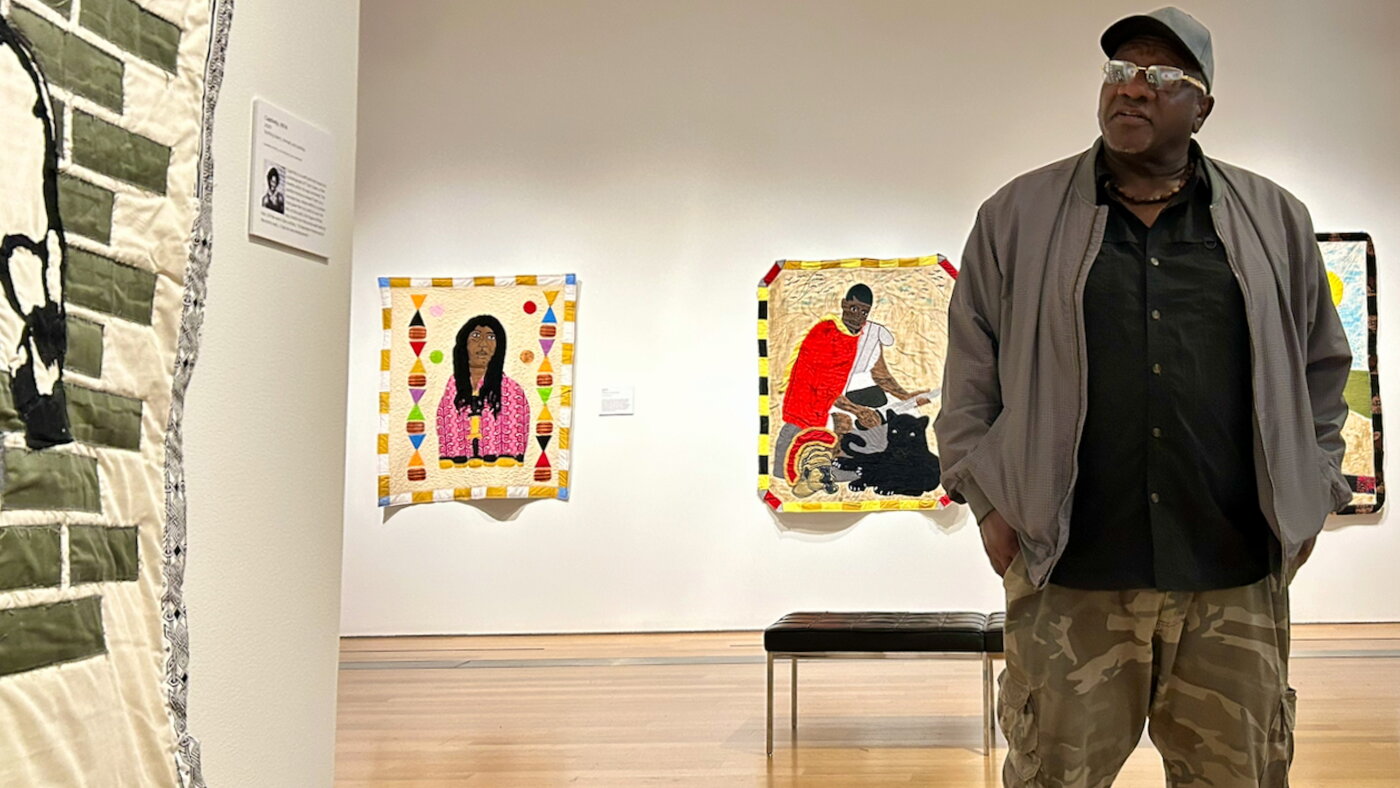
At the Grand Rapids Art Museum in Michigan, Gary Tyler stands beside a black-and-white quilt based on a photograph taken by his brother. “That’s a picture that was taken by my brother back in [19]74,” Tyler recalls, referring to an image that captures a moment frozen in time.
In 1974, Tyler was a fashion-forward 16-year-old living in Louisiana. On a particular school morning, he wore a body shirt, a sweater, fingerless gloves, and a bandana. “This body shirt was the shirt and bandana that I had the day of the incident,” he notes.
By evening, Tyler was in police custody. During a period of anti-school-integration tensions, a white 13-year-old was fatally shot. Tyler, apprehended for “mouthing off,” was later charged with the murder by local authorities. The charges seemed surreal to him, as he reflected on his youthful innocence depicted in the photo.
Legal Missteps and Injustice
Tyler’s trial was marred by poor legal representation and coerced testimonies from four friends who later recanted. An all-white jury, instructed by the judge to believe Tyler intended to kill multiple people, found him guilty and sentenced him to death. Wanda Bertram from the Prison Policy Initiative highlights that Tyler’s story is not isolated. “There are a ton of people in prison who have shocking stories to tell about the defense they received, especially if they were indigent,” Bertram explains.
Louisiana, with the highest incarceration rate in the U.S., rarely grants parole. Despite the Louisiana Board of Pardons recommending a pardon for Tyler three times, the state governor refused each time.
Eric Seiferth, a senior curator at the Historic New Orleans Collection, adds that sentences in Louisiana are notably lengthy, with many inmates facing life sentences without the possibility of release.
Quilting as a Beacon of Hope
During his time at Angola Prison, Tyler and fellow inmates initiated a hospice program. “Men in prison, taking care [of] terminally ill men to, you know, end of life, it had the way of really transforming you, changing you,” Tyler reflects. Quilting became a tool for raising funds for this initiative, leading to the creation of quilts such as “The Tree of Life,” now part of Seiferth’s museum collection.
Tyler’s quilts, including works like “Enduring” (2025), utilize mixed media to highlight the humanity of those serving prolonged sentences. In “Black Gold” (2026), Tyler underscores the historical ties of Angola Prison to slavery.
An Incomplete Justice
Despite multiple recommendations for a pardon, Tyler never received one. However, a 2016 U.S. Supreme Court decision led to his resentencing and eventual release. Tyler views the conditions of his release as another layer of injustice, emphasizing the need for a fairer judicial system for people of color and the economically disadvantaged.
Gary Tyler’s art now serves as a tribute to those still incarcerated, with quilts depicting individuals he met during his incarceration. “Because when you see Sandra Stall, Trinidad, Big Toe, Mary, and Bertha, that’s my way of showing moral and spiritual support,” Tyler explains. Out of these names, only Mary and Bertha have regained their freedom.
The exhibition, “Gary Tyler: Rebirth,” is open to the public until January 3, offering visitors a poignant look at resilience and hope amid adversity.
Admiring the artworks, Caton Vance reflects, “I think it mostly has to do with dealing with consequences that are beyond imagining and somehow, despite the environment, finding hope.”
This article was originally written by www.npr.org