As debates intensify over the alignment of faith and political ideology, recent remarks from key Christian leaders in Jerusalem have stirred discussions about Christian Zionism and its implications for religious unity. U.S. Ambassador Mike Huckabee has stepped into the fray, defending the diverse perspectives of free-church believers against criticisms from Orthodox and Catholic figures.
Church Leaders’ Stance on Christian Zionism
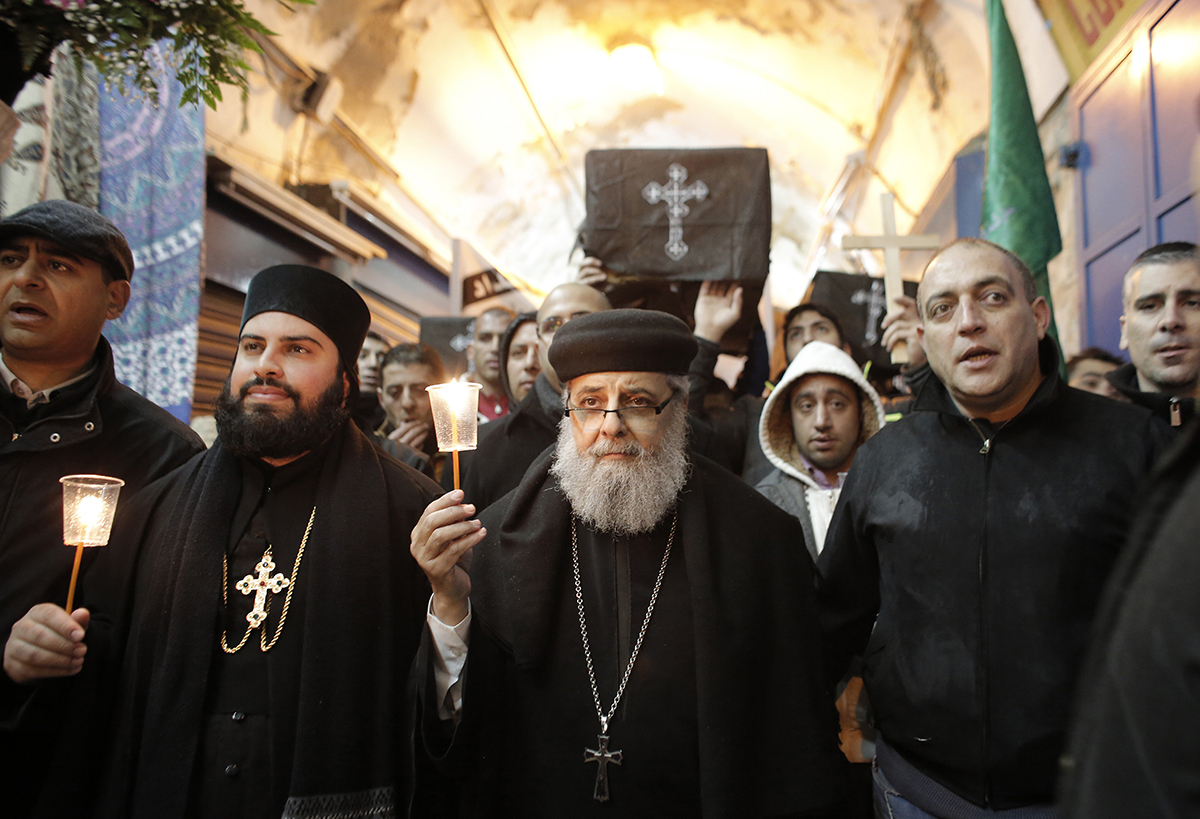
On January 17, a declaration from the Patriarchs and Heads of the Churches in Jerusalem labeled Christian Zionism as a “damaging ideology” that threatens the unity of Christians in the Holy Land. This statement emphasized the exclusive role of historic apostolic churches in representing local Christians, arguing that external pro-Israel groups lack the authority to speak for the Christian community. “The Patriarchs and Heads of Churches in the Holy Land affirm before the faithful and before the world that the flock of Christ in this land is entrusted to the Apostolic Churches, which have borne their sacred ministry across centuries with steadfast devotion,” the statement reads.
The leaders, comprising Coptic, Greek Orthodox, Maronite, Melkite, Syrian, Armenian Catholic, Armenian Apostolic, Lutheran, and Anglican patriarchs, expressed concerns over activities promoting ideologies like Christian Zionism. They warned these efforts risk misleading the public and harming the community’s unity.
Ambassador Huckabee’s Response
Mike Huckabee, a prominent Evangelical and former governor, criticized the church leaders for their exclusive tone, describing it as pejorative towards free-church believers. In a social media post, Huckabee wrote, “I love my brothers and sisters in Christ from traditional, liturgical churches and respect their views, but I do not feel any sect of the Christian faith should claim exclusivity in speaking for Christians worldwide or assume there is only one viewpoint regarding faith in the Holy Land.” He defended the evangelical tradition that supports Israel based on biblical covenants, stating, “Christians are followers of Christ and a Zionist simply accepts that the Jewish people have a right to live in their ancient, indigenous, and Biblical homeland.”
Broader Context and Theological Perspectives
The controversy arises after over 1,000 American pastors pledged support for Israel during The Friends of Zion Ambassadors Summit, organized with the Israeli Ministry of Foreign Affairs. This event underscored the political dimensions intertwined with theological beliefs.
While some view Christian Zionism as a fulfillment of biblical prophecy, critics argue it can overshadow the rights of Palestinian Christians. Simone Rizkhallah from Philos Catholic highlighted the need for theological clarity, noting, “Rejecting Christian Zionism does not require rejecting Zionism altogether, nor does it excuse Catholic ambivalence toward the Jewish people’s return to their ancestral homeland.”
Christian Zionism, rooted in dispensationalist interpretations, ties the establishment of Israel in 1948 to prophecy, influencing political support among U.S. Evangelicals. Yet, it remains a contentious topic, prompting figures like Tucker Carlson to publicly navigate its complexities.
This article was originally written by www.christianpost.com