Increased ICE Activity Raises Concerns Ahead of Midterms
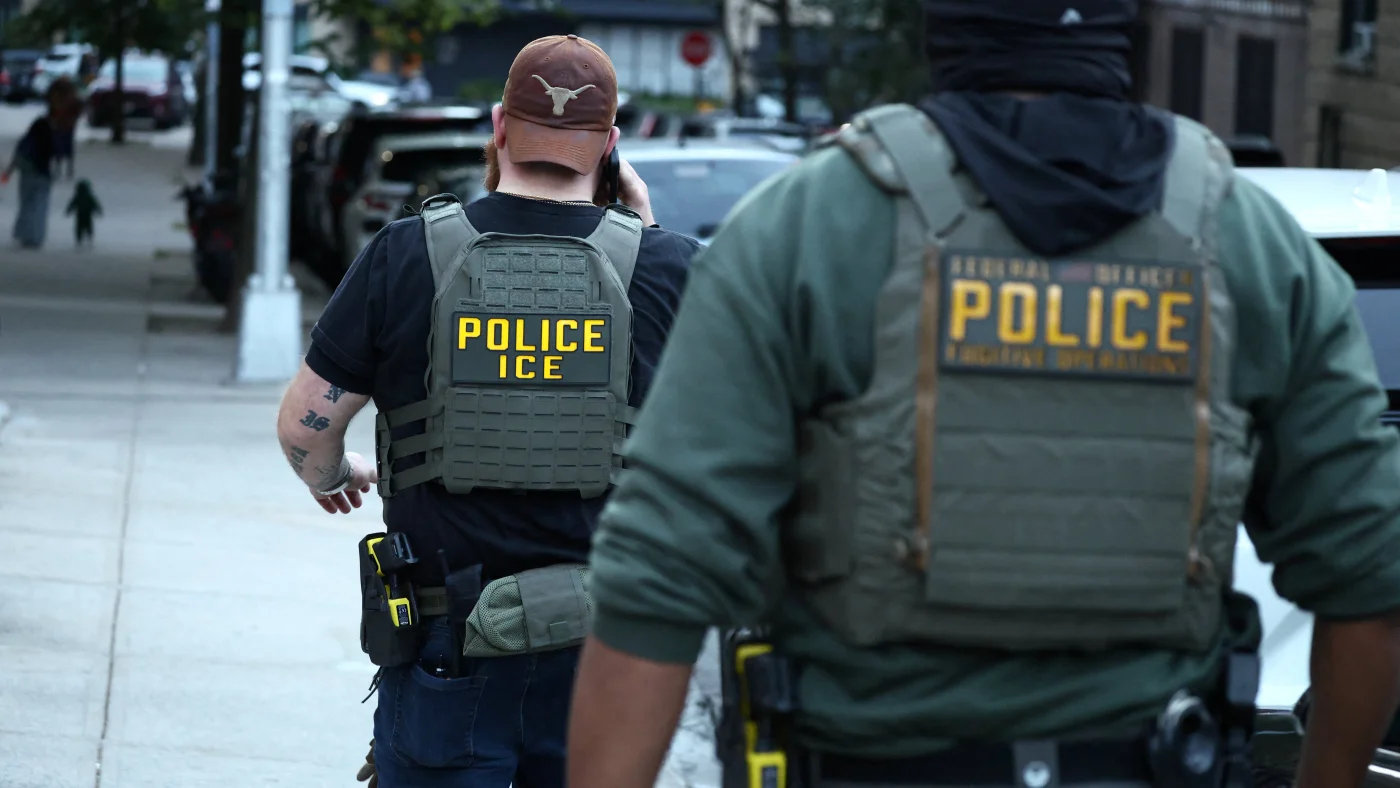
As the midterm elections approach, communities across the United States are witnessing a noticeable increase in Immigration and Customs Enforcement (ICE) operations. This surge in enforcement has been observed not only in New Jersey but also in various regions nationwide, raising questions about the timing and intent of these actions.
In Dover, New Jersey, Councilwoman Sandra Wittner began receiving numerous alerts regarding ICE agents assembling outside a local Walgreens early one Wednesday morning. This increase in activity was echoed by reports from other parts of New Jersey and beyond. “The tactics that the administration has been deploying in communities really appear to be designed to try to intimidate voters,” commented Wendy Weiser from the Brennan Center for Justice at NYU Law School, though early voter turnout remains robust, as indicated by recent data.
Wittner expressed concern over the anxiety and fear these actions instilled in her community. “We just really weren’t sure if something huge was about to happen. People were not feeling very comfortable or safe,” she said. Despite reaching out to the Department of Homeland Security, timely information about ICE operations remains scarce, making it challenging to address these concerns effectively. The agency, when contacted, stated, “ICE agents uphold our nation’s immigration laws in all 50 states, seven days a week, 24 hours a day.”
Reports of heightened ICE enforcement have been corroborated by NPR and its member stations, with tips coming from rural Illinois, Oregon, Detroit, and California. An official from New York Mayor Zohran Mamdani’s office confirmed a similar surge in the city, although they were not authorized to speak publicly.
In New York, a volunteer group actively monitors ICE operations, providing support and information to those detained. “We’re certainly witnessing an uptick in activity, and have been since the summer,” said a group member who requested anonymity due to fears of retaliation. This group documents ICE operations and ensures those affected are aware of their rights.
Meanwhile, Oregon Public Broadcasting reporter Troy Brynelson observed a similar pattern in Portland, noting that ICE activities have been particularly concentrated in commercial areas. “I’d say it’s a noticeable uptick compared to what we’ve seen over the summer,” he remarked.
Juan Proaño from the League of United Latin American Citizens (LULAC) raised concerns about the timing of these operations, given their proximity to the elections. “It’s not about ICE at the actual polling station, it’s ICE at the perimeter of the polling station,” he explained. He fears that mass enforcement actions, even if not directly at polling places, could still deter potential voters through their presence and coverage on social media.
Despite these concerns, Weiser from the Brennan Center assures that the increased ICE activity has not deterred voter participation. In fact, she highlights that early voting is surging, particularly in minority communities. “The good news is: it isn’t working. Americans are tuning this out, and we are not seeing a significant impact on participation,” she said. Nevertheless, Weiser emphasizes that any form of intimidation at the polls is illegal and should be promptly reported.
This article was originally written by www.npr.org