A New Path for Inclusivity: Bay Area Christian Church’s Ministry for Disabilities
The challenges faced by families seeking inclusive religious environments for children with disabilities have inspired a transformative approach at Bay Area Christian Church. At the forefront of this movement are Russ and Gail Ewell, who have dedicated themselves to reshaping how congregations can meet these needs.
In 1991, the Ewells’ first son was born with Down syndrome, a genetic disorder that often leads to developmental challenges. This personal experience highlighted the lack of understanding and services within church settings, prompting the couple to act. Following the birth of their second son, who was later diagnosed with autism, they found even more motivation to address these gaps.
Russ Ewell, executive minister of Bay Area Christian Church in Palo Alto, reflected on the early days, stating, “When my firstborn was a baby, [my wife] couldn’t put him in a children’s ministry because they didn’t have any kind of service where people understood someone with Down syndrome and how to work with him.” Thus began their initiative to educate and train volunteers, leading to the creation of the Spiritual Resource Ministry (SRM).
The Spiritual Resource Ministry is integrated into children’s ministry, featuring over 150 volunteers across eight campuses in the Bay Area. These volunteers, including 60 actively engaged at any time, are selected and trained by designated coordinators. The SRM’s distinctive approach combines peer helpers and adult volunteers to support both children with disabilities and their neurotypical peers, fostering inclusive friendships.
“So they not only have a great experience in children’s ministry at church, but they also build friendships that are lifelong,” Russ noted.
In addition to enhancing local ministry, Bay Area Christian is extending its support to other congregations. A free online manual is available to guide churches in developing their own ministries for families with special needs.
Despite a 2019 Lifeway Research study suggesting most pastors feel welcoming to individuals with disabilities, only 29% of churches offer specific programs. Ewell attributes this gap to a lack of focus on the teachings of Jesus and uncertainty on how to proceed. He emphasized the need for cultural shifts within churches, encouraging leaders to start small and adapt.
The Ewells have also introduced the E-Life initiative, which includes various community programs such as E-Sports and E-Gardening. These programs bring together children with and without disabilities, fostering inclusive environments through activities like sports, supported by over 500 volunteers across the Bay Area.
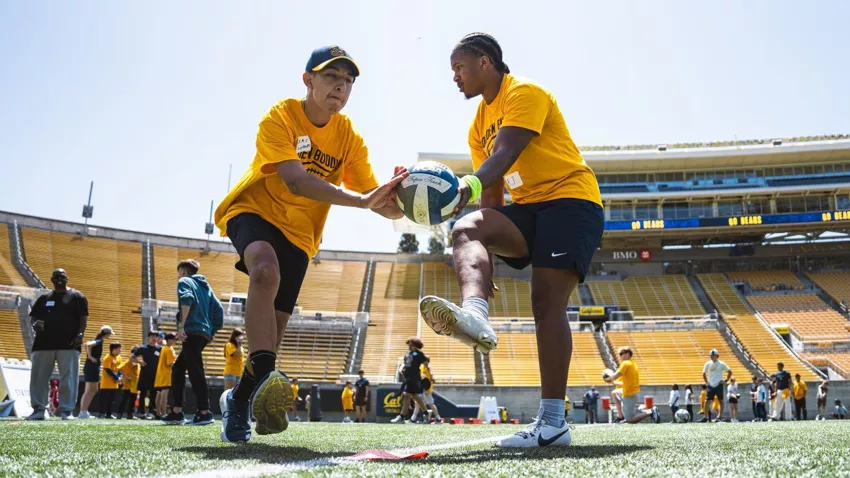
Ewell elaborated, “We started with eight kids. Then that eight kids grew to 50 kids. That 50 kids grew to 100 kids. And from there, we’ve seen it reach thousands of kids here, as well as parts of the Philippines and Nigeria and India.”
Looking ahead, the Ewells aim to establish the “Beacon of Hope Village,” a community of tiny homes where adults with special needs can live alongside volunteers. This initiative seeks to provide lifelong community support for individuals with disabilities.
With plans to launch within three years, Russ Ewell is actively visiting potential locations for this innovative project.
This article was originally written by www.christianpost.com