When political uncertainty feels paralyzing, civic action — especially voting — can be one of the most direct ways citizens push back against forces that undermine democratic norms. A new podcast episode from Religion News Service explores exactly how ordinary Americans can move from anxiety to action.
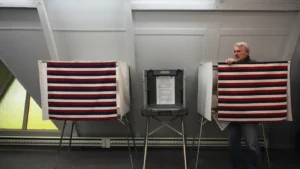
The fourth installment of the No Kings series, titled “Voting is a Sabotage Disrupter,” features Leah Greenberg, co-founder and co-executive director of Indivisible, a national grassroots organization that has worked since 2017 to help everyday people engage with their elected representatives and participate in the democratic process. The episode’s central message is straightforward: voting is not just a civic duty — it is a concrete tool for disrupting efforts to concentrate power and sideline democratic institutions.
The episode is described as
“helping people move from feeling overwhelmed to taking part in creating positive change at the ballot box and in their own neighborhoods.”
That framing speaks directly to a sentiment many Americans share — a sense that events are moving too fast and too far beyond their control. Greenberg and the No Kings series aim to reframe that feeling, offering a path from helplessness toward meaningful participation.
Listeners can stream or download the episode directly and explore the full No Kings series alongside other RNS programming. Religion News Service’s podcast slate covers a broad range of topics at the intersection of faith, culture, and public life, including Money Meet Meaning, which examines the relationship between personal finance and values, and Martini Judaism, which recently explored whether antisemitism constitutes a uniquely distinct form of hatred.
The No Kings series reflects a growing conversation about how individuals — regardless of political affiliation — can channel concern about democratic backsliding into tangible local and national action. By centering neighborhood-level engagement alongside electoral participation, the series underscores that civic power is exercised not only on Election Day, but in the ongoing relationship between citizens and the communities they share.