Banning Cellphones: A New Era in School Policies Aims to Enhance Student Engagement
As more schools across the United States adopt cellphone bans, the challenge of persuading teenagers to part with their devices for extended periods gains momentum. With over 30 states implementing restrictions, schools are experimenting with various methods to decrease cellphone usage during school hours.
In Kentucky, a new policy mandates that all public school classes remain cellphone-free, allowing districts to customize their enforcement strategies. Some schools collect phones at the start of each class, while others restrict their use to lunch breaks. In the Jefferson County school district, which includes Louisville, a “bell-to-bell” policy is enforced, ensuring students remain phone-free from entry to exit.
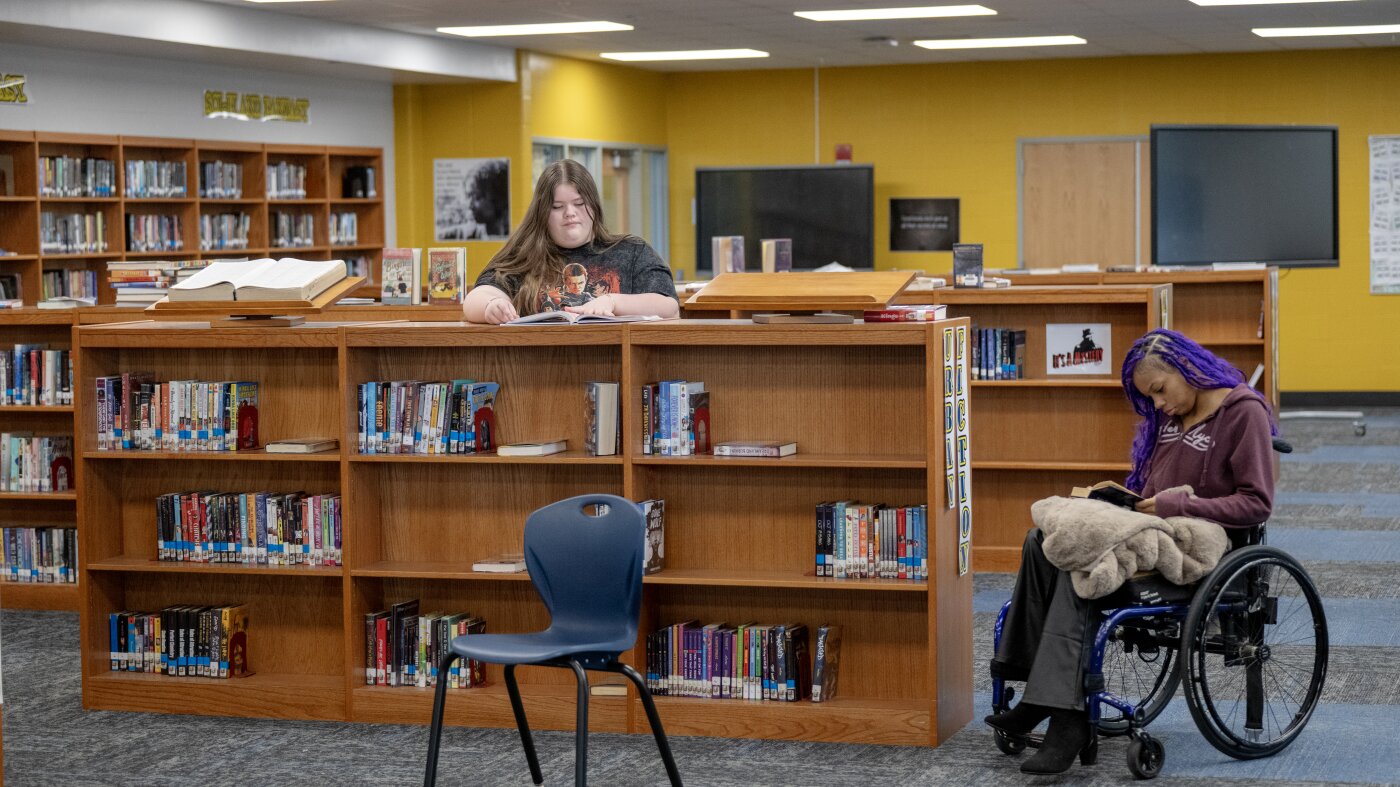
Madelyn Whitt (left) and Quani’e Lanier read in the school library at the Academy @ Shawnee, Louisville, Kentucky. Photo by Lydia Schweickart for NPR.
Adapting to New Expectations
At the Academy @ Shawnee in Louisville, the implementation of this policy is evident. Executive Principal Hollie Smith notes that before the restrictions, many students appeared disengaged due to cellphone distractions. Now, she observes a significant change in the school’s environment, with students understanding the new expectations.

Hollie Smith, the executive principal at the Academy @ Shawnee, believes the cellphone ban enhances student engagement. Photo by Lydia Schweickart for NPR.
Conversations fill the hallways and cafeterias, reflecting a more connected and lively atmosphere. However, Smith acknowledges the students’ mixed feelings, stating, “I think they absolutely hate it. Their phone is their lives — it’s their world.”
Despite the policy’s intention to reduce distractions, some students and educators agree that the ban is effective, but not exactly as planned. To comply with state requirements, Shawnee invested in Yondr pouches, which lock phones away securely, but students have found ways around them.

Students at the Academy @ Shawnee are required to lock their phones in a Yondr pouch each day. Photo by Lydia Schweickart for NPR.
Student Reactions and Workarounds
Senior Jayden O’Neil expressed frustration, noting that, “All the students hate it… I think they’re gonna rebel more.” Students have resorted to various methods to bypass the restrictions, such as using spare phones or breaking the pouches.
Despite these challenges, some students, like Joseph Jolly, have noticed increased productivity. Jolly commented, “They’ve started to actually focus on work, and I think we’ve become more productive because of that.”

Jayden O’Neil (left) and Quani’e Lanier in the school library. Photo by Lydia Schweickart for NPR.
Librarian Anton Caldwell observed a positive shift, with more students visiting the library and a rise in book checkouts. Popular authors like Jenny Han are in high demand, indicating students are finding new ways to occupy their time.
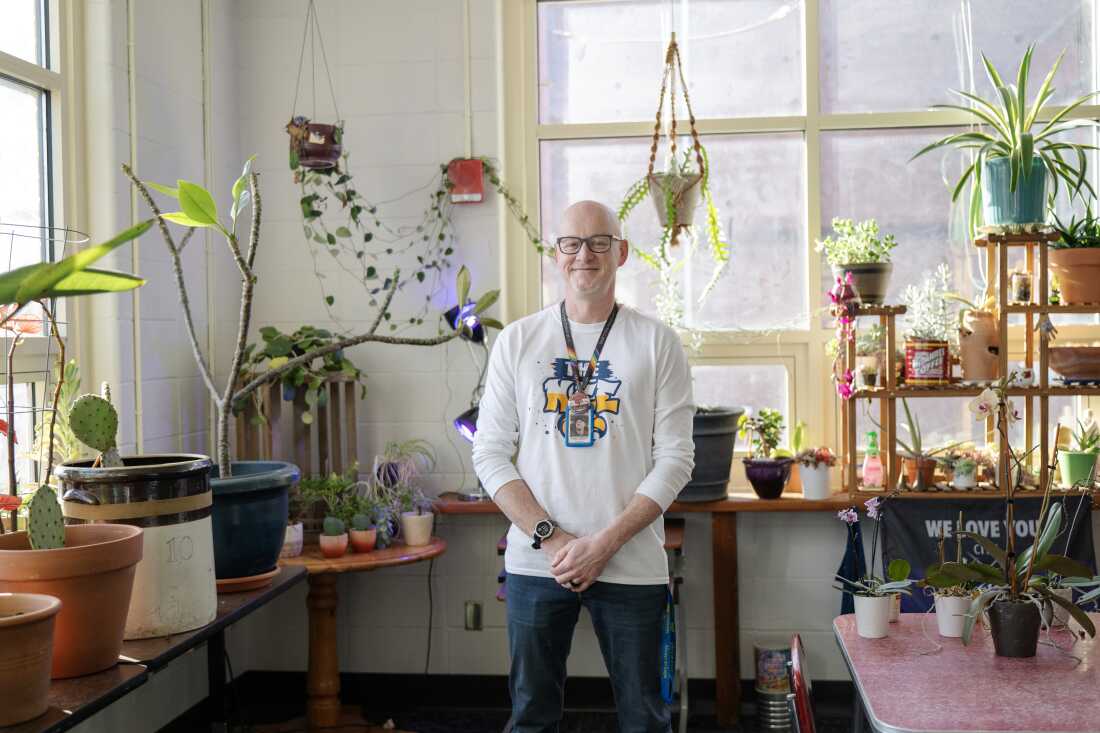
Anton Caldwell, the school librarian, has noticed a surge in library visits and book checkouts. Photo by Lydia Schweickart for NPR.
While the effectiveness of cellphone bans remains under scrutiny, it is evident that schools are fostering an environment that encourages students to engage more with their peers and academic responsibilities.