Birds Flying Through Time Zones: The Surprising Truth About Avian Jet Lag
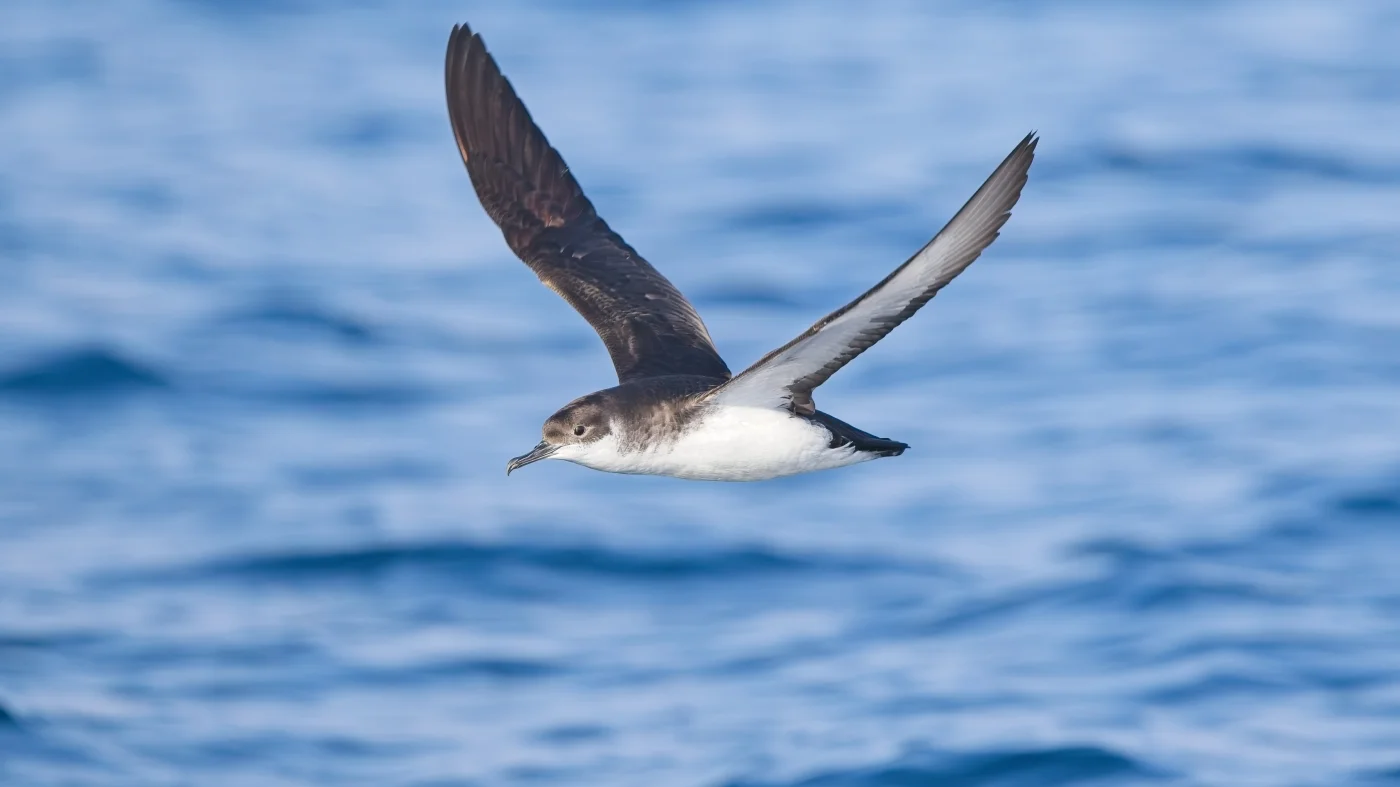
While the concept of jet lag is commonly associated with human travelers, recent findings suggest that some birds might experience similar symptoms when they traverse vast distances. Research reveals that the Manx shearwater, a seabird species, may encounter disorientation akin to jet lag during their extensive oceanic flights.
Published in Science, the study indicates that Manx shearwaters may become momentarily disoriented on their long transatlantic journeys. This disorientation is attributed to their internal clocks misaligning with the sun’s position. “To use the sun as a compass you have to know what time of day it is,” explained Patrick Lewin, a behavioral ecologist at the University of Oxford.
These birds, commonly found in the British Isles and closely related to albatrosses, are known for their lifelong mating pairs. During breeding, each pair lays a single egg, and partners take turns incubating it. “One partner will sit on the egg nonstop while the other one goes out to sea,” Lewin noted.
During their hunting expeditions, shearwaters travel across the North Atlantic, scouring the seas for fish and squid. These hunts can last up to two weeks, after which the birds return to their colonies, often completing the journey in just a day.
Lewin’s curiosity about whether these birds experience jet lag led him to analyze data accumulated over 20 years from GPS trackers attached to the shearwaters. These devices provided insights into their navigational patterns and potential disorientation.
As the birds rely on the sun for navigation, a misjudgment of time could lead them off course. Lewin’s observations confirmed this: the birds occasionally veered slightly, resulting in a maximum deviation of about three miles on a 600-mile journey. “It’s a really small addition,” he stated.
The study’s findings have intrigued many, including Alice Boyle, a biologist at the Centre for Animals on the Move at Western University, Canada. Boyle emphasized the significance of this research, highlighting the rarity of studies that capture navigation decisions in action. “It’s using these wild birds that travel to completely remote places and we’re able to learn so much about how they do that,” she said.
For more information on related research, visit this article.
This article was originally written by www.npr.org