The Unchained Gospel: N.T. Wright Delivers Insights on Paul’s Letter to the Philippians
At a time when the teachings of the Apostle Paul continue to resonate with many, renowned New Testament scholar N.T. Wright aims to reaffirm the enduring power of the Gospel, emphasizing that it remains unfettered by worldly constraints, much like when Paul penned his epistle to the Philippians from prison.
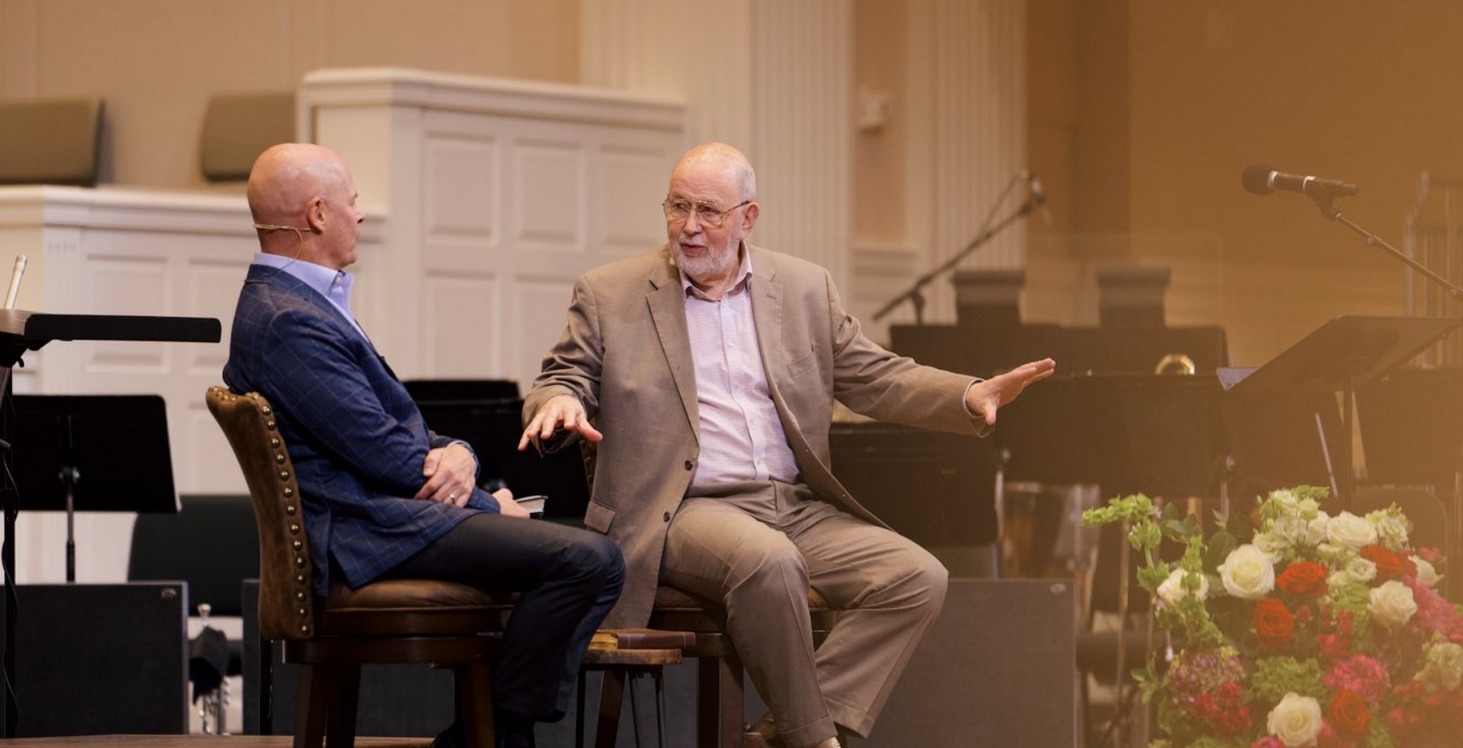
During the commencement of a three-day conference at Park Cities Baptist Church in Dallas, Wright drew an audience of 650 individuals from Texas and beyond. The focus of the gathering was Paul’s letter to the Philippians, an epistle with a unique backdrop of incarceration that remains a topic of scholarly debate regarding whether it was written in Ephesus or Rome.
Wright underscored the notion that while Paul was physically imprisoned, the message of Jesus Christ was far from confined. “Paul is in prison when he’s writing [Philippians],” Wright stated. “But the great thing about Paul writing from prison is he makes it clear that the Gospel is not locked up. He may be shut up, but the Gospel is not.”
Exploring the letter’s context, Wright presented it as a distinct narrative about the supremacy of Jesus over the Roman emperor Caesar during the era of Octavian. In his interpretation, Paul’s intention was to affirm Jesus as the true Lord, fulfilling the promises of the God of Israel through His resurrection.
Highlighting the central message of Philippians, Wright pointed to Philippians 1:27, emphasizing its call for a transformative way of living. He stressed the appeal of a life dedicated to following Jesus, even if it placed Him above the revered Caesar in Rome.
Delving further into the epistle, Wright discussed Philippians 2:12–18, clarifying that Paul was not promoting “salvation by works,” but encouraging believers to embody the salvation God was working within them. “He doesn’t mean ‘do moral good work to learn your salvation,’” Wright explained. “… He noticed that God is indeed at work in them. And his job was to point them in the right direction and to encourage them, then, to think it out for themselves.”
Wright further elaborated on Philippians 2:6–11, positing that Paul authored a remarkable poetic work with the cross at its core, symbolizing its central importance in the cosmos and divine narrative.
Concluding the day’s discussions, Wright juxtaposed the crucifixion of Christ with the local pagan beliefs of Philippi, interpreting this contrast as evidence of God’s unwavering commitment to His promises and His people, as foretold in Isaiah 53. “The word ‘love’ doesn’t occur, but by placing the cross in the middle and showing how the exaltation flows from it, that’s clearly what it’s all about,” he remarked.
This article was originally written by www.christianpost.com