Reviving History Through Touch: An Inclusive Experience at the National Constitution Center
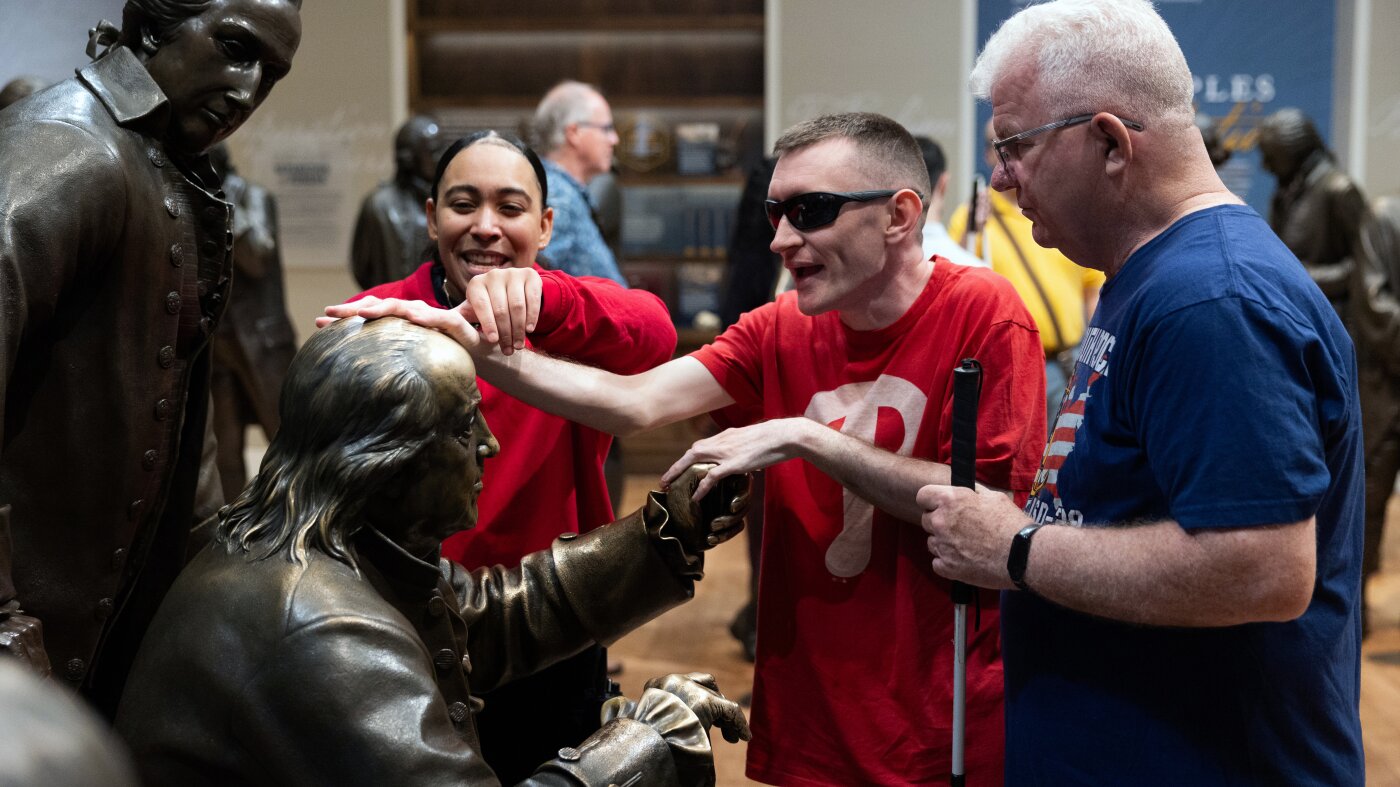
The National Constitution Center in Philadelphia is breaking new ground in accessibility by offering guided tactile tours in “Signers’ Hall.” These tours are specially designed for blind and low vision visitors, allowing them to experience history through touch, as they explore life-size statues of the 42 men who signed the U.S. Constitution over 200 years ago.
At the heart of this initiative is the belief that touch can offer a deeper connection to history. As museum educator Grace Engle explains, “They feel like real people,” emphasizing the unique opportunity these tours provide. By allowing visitors to physically interact with the statues, the tours bring to life the historic figures in a manner that traditional visual exhibits cannot.
Tim Kelly Jr., a visitor benefiting from this experience, expressed his appreciation for the tactile detail, saying, “Everything feels so distinct on him,” referring to the statue of Benjamin Franklin. The tactile tours not only convey physical details but also incorporate vivid descriptions and historical context, enhancing the educational experience for participants.
Expanding Accessibility in Museums Nationwide
The National Constitution Center is among a growing number of museums integrating accessibility into their offerings. While the Americans with Disabilities Act (ADA) mandates physical accessibility, museums are increasingly focusing on making their exhibits more inclusive. Initiatives like sensory-friendly days and touch tours are becoming more common, providing visitors with diverse needs the opportunity to engage with exhibits fully.
Kristina Marinello, senior director of museum experience, highlights the long-standing tradition of tactile interaction in Signers’ Hall. “Ben Franklin’s hands are super shiny because people have kind of always touched him no matter what,” she notes. The official tactile tours, launched with the help of Philly Touch Tours, aim to formalize and expand these interactions.
Heather Pressman, an educator at Johns Hopkins University, emphasizes that meeting ADA requirements should be just the beginning. Accessibility can be enhanced with cost-effective measures, such as large print labels or creating replicas of artifacts for handling, which can significantly improve the museum experience for all visitors.
The Power of Touch in Learning
Trish Maunder, co-founder of Philly Touch Tours, believes in the educational power of touch, stating, “Our mantra is ‘seeing may be believing, but when you touch, you know.'” She argues that touch is a vital sense that people often neglect as they age and hopes that tactile tours will help both sighted and blind visitors reconnect with this fundamental sense.
Visitor Akosua “Kosi” Asabere reflects on her experience, noting the profound impact of physically interacting with the statues. As a software engineer focused on digital accessibility, she perceives parallels between the historical exclusion in the U.S. Constitution and modern efforts to ensure inclusivity. “It was a brilliant document, but it had massive systemic bugs. Women were left out. Black people were left out. Disabled people were left out,” she remarks, while appreciating the museum’s strides toward inclusivity.
The National Constitution Center’s efforts to create an inclusive environment reflect a broader trend in museums, striving to ensure that “we the people” includes everyone, regardless of physical ability.
This article was originally written by www.npr.org