New Hampshire Faces Potential Revenue Challenges Amidst Rise of Prediction Markets
As New Hampshire continues to benefit from legalized sports betting, concerns are growing over the impact of emerging prediction markets on state revenue. The introduction of platforms like Kalshi and Polymarket is raising questions about the future of gambling laws and state income.
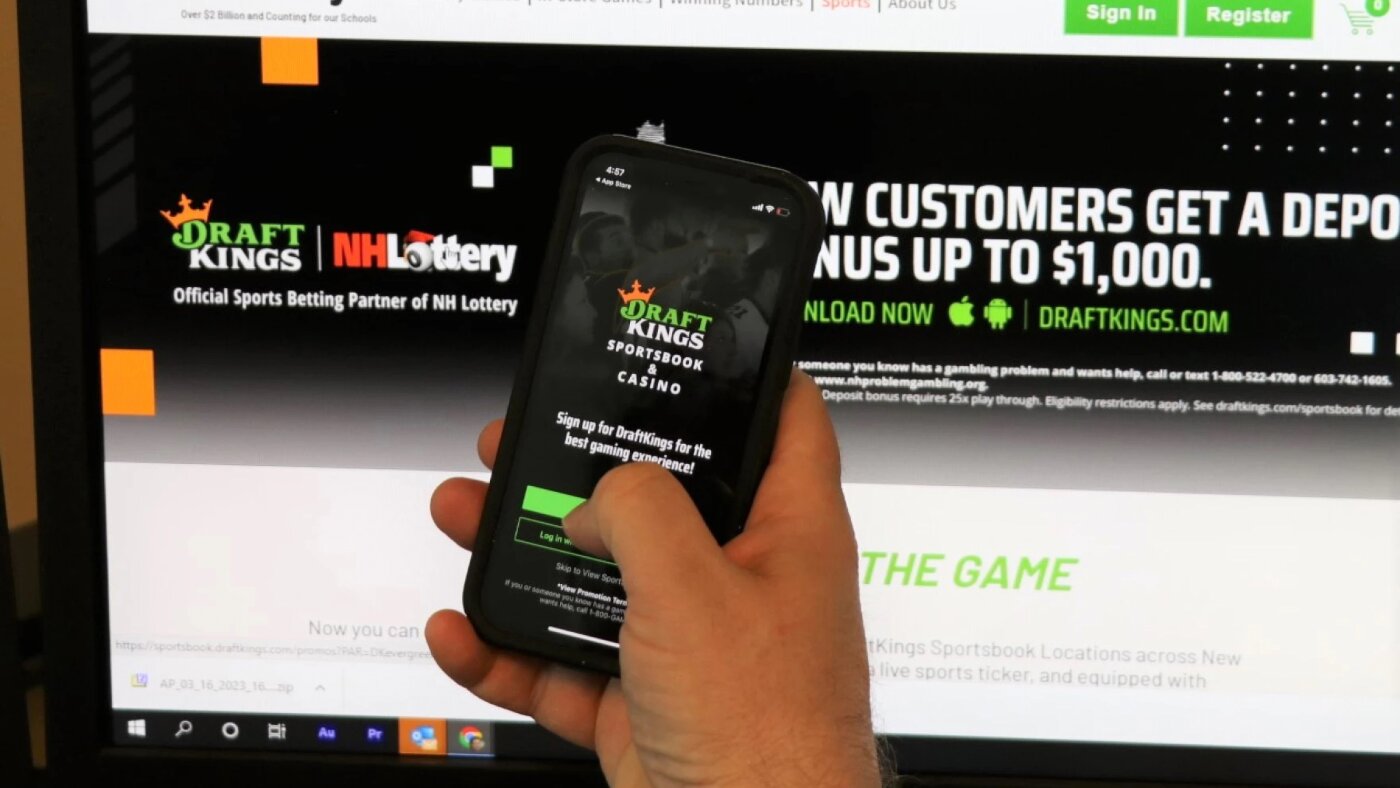
The state of New Hampshire receives revenue from sports wagers made with DraftKings, but officials are worried that people will switch to new prediction market platforms. Zoey Knox/NHPR
State Senator Tim Lang of New Hampshire is feeling the pressure both personally and politically. “I do have a bracket. It broke pretty hard,” Lang remarked about his NCAA men’s basketball tournament predictions. However, his concerns aren’t just personal; they extend to the state’s financial outlook.
Since the legalization of sports betting in 2019, New Hampshire has accrued over $170 million through its collaboration with DraftKings. This significant revenue supports important state services, including education. However, the rise of prediction markets could threaten this financial model, prompting Lang to consider legislative action against companies like Kalshi and Polymarket.
Legal Challenges and Regulatory Disputes
Prediction markets allow users to buy futures contracts on various outcomes, from elections to sports events. Unlike traditional sportsbooks, these platforms argue they are financial markets, thus bypassing state gambling laws and revenue sharing. States such as Connecticut, Michigan, and Washington have initiated legal actions against these companies. Arizona has even pursued criminal charges against Kalshi for offering illegal sports wagers.
Kalshi and Polymarket did not comment on the matter, but have previously argued that they are regulated by the federal Commodity Futures Trading Commission. They claim adapting to different state regulations is impractical. The Trump administration supports this view (source).
Ongoing Legal Ambiguity
Michael McCann, director of the University of New Hampshire’s Sports and Entertainment Law Institute, notes the legal uncertainty: “Is sports betting and prediction market synonymous, or are they sufficiently distinct that there should be different treatment under the law?” This unresolved question continues to stir debate.
Despite concerns about revenue loss, some like John Stephen, a Republican council member, appreciate the competition prediction markets bring. “Companies that are trying to make money, and this entrepreneurial spirit that we have in this country, I value that,” Stephen expressed.
For more insights, visit Todd Bookman at New Hampshire Public Radio.