Concerns Over Staffing Procedures Arise After Fatal LaGuardia Airport Crash
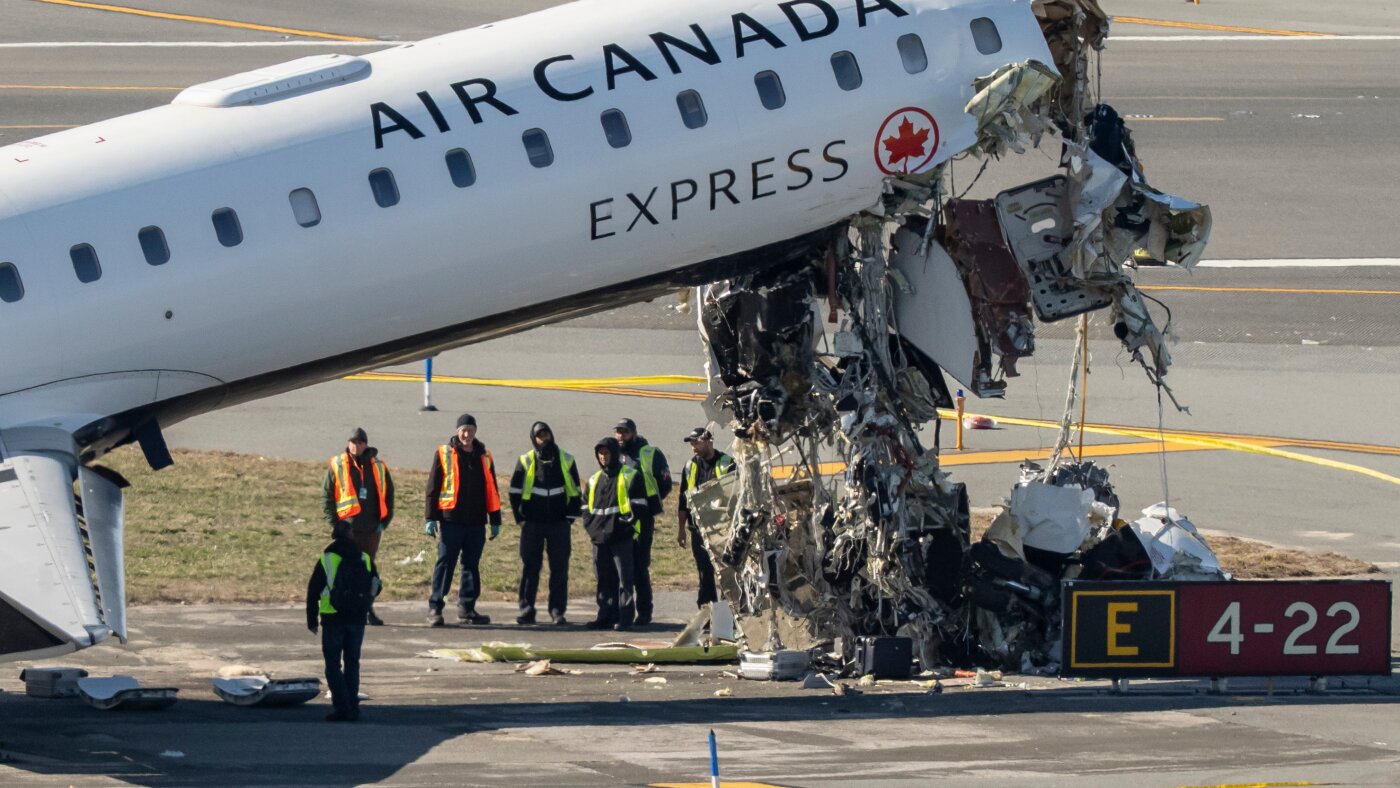
In the wake of a tragic collision at New York’s LaGuardia Airport, resulting in the deaths of two pilots, the National Transportation Safety Board (NTSB) has expressed significant concerns regarding staffing procedures. The incident, which involved an Air Canada Express jet crashing into a fire truck, has prompted a detailed investigation by the NTSB.
According to NTSB Chair Jennifer Homendy, the investigation thus far has uncovered that two air traffic controllers were present in the tower during the accident. However, at least one of them was tasked with multiple responsibilities simultaneously. Homendy emphasized the need to examine broader systemic issues instead of individual errors at a press conference held on Tuesday.
“I would caution pointing fingers at controllers and saying distraction was involved. This is a heavy workload environment,” Homendy stated.
The NTSB’s Ongoing Concerns
Homendy highlighted that it is common practice during midnight shifts for two controllers to handle the duties of several. However, given the high traffic at LaGuardia, she questioned the suitability of this practice at such a busy airport.
“That’s certainly something we will look at as part of this investigation: Would that make sense? Why would that make sense at LaGuardia?” Homendy questioned.
At the time of the crash, both a local controller and a controller in charge were in the tower. The local controller was tasked with managing active runways and nearby airspace, while the controller in charge oversaw all safety operations and was also performing the duties of a clearance delivery controller, who authorizes departures.
Homendy mentioned there is conflicting information regarding whether the local controller or the controller in charge also acted as the ground controller, responsible for managing vehicle activity on taxiways.
“Certainly I can tell you that our air traffic control team has stated this is a concern for them for years,” she said.
Details from the Cockpit Voice Recorder
The NTSB retrieved the cockpit voice recorder and sent it to their Washington, D.C. lab for analysis. Doug Brazy, a senior aviation accident investigator, provided insights into the last three minutes of the recording.
Brazy noted that as the aircraft neared the runway, the crew completed their landing checklist, and alerts were sounded as they approached the ground. Following the checklist completion, a transmission from an unidentified airport vehicle was “stepped on,” or disrupted, by another communication.
Firefighters radioed the tower for permission to cross the runway, responding to fumes reported from a United Airlines plane. The request was approved, but the fire truck lacked a transponder, a radio receiver and transmitter, as Homendy pointed out.
The Airport Surface Detection System, Model X (ASDE-X), which tracks ground movement, failed to generate an alert due to the close proximity of vehicles near the runway, Homendy explained. She read from the NTSB tech center’s analysis: “ASDE-X did not generate an alert due to the close proximity of vehicles merging and unmerging near the runway, resulting in the inability to create a track of high confidence.”
Unanswered Questions in the Investigation
Homendy made it clear that the information the NTSB currently possesses is preliminary and subject to verification. There remain several unknowns, including who made the interrupted radio transmission, why one controller remained on duty post-crash, and whether the firefighters heard the stop directives. Additionally, it’s unclear if the pilots saw the truck or experienced any confusion in the cockpit.
“We rarely, if ever, investigate a major accident where it was one failure,” Homendy stated. “Our aviation system is incredibly safe because there are multiple, multiple layers of defense built in to prevent an accident. So when something goes wrong, that means many, many things went wrong.”
This article was originally written by www.npr.org