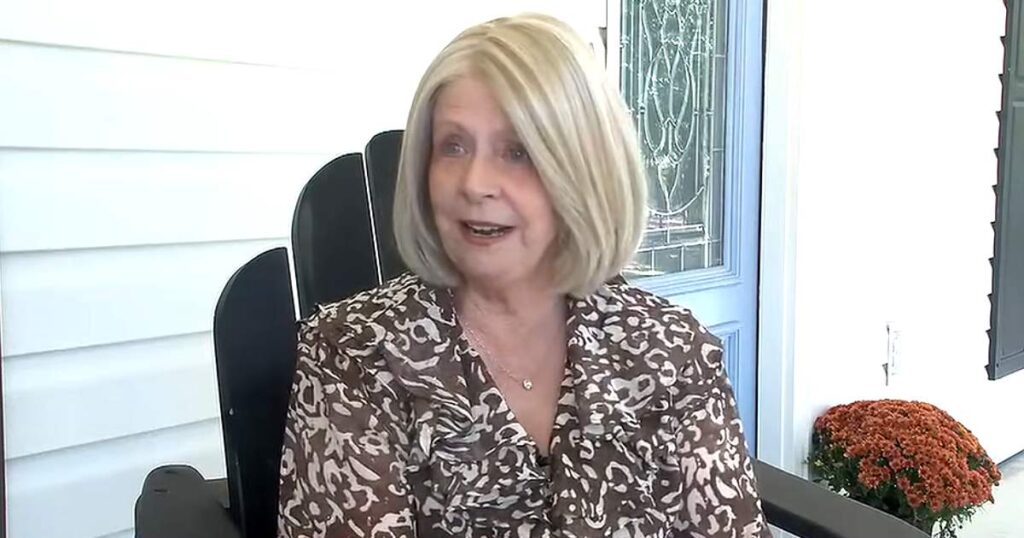
When Judy Wells embarked on her first day of retirement after nearly five decades as a nurse in Mississippi, she had visions of peaceful days filled with baking and tending to her bees. Instead, she found herself facing an unexpected battle against aggressive stage 4 cancer that would test both her medical knowledge and her faith in ways she never imagined.
The Laurel, Mississippi resident had spent 47 years caring for others when mysterious stomach pain led to a devastating discovery. Medical imaging uncovered a tumor affecting her kidney, which had become swollen from the mass pressing dangerously against her spine. The diagnosis was particularly grim: high-grade urothelial cancer that had penetrated the kidney’s lining and posed a threat of spreading through her bloodstream. Physicians in her local area immediately began planning surgical intervention.
A second opinion changes everything
Following the urging of a concerned friend, Wells sought additional medical expertise at Memorial Sloan Kettering Cancer Center in New York. The specialists there, Dr. A. Ari Hakimi and Dr. David Aggen, proposed an alternative approach that would delay immediate surgery in favor of a novel treatment combination using Padcev and Keytruda.
The treatment strategy involved two distinct mechanisms: Padcev functions as a targeted therapy that transports cancer-destroying medication straight to malignant cells, while Keytruda works as an immunotherapy agent that strengthens the body’s natural defenses against the disease.
Doctor’s unusual prescription includes prayer
During her consultation, Wells posed a direct question to Dr. Hakimi about her survival prospects. “He said, ‘Well, aren’t you a Bible-believing lady?'” she recalled. After confirming her faith, the physician offered remarkable counsel: “Go home and pray, and get others to pray for you. Take this medicine and come back in a few months.”
The ensuing treatment period proved extraordinarily difficult. Wells endured six rounds of therapy back in Mississippi that left her nearly confined to bed, suffering from intense nausea and losing 55 pounds in the process.
Scan shows unprecedented results
Six months after beginning treatment, Wells returned to New York for follow-up imaging. Dr. Aggen presented her with a comparison that seemed almost impossible. The original PET scan had shown her kidney illuminated with cancerous activity. The new scan displayed something remarkable: no detectable cancer.
To eliminate any uncertainty, Dr. Hakimi conducted an extensive five-hour surgical procedure, removing the kidney, ureter, portions of the bladder, and 50 lymph nodes. The phone call that followed brought confirmation of what the scans suggested. “He said, ‘Judy, I can’t find cancer anywhere,'” she recalled. According to Wells, the surgeon indicated she was the first patient to achieve complete remission from this particular type of urothelial cancer using this treatment protocol.
Living cancer-free with a message of hope
More than 18 months have passed since Wells received her clean bill of health. She credits her faith for sustaining her through the ordeal and regularly references Romans 15:13 when sharing her experience. “I want to be the one to give them hope that just because they got that result does not mean that it’s a death sentence,” she said.
Her testimony emphasizes the intersection of modern medicine and spiritual faith, particularly noting how her physician acknowledged the power of prayer alongside pharmaceutical intervention.
The biblical verse from Jeremiah 32:17 (NKJV) encapsulates her perspective: “Ah, Lord God! Behold, You have made the heavens and the earth by Your great power and outstretched arm. There is nothing too hard for You.”