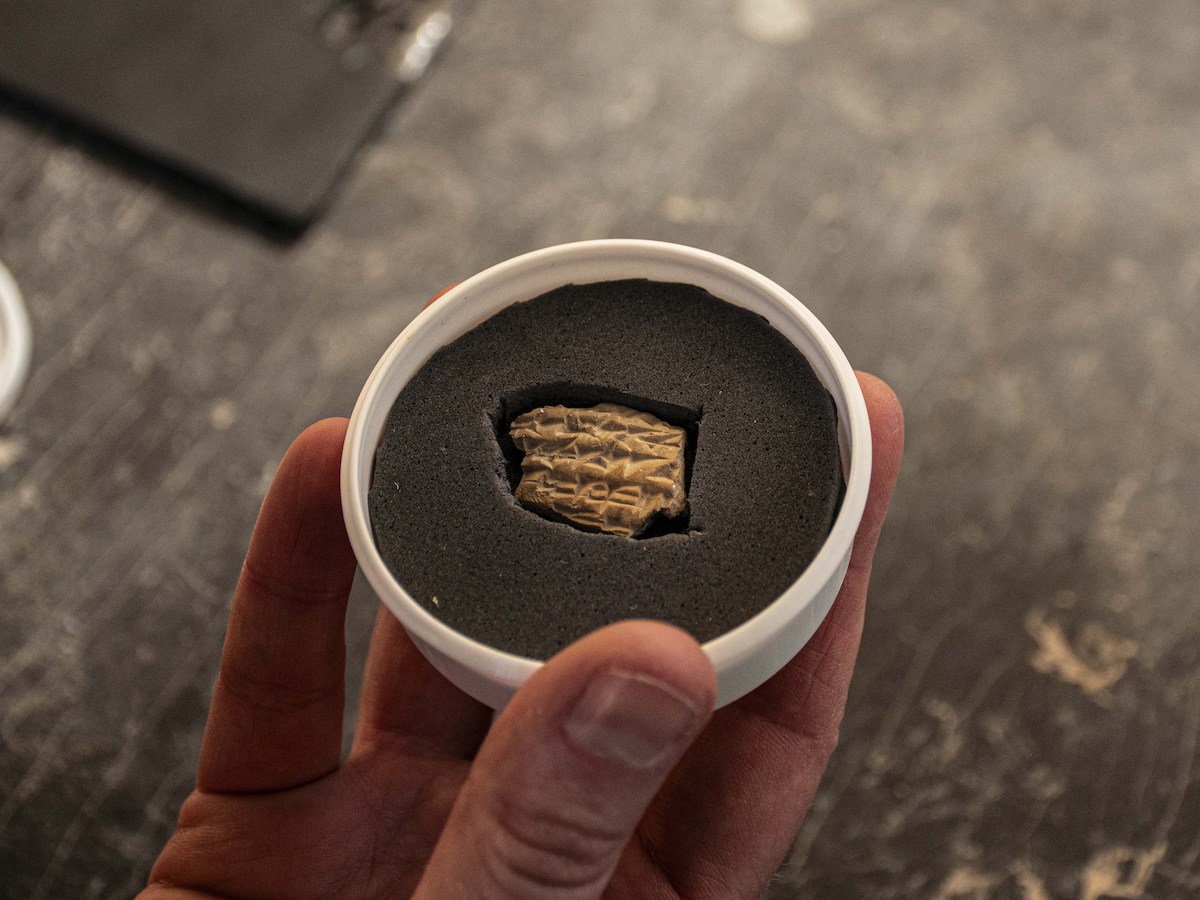
(Photo: Yoli Schwartz / Israel Antiquities Authority)
An extraordinary archaeological discovery in Israel has unveiled a cuneiform inscription that potentially ties back to a biblical figure: Hezekiah, King of Judah. This ancient fragment sheds light on a historical event involving tribute payments from Judah to the Assyrian Empire.
Historical records from the Old Testament recount that Hezekiah defied Assyrian ruler Sennacherib, leading to a siege of Jerusalem. However, divine intervention is said to have saved the city, marking a pivotal moment in history.
The recently discovered inscription might correspond to this narrative. Found on a pottery shard dating back 2,700 years, it offers a glimpse into the era’s geopolitical dynamics.
Though the fragment doesn’t directly name the Judean king, its context and the details inscribed suggest a strong connection. Unearthed near the Western Wall of the Temple Mount, this artifact is written in Akkadian, marking it as the only known Assyrian inscription from Jerusalem’s First Temple period.
The shard appears to be a piece of a royal Assyrian sealing, mentioning a tribute deadline, hinting at possible tensions if Judah failed to meet its obligations to Assyria. This might allude to the revolt mentioned in 2 Kings 18:7.
The discovery was made by Moriah Cohen from the Archaeological Experience in Emek Tzurim. “I was sifting through the dirt and suddenly noticed a sherd with a strange decoration. Examining it closely, it looked to me to be cuneiform, but that seemed totally unreasonable. Even though so many fascinating finds have been discovered here over the years, we’ve never, ever found anything like this,” she shared with enthusiasm.
Cohen expressed her amazement, stating, “For me personally, the thought that after 2,700 years, I am the first person to actually touch this pottery with my hands is a very exciting thought. This is a once-in-a-lifetime find.”
Dr. Ayala Zilberstein of the Israel Antiquities Authority leads the excavation. She emphasized that the artifact offers concrete evidence of official exchanges between Assyria and Judah.
“The inscription provides direct evidence of official correspondence between the Assyrian Empire and the Kingdom of Judah,” Dr. Zilberstein noted. “The discovery strengthens our understanding of the depth of the Assyrian presence in Jerusalem, and the extent of its influence on and involvement in the conduct of the affairs of the Judean kingdom.”
She further mentioned that the find enhances knowledge about the development of a new neighborhood west of the Temple, suggesting it was a hub for high-ranking officials’ activities.
This article was originally written by www.christiantoday.com