A Transformative Journey: Santa Fe Indian School’s Evolution from Assimilation to Cultural Reclamation
Amidst the dusty expanse of New Mexico, the Santa Fe Indian School stands as a testament to transformation. Once a symbol of forced assimilation, it now celebrates a rich tapestry of Native American heritage.
The school’s origins trace back to 1890 when it was founded as a federal Indian boarding school. Its initial mission was to assimilate Native American children, severing their ties to their cultural roots. Kyle Shutiva, a junior at the school, reflects, “We were established in 1890 as a Native American boarding school. It’s still a boarding school, but not how people would expect.”
While the school’s past is marked by stories of punishment for speaking Native languages, its present tells a different tale. SFIS is now a hub of cultural revival, where students roam the campus adorned in moccasins and traditional jewelry. The library, rich with murals and historical photographs, is undergoing a significant transformation. Students like Shutiva are recategorizing Native American materials, challenging the outdated Dewey Decimal System classification of Native cultures as historical artifacts.
A Different Path
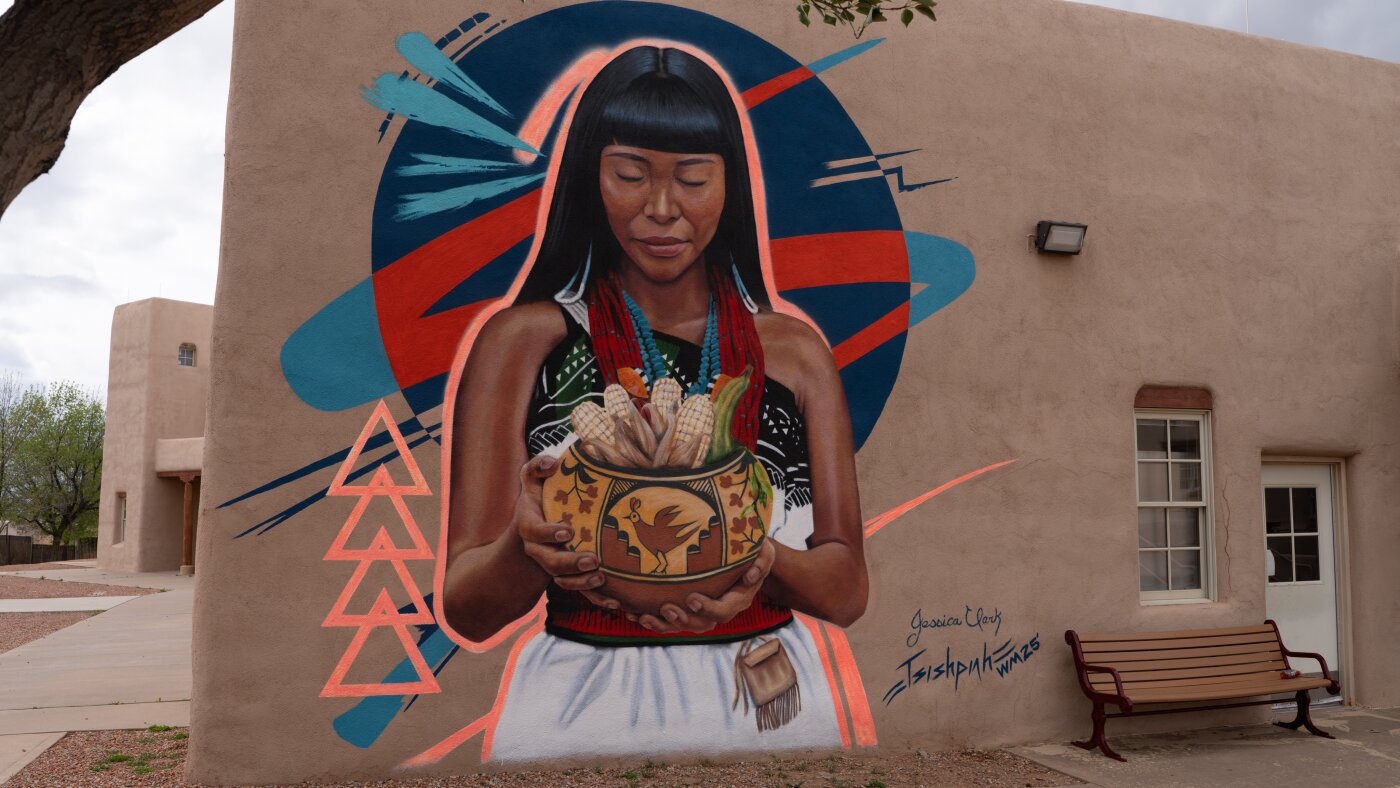
Unlike many isolated federal schools, SFIS played a pivotal role in nurturing Native artists, thanks to New Deal-era funding. The school attracted notable figures like Georgia O’Keeffe, who were drawn to the Native art scene. This artistic influence persists today, as students and artists continue to decorate the school’s walls with vibrant murals.
SFIS’s independence from federal control, achieved over 50 years ago, marked a turning point. According to librarian Lisa Longeteig, “When we became tribally controlled, that was a key piece.” This autonomy has allowed local tribes to set the curriculum, fostering a surge in language offerings and cultural education on campus.
A Family History
Students like Kyle Shutiva and Alivia Armijo find personal connections at SFIS. Shutiva, inspired by his great-grandmother, Acoma potter Lucy Lewis, sought to reconnect with his heritage after leaving public school. Armijo, whose mother attended SFIS, chose the school to embrace her Native identity, a stark contrast to her previous experience in Ohio.
The school’s commitment to preserving and teaching Native languages is evident in its diverse offerings. Language teacher Tasha Pino, an alumna of SFIS, highlights the importance of her role: “It’s a huge passion for me,” she says. “Being able to give back to my community and to my students. This is the way I can do that.”
A Legacy in the Making
Mark Lee Moquino, overseeing the language program, aims to integrate cultural aspects into the curriculum. He envisions lessons that blend cultural traditions with subjects like math and art. “Math is used in counting numbers of fibers when weaving a belt or blanket,” Moquino explains. His vision for the future includes expanding language offerings and finding new ways to intersect Native culture with Western education.