Good morning. You’re reading the Up First newsletter. Subscribe here to get it delivered to your inbox, and listen to the Up First podcast for all the news you need to start your day.
Top Headlines for Today
Senate Republicans are advancing efforts to secure funding for immigration enforcement until President Trump’s term concludes. The senators departed Washington previously without passing the GOP-supported legislation due to apprehensions regarding the Trump administration’s nearly $1.8 billion “anti-weaponization” fund. Acting Attorney General Todd Blanche informed Congress that the administration had abandoned the fund plans, though Trump refrained from confirming this statement.
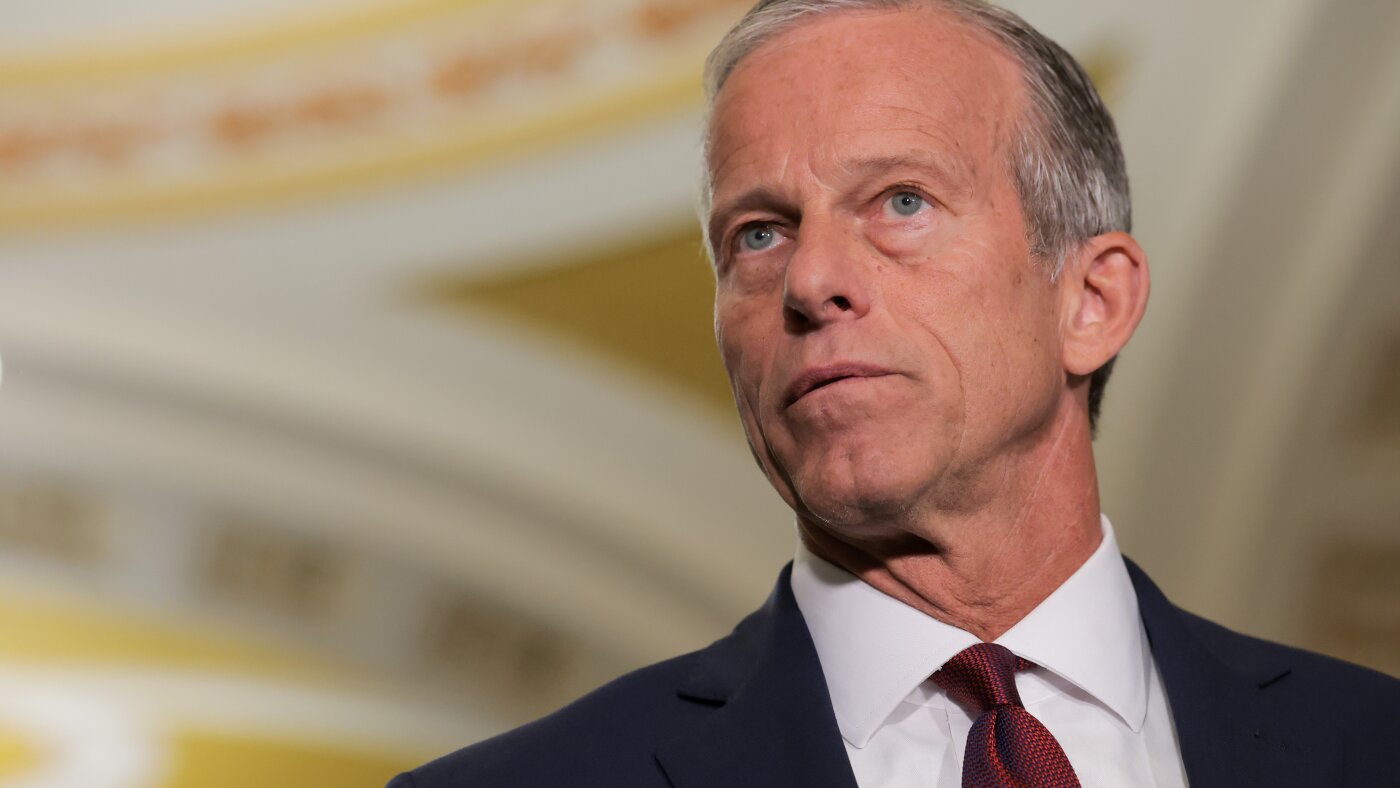
Senate Majority Leader John Thune (R-SD) speaks during a news conference following a weekly policy luncheon with Senate Republicans at the U.S. Capitol on June 02, 2026 in Washington, D.C. Thune was joined by U.S. Sen. Tom Cotton (R-AK), U.S. Sen. James Lankford (R-OK), U.S. Sen. John Barrasso (R-WY) and U.S. Sen. Shelley Moore Capito (R-WV).
Anna Moneymaker/Getty Images/Getty Images North America
hide caption
toggle caption
Anna Moneymaker/Getty Images/Getty Images North America
- 🎧 Sen. John Cornyn of Texas highlighted that the only way to ensure the fund is eliminated is “for Congress to put a stake through it.” Republican legislators have introduced two amendments to permanently block the fund. However, NPR’s Sam Gringlas noted on Up First that even if these amendments secure enough votes, it’s uncertain if Senate rules will permit their inclusion in the $70 billion package for Immigration and Customs Enforcement and Border Patrol. Recent Republican moves, like the House vote to end the war with Iran, reveal some dissent within the party against the president. Gringlas mentioned that more GOP members are reconsidering the value of maintaining loyalty.
Israel and Lebanon have renewed a ceasefire agreement that has had difficulty taking effect. The diplomatic discussions took place in Washington, with President Trump also having a conversation with Israel’s Prime Minister Benjamin Netanyahu. During a tense call about Netanyahu’s plans concerning Beirut, Trump confirmed calling Netanyahu “crazy” and used an expletive.
- 🎧 The ceasefire could bring positive outcomes if successful, but NPR’s Greg Myre advises caution. The deal is between the Israeli and Lebanese governments, but Hezbollah wasn’t involved in the talks. The agreement mandates Hezbollah to cease fire and pull out of southern Lebanon, while not requiring Israeli forces to leave Lebanese areas. A Hezbollah official anonymously told NPR that Israeli troops must vacate southern Lebanon for the truce to succeed. Myre suggests a successful ceasefire might aid both nations and potentially ease tensions related to the Iran conflict.
President Trump issued an executive order turning around 8,000 federal workers into at-will employees. This allows the government to dismiss them without cause. This move is part of Trump’s ongoing efforts to remove civil service protections, meant to prevent political interference. Most affected employees are in the GS-15 civil service level, including leaders of policy offices, senior public affairs officers, and regional office heads.
The men’s soccer World Cup kicks off next week at 16 North American stadiums, coinciding with potentially hazardous summer weather in numerous host cities. An NPR analysis indicates that millions attending the World Cup—fans, players, and workers alike—face potential exposure to extreme heat. NPR’s findings suggest over a third of matches pose a high risk of dangerously hot and humid conditions, with many more presenting moderate heat risks. High-risk matches include several high-profile games, such as the third-place decider and the final.
Today’s Featured Listen

Soprano Renée Fleming and banjo player Béla Fleck are touring together across the United States this year, performing American bluegrass and folk music, from Walt Disney Concert Hall in Los Angeles to Carnegie Hall in New York.
Madison Thorn
hide caption
toggle caption
Madison Thorn
Musicians Renée Fleming and Béla Fleck have collaborated on a project that took over two decades to complete. Fleming, a celebrated opera singer with five Grammy Awards, has ventured into Appalachian bluegrass with Fiddle and The Drum, featuring the banjo prowess of Béla Fleck, who boasts 18 Grammys and a Latin Grammy. The album, rich with mountain songs, ballads, and folk hymns, pays homage to traditional American music. Themes of loss and war permeate the collection, which includes a duet with Dolly Parton titled “In The Pines.” In a conversation with Morning Edition host Michel Martin, Fleming and Fleck discussed their musical journey, their initial meeting, and Fleming’s resignation as artistic adviser at the Kennedy Center following Trump’s administration. Listen to the interview and song excerpts or read the full article here.
In-Depth Report

Illustration by Hanna Barczyk
The Trump administration has pledged to augment citizenship revocations for some naturalized Americans as part of a broader push for stricter immigration enforcement. This stance raises concerns among immigrant advocates, legal experts, and naturalized Americans regarding potential misuse. However, the cases filed thus far appear more limited than the rhetoric suggests, highlighting the legal and practical limitations on broader application of this measure. NPR reviewed 34 publicly announced denaturalization cases that the Department of Justice filed or resolved, including 11 citizenship revocations. Daniel Kanstroom, an immigration law professor at Boston College, remarked that he isn’t “seeing a major surge of worrisome denaturalizations.” Here’s what NPR found from its review:
- ➡️ The cases illustrate the challenges the administration faces in pursuing mass denaturalization, according to Kanstroom and other immigration experts. Unlike swift detentions and deportations in the broader deportation agenda, naturalized U.S. citizens enjoy stronger legal protections.
- ➡️ The 34 cases largely involve accusations of fraud, child sexual abuse, terrorism-related activity, war crimes, and drug trafficking.
- ➡️ In court documents, the DOJ claims the defendants concealed actions that would have disqualified them from demonstrating the “good moral character” required for citizenship.
- ➡️ In many reviewed cases, the defendants lacked legal representation. Several of these cases resulted in denaturalization, with defendants making few or no court appearances.
3 Things to Know Before You Go

Barry Manilow
Christopher DeVargas/Stiletto Entertainment
hide caption
toggle caption
Christopher DeVargas/Stiletto Entertainment
- Barry Manilow is recovering from lung cancer and rehabilitating his singing voice in hopes of returning to the stage to promote his first album of new songs in nearly 15 years, What a Time.
- In this week’s edition of Far-Flung Postcards, NPR’s Esme Nicholson takes readers to souvenir shops in Porto, where linen scarves, cotton aprons and more decorate the entrances. Many of these shops are run by Bangladeshis, whose home country shares a rich textile manufacturing tradition with Portugal.
- The value of copper is increasing, leading to a rise in thefts as criminals strip it from phone poles, streetlights, and electric vehicle chargers. The repairs for such damage could cost companies tens of thousands of dollars. Frustrated with the ongoing issue, AT&T executives invited NPR to join them on a ride-along to witness the problem firsthand.
This newsletter was edited by Suzanne Nuyen.