When a 73-year-old law professor suddenly collapsed during an evening lecture at UNT Dallas College of Law, his students faced a life-or-death moment that would test everything they had learned—not just in the classroom, but in life. The quick thinking and coordinated response that followed would prove to be the difference between tragedy and miracle.
On the evening of October 8, 2026, Michael Maslanka was teaching his regular class when he began feeling unwell. The veteran educator informed his students he couldn’t continue the lecture, and moments later, he collapsed in front of them.
Former Navy SEAL springs into action
The classroom held an unlikely lifesaver that night. Matthew Melton, a 45-year-old student who works in cybersecurity IT, brought years of military experience as a former Navy SEAL to the emergency. His training alongside 18 Delta medics and field surgeons had prepared him to recognize the signs immediately. When he checked Maslanka and found no pulse and no breathing, he and fellow students moved the professor to the floor and began administering CPR.
Melton performed three rounds of chest compressions, a physically demanding and emotionally challenging task. “I felt it, I felt breaking his ribs, but I knew it was the right thing to do,” Melton said. “I knew it was about keeping him alive.”
Prayer and emergency response work together
While Melton worked to restart Maslanka’s heart, his classmates coordinated other crucial elements of the rescue. Student Daniela Sanchez immediately contacted 911, while other students ran outside to meet Dallas Fire Rescue personnel and direct them to the classroom. After making the emergency call, Sanchez returned to the front of the room and took her professor’s hand.
“I didn’t remember, not a verse, but I said, ‘Father God, in the name of Jesus, I declare victory and healing over this body,'” she recalled.
Medical intervention at the hospital
Emergency responders transported Maslanka to Baylor Scott & White Heart Hospital in Dallas, where medical staff had to use defibrillation to restore normal heart rhythm. “I just saw blackness,” he said. “[The nurse] said, ‘We have to shock you.’ And the next thing I heard was ‘Clear!'” Medical personnel shocked his heart twice to stabilize him.
The timing of the cardiac event struck everyone involved as remarkably providential. Had the heart attack occurred minutes earlier, Maslanka would have been alone in his office. Had it happened later, he would have been at home after class concluded. In either scenario, immediate expert assistance would not have been available. Sanchez described the circumstances as “oddly orchestrated by God.”
Emotional hospital reunion
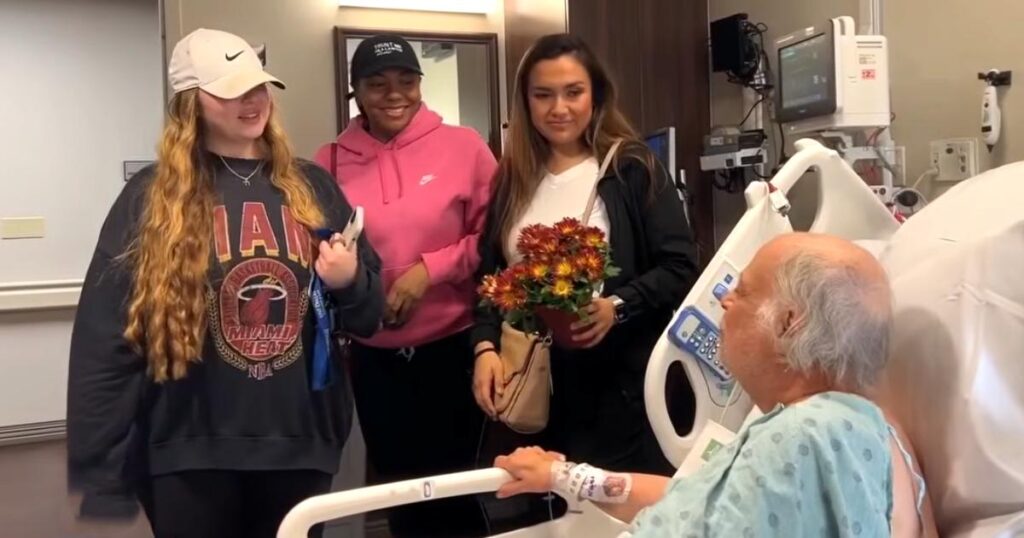
Several days after the incident, Sanchez and other students visited their professor during his hospital recovery. The reunion brought powerful emotions for everyone present. “You were gone,” she told him. “We were grieving your passing. Everyone was bawling.”
Student Alysia Davis expressed her gratitude for his impact on their education: “You’ve been so instrumental in our lives. I’ll take what I learned from you forever.”
In an ironic twist, Maslanka had appeared on Texas Bar TV in 2014, where he encouraged attorneys to “think like a Navy SEAL and train for what can go wrong.” He never imagined that advice would come full circle with an actual Navy SEAL saving his life.
“There was a tomorrow for me because of my students,” Maslanka said. “Every day is a lifetime. If we don’t do well today, we have a chance tomorrow. And those students gave me a chance because tomorrow is here and I’m here.”
The importance of CPR training
Following his recovery, Maslanka has advocated for more widespread CPR education. Despite its critical importance, most people have never received formal training in cardiopulmonary resuscitation. Many assume they’ll never encounter a situation requiring these skills, but cardiac emergencies occur without warning in everyday locations—classrooms, restaurants, stores, and homes.
Without Melton’s knowledge and quick response during those crucial minutes, the outcome could have been tragically different. CPR courses typically require only a few hours to complete, and many hospitals and fire departments offer them regularly. This modest time investment could equip someone with skills to save a life.
Recognizing heart attack symptoms
Maslanka’s experience also highlights the need for better awareness of cardiac warning signs. Heart attacks don’t always announce themselves with dramatic chest pain. Symptoms can include chest pressure or tightness, pain radiating to the arm, back, neck, or jaw, shortness of breath, cold sweats, nausea, rapid heartbeat, or dizziness.
Before collapsing, Maslanka simply felt unusual and experienced some blurred vision. Many people dismiss similar symptoms as indigestion or fatigue, waiting for them to pass. Medical professionals stress the importance of calling emergency services immediately when experiencing these signs rather than attempting to drive oneself to a hospital. Alerting nearby people to your symptoms ensures someone can stay with you and assist if needed.
The power of faith in crisis
While Sanchez didn’t possess CPR training, she recognized another way to help. After calling 911 and watching Melton administer chest compressions, she understood the situation required divine intervention as well as medical skill. Her decision to pray over her professor demonstrated faith in action during a helpless moment.
Life presents many situations where human ability reaches its limits—waiting through surgeries, comforting grieving friends, or witnessing medical emergencies. Even when practical solutions seem exhausted, prayer remains available. Medical expertise and training represent gifts from God, as do the people He positions in our lives during critical moments. Yet ultimate trust belongs with God alone, as expressed in Psalm 20:7: “Some trust in chariots, and some in horses; But we will remember the name of the LORD our God.”
Professor Maslanka has since returned to teaching at UNT Dallas College of Law, resuming his role in educating future attorneys thanks to the extraordinary response of his students that October evening.