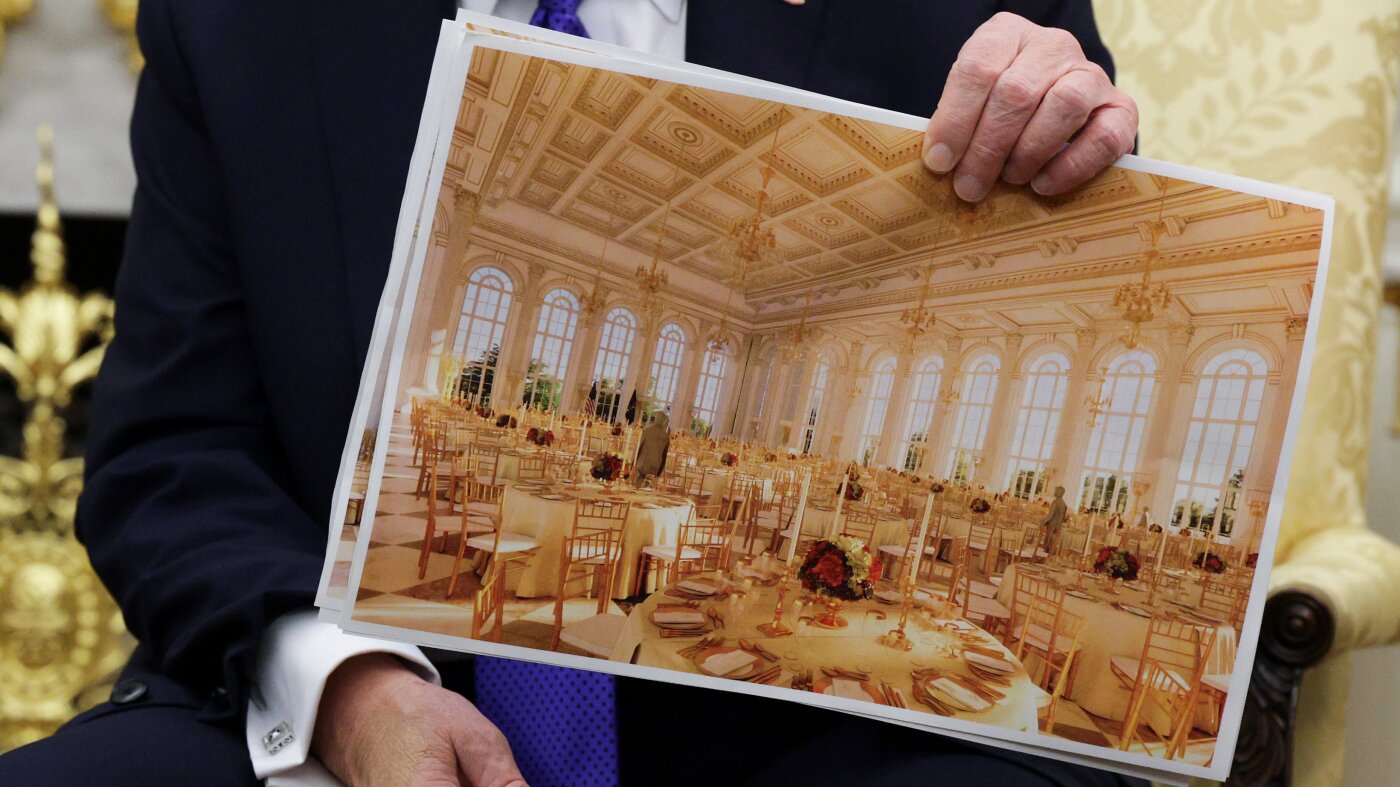
A Supreme Court Approval Allows Trump’s White House Ballroom to Proceed
The Supreme Court has given President Trump the green light to continue with his ambitious $250 million White House ballroom project, a decision that has stirred debates over its necessity and funding. The ruling allows construction to proceed on the historic site of the former East Wing, despite opposition.
Initially estimated to cost taxpayers at least $300 million, the ballroom project has been controversial due to the president’s prior assurances that public funds would not be used. The National Trust for Historic Preservation has been a vocal opponent, arguing that Congressional approval is required for such a significant alteration to the White House grounds.
Measuring 90,000 square feet, the new ballroom will significantly expand the White House’s footprint. President Trump has repeatedly emphasized the ballroom’s importance, citing its role in hosting international events and providing critical national security infrastructure, including bomb shelters and a drone port.
The decision from the Supreme Court, led by Chief Justice John Roberts, comes after a series of conflicting lower court rulings. The National Trust for Historic Preservation had challenged the project, asserting that bypassing Congress undermines judicial review.
“Rather than obtain permission from Congress, Petitioners have instead decided to try to outrun judicial review,” the brief states, expressing concerns that the Supreme Court’s decision effectively ends the case.
President Trump celebrated the ruling on social media, stating, “We are grateful for the Decision of the United States Supreme Court. The Military/Ballroom Complex being built on the hallowed grounds of the White House, which is so vital for National Security, will be THE GREATEST OF ITS KIND!”
The legal battle began in March when Judge Richard Leon, appointed by Republicans, ruled against the project unless linked to White House security enhancements. However, the U.S. Court of Appeals for the D.C. Circuit permitted construction to continue temporarily. Leon later restricted above-ground construction while allowing below-ground work.
Despite opposition, construction began last July, resulting in restricted access to the White House’s north side and Lafayette Park. Public opinion, as shown in an April poll by Washington Post-ABC News-Ipsos, indicates that 56% of Americans disapprove of the demolition of the East Wing for the new ballroom.