Syria’s Ceasefire with Kurdish Forces: A Move Towards Unity Amid Lingering Concerns
Syria has initiated a nationwide ceasefire with the Kurdish-led Syrian Democratic Forces (SDF), halting almost two weeks of conflict. While this agreement marks a potential step toward stability, apprehensions remain among Christians and other minority groups about continued persecution and unrest.
As detailed by Syrian state media, the ceasefire is part of a comprehensive 14-point plan, which involves the integration of the SDF into Syria’s military and security frameworks. President Ahmed al-Sharaa announced that this agreement would enable the government to regain control over key regions such as al-Hasakah, Deir Ezzor, and Raqqa, areas vital for their oil and gas resources. The accord emerged from discussions in Damascus between al-Sharaa and Tom Barrack, the U.S. special envoy to Syria, who described it as a step towards a “unified Syria,” according to a BBC report.
The agreement also involves Syrian authorities assuming control over civilian institutions, border checkpoints, and energy facilities previously managed by the SDF. Following a thorough vetting process, SDF members are expected to be incorporated into Syria’s defense and interior ministries. The Syrian government will manage prisons and camps holding foreign Islamic State fighters and their families.
A noteworthy aspect of the deal is the pledge to recognize Kurdish cultural and linguistic rights, marking the first official acknowledgment since Syria’s independence in 1946. This includes granting Kurdish the status of an official language and recognizing the Kurdish new year as a national holiday, as reported by the BBC.
In comments broadcasted on Kurdish television, SDF commander Mazloum Abdi confirmed the agreement, stating that the ceasefire aims to avert a broader conflict. Abdi emphasized the SDF’s commitment to maintaining the gains of Kurdish self-rule developed during Syria’s civil war with U.S. support against the Islamic State group.
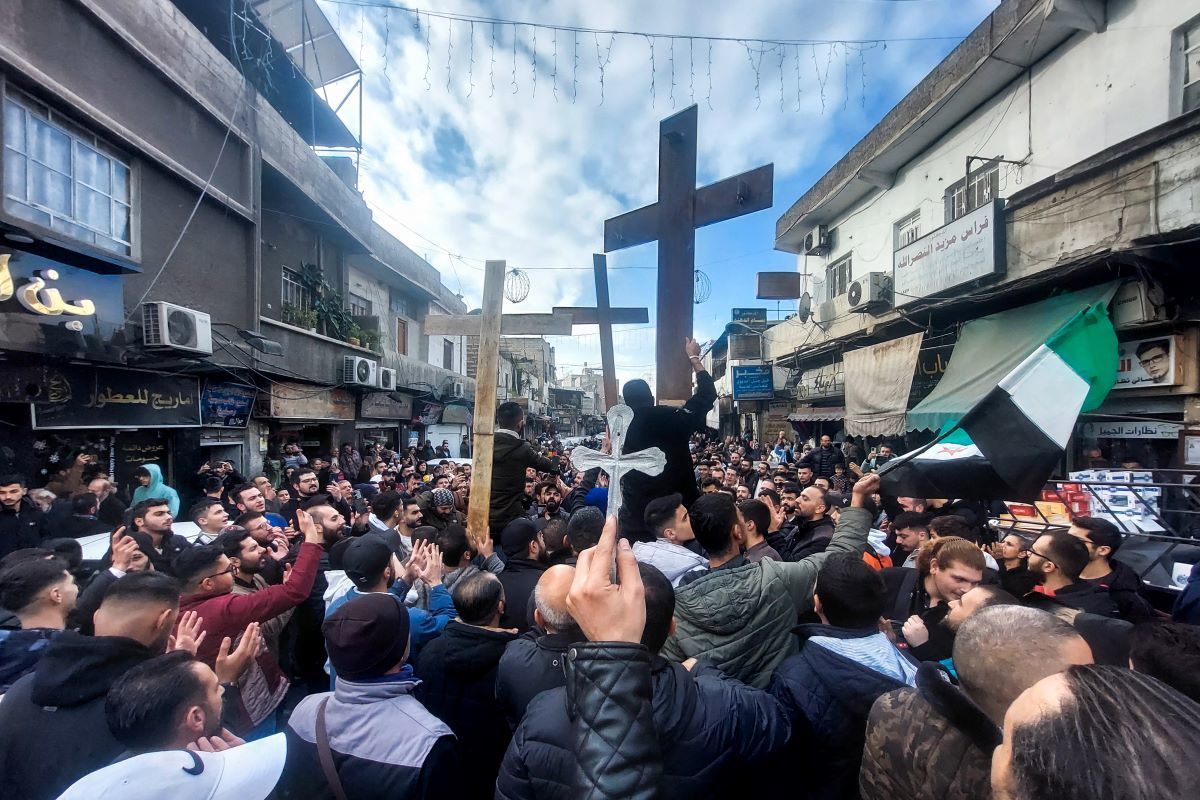
Despite international media highlighting the ceasefire as a stabilizing move, a Christian Syrian Kurd refugee in Europe expressed skepticism. “For a longer time, I have been afraid for minorities in Syria — or more accurately, for the different components of Syrian society, including Kurds, Alawites, Druze, and Christians,” they said anonymously for security reasons.
The refugee described various attacks on minority communities, highlighting recent threats and violence. They warned of potential security risks due to the shift in control over detention facilities, mentioning a prison in Raqqa holding approximately 5,000 ISIS prisoners that was recently taken over by new authorities, raising fears of possible releases and extremist resurgence.
Concerns about Syria’s safety for Christians are supported by findings from Open Doors, which ranked Syria sixth on its World Watch List 2026, released on January 14. The country saw a significant rise in violence against Christians, with its violence score surging to 16.1 out of a possible 16.7, as reported by Christian Daily International.
Open Doors estimated that about 300,000 Christians remain in Syria, a sharp decrease from a decade ago, leaving these communities more vulnerable amid political fragmentation and growing Islamist influence. The organization reported at least 27 Christians were killed for their faith during the reporting period, with a notable June 2025 suicide bombing at Mar Elias Greek Orthodox Church in Damascus claiming 22 lives.
Following the overthrow of Bashar al-Assad’s regime in December 2024, the interim constitutional framework centralized power in the presidency and established Islamic jurisprudence as the primary legislative source. This development has heightened the pressure on Christians and other minorities.
The refugee concluded by urging for prayer, hoping for a transformation in Damascus akin to the biblical account of Saul’s conversion. “That just as God transformed Saul’s life in Damascus, He may also transform this new ‘Saul’ in Damascus today,” they said.
This article was originally written by www.christianpost.com