
The Letter to the Hebrews speaks of a “cloud of witnesses” surrounding Christians. Over hundreds of years, this “cloud” has expanded, comprised of individuals and events that have sculpted the Christian Church into what it is today.
“First they came for the communists, and I did not speak out – because I was not a
communist; then they came for the trade unionists, and I did not speak out – because
I was not a trade unionist; then they came for the Jews, and I did not speak out –
because I was not a Jew; then they came for me – and there was no one left to speak out.”
Pastor Martin Niemöller (1892–1984) reflected on his experiences during the Third Reich with these words. A former commander of the U-67 submarine in WWI, Niemöller resigned from the navy post-war due to his dissatisfaction with the Weimar Republic. He turned to theology, becoming ordained in 1924, and later a pastor in Berlin by 1931. Initially, Niemöller, a nationalist, was hopeful about the Nazi rise under Hitler, expecting a revival of German unity and Christian values. However, his optimism soon turned to disappointment.
The Impact of German History on Christian Perspectives
The fundamental principles of Nazism clashed with the core teachings of Christianity, which emphasize love, forgiveness, and a Jewish-rooted faith. Despite this, widespread support for the Nazi regime among German Christians posed a puzzling question: Why did so few resist? Three main influences are often cited: the historical relationship between the German churches and the state, the longstanding prejudice against Jews, and the broader European context of the early 20th century.
The German Reformation and subsequent political developments fostered a strong church-state alliance, which hindered the Church’s political activism and enabled the state to influence religious communities. This dynamic was further complicated by historical tensions, such as the Kulturkampf in the 1870s, which left Catholics wary of government confrontation but still on a collision course with the Nazis.
Moreover, antisemitism, deeply rooted in European history and exacerbated by figures like Martin Luther, marred the Church’s view of Jews, who were often seen as outsiders. Additionally, the threat posed by Communism after 1917 led many Christians to view it as a greater danger than Nazism, especially given the latter’s nominal alignment with Christian civilization.
Church and State: A Fraught Relationship
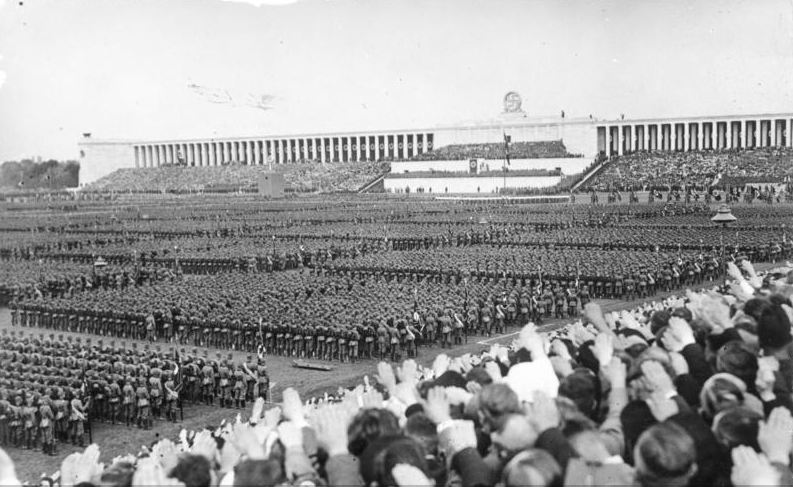
German Protestants, making up a significant portion of the population, largely supported the Nazi Party as it rose to power. The new regime sought to align with Protestant sentiments, celebrating Martin Luther’s legacy and organizing events like the ‘Day of Potsdam’ to reassure traditionalists. However, internal divisions soon arose within the Church. The ‘German Christians,’ a faction supporting Nazi ideology, pushed for a unified Reich Church, which ultimately failed due to growing opposition from groups like the Confessing Church, led by Niemöller and Bonhoeffer.
The Catholic Church, comprising 20 million Germans, faced a complex relationship with the Nazis. While initially making concessions to maintain its integrity, the Church soon realized the unreliability of Nazi promises. Despite the Papal Encyclical condemning Nazi actions in 1937, Catholic institutions faced increasing restrictions and harassment.
Throughout the war, the Nazi campaign against Christianity softened to maintain national unity, yet the complicity of many Christians in supporting the war effort remained evident. The persecution of Jews, known to many, met with little protest from the Church.
Lessons from History
Jehovah’s Witnesses, although doctrinally distinct from mainstream Christianity, exemplified resistance, with many facing severe persecution. In contrast, Niemöller and Bonhoeffer’s efforts within the Confessing Church highlighted a minority’s attempt to atone for the Church’s broader failures to oppose Nazi nationalism. Their actions serve as a poignant reminder of the dangers of aligning faith with extreme nationalism, a warning that resonates in today’s political landscape.
Martyn Whittock is a historian and Licensed Lay Minister in the Church of England. Author and co-author of numerous books, his work explores historical and theological themes. He regularly contributes to news platforms, focusing on the interplay of faith and politics.
This article was originally written by www.christiantoday.com




