The U.S. and Iran Reach Preliminary Agreement to End Conflict and Reopen Strait of Hormuz
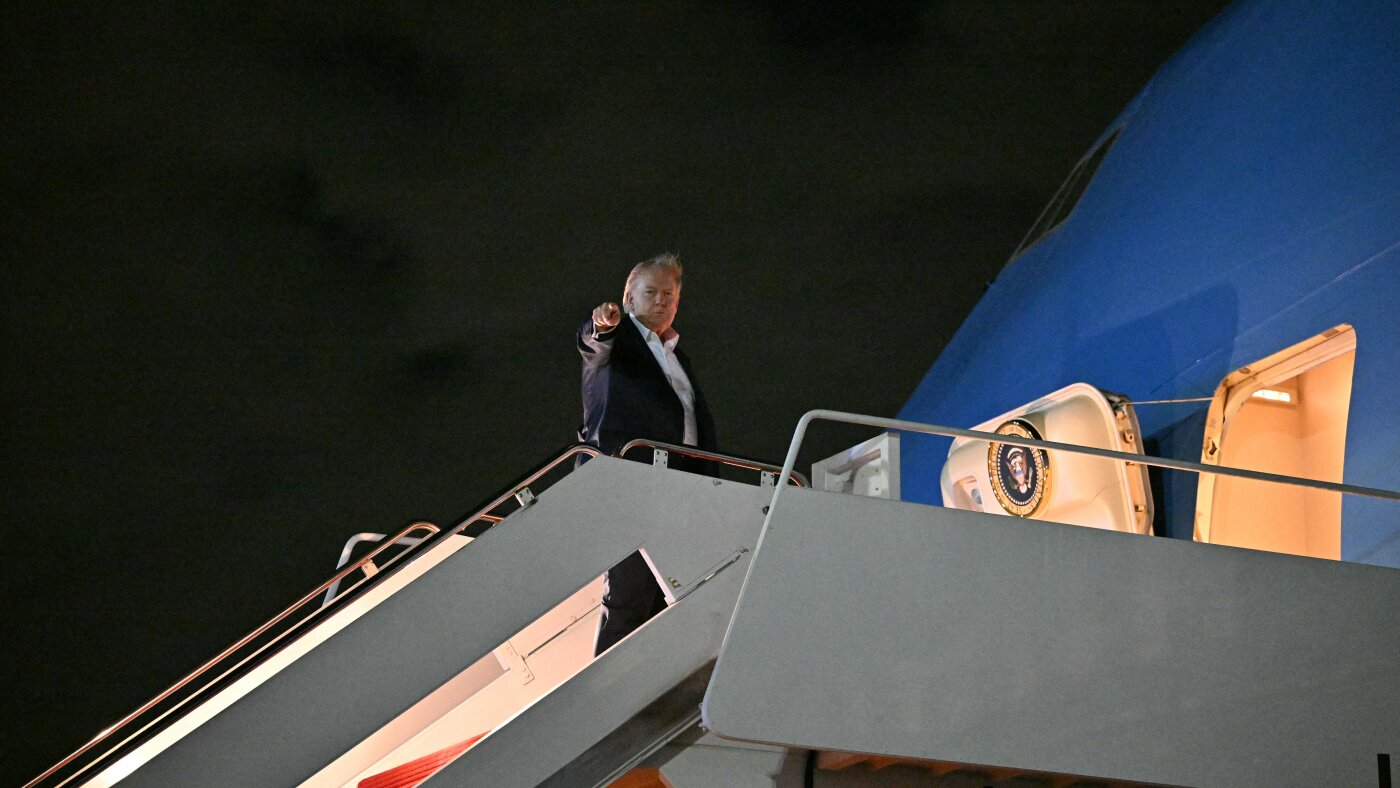
President Trump boards Air Force One before departing Joint Base Andrews in Maryland to fly to Evian-les-Bains, France, for the G7 summit on Monday.
Mandel Ngan/AFP via Getty Images
After over three months of turmoil, the United States and Iran have preliminarily agreed to reopen the Strait of Hormuz and potentially end hostilities between the two nations. The announcement, expected to be formalized with a signing in Switzerland on Friday, could bring a significant shift to the Middle East’s geopolitical landscape.
President Trump expressed enthusiasm about the progress, announcing, “The Deal with the Islamic Republic of Iran is now complete. Congratulations to all!” via his social media account.
During a G7 meeting in France, Trump confirmed to French President Emmanuel Macron that the agreement is signed and details will be disclosed soon. Iran’s Supreme National Security Council acknowledged the challenging negotiations that led to the agreement.
The financial markets reacted positively to the news, with a stock rally and a decrease in oil prices. If the agreement unfolds as planned, the U.S. and Iran will cease sporadic attacks, end the blockade of the Strait of Hormuz, and halt the Israel-Hezbollah conflict in Lebanon.
However, several unresolved issues remain. The memorandum of understanding extends the U.S.-Iran ceasefire for 60 days, aiming for a permanent peace agreement. The future of Iran’s nuclear program, central to the original conflict, remains undecided, although Trump suggested Iran would be allowed low-level nuclear enrichment, a shift from his previous stance.
Iran is also seeking the unfreezing of billions of dollars in assets and the lifting of international sanctions. The outcome of these discussions is uncertain, and if no agreement is reached within 60 days, Trump has hinted at possible military actions or a strategic shift in the region.
Signing set for Friday
Pakistan’s Prime Minister Shehbaz Sharif, who played a mediating role, confirmed that the official signing will occur in Switzerland on Friday, echoed by Trump in a second post.
Iran has had control over the Strait of Hormuz since the conflict began in February, affecting global oil flow. The U.S. responded with a blockade of Iranian ports. Trump stated that mine removal in the strait would commence once the deal is signed.
The deal also includes conditions for ending hostilities between Israel and Hezbollah. However, Israel remains skeptical, with Defense Minister Israel Katz affirming the presence of troops in southern Lebanon.
Despite a ceasefire, tensions persist, highlighted by a recent exchange of fire involving Hezbollah drones and Israeli airstrikes. Trump criticized Israel’s actions, noting that such attacks should not occur amidst peace negotiations.
Middle Eastern and European leaders have welcomed the agreement, including Qatar, which assisted in the negotiations. European leaders have called for the swift implementation of the deal, emphasizing the importance of reopening the Strait of Hormuz and supporting Lebanon’s stability.
U.N. Secretary-General António Guterres described the deal as a “critical step” and encouraged all parties to work towards a final resolution of the conflict.