Trump’s Towering Arch Proposal Faces Public Backlash Despite Approval
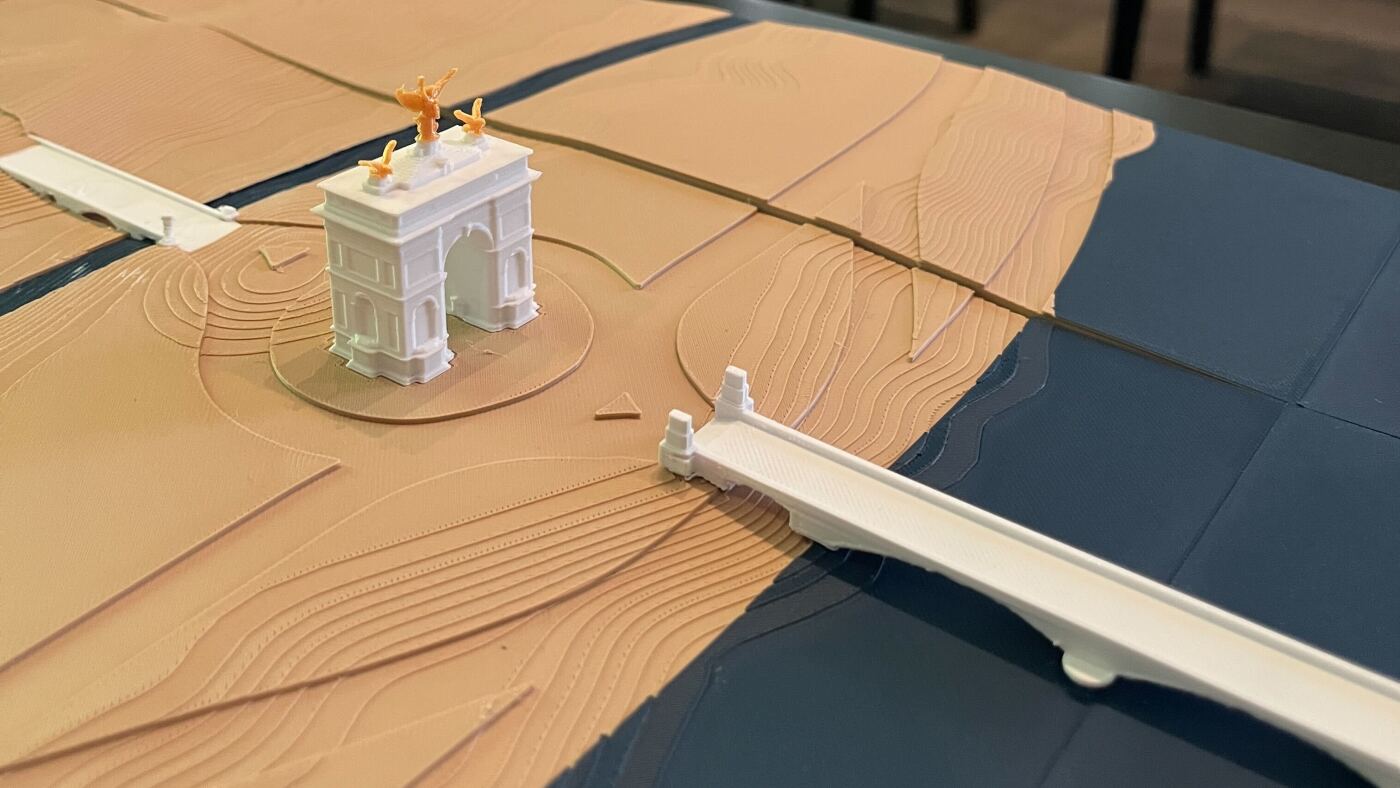
In a move that has sparked widespread controversy, the Commission of Fine Arts has given its final nod to President Trump’s towering arch project, set to rise between Arlington National Cemetery and the National Mall. The approval comes despite significant public opposition and lingering questions about the project’s details.
The decision marks a significant step forward for the 250-foot monument planned for a traffic circle on the Virginia side of the Potomac River. Although the project has cleared this hurdle quickly, it still faces various challenges ahead.
All commissioners, appointed by Trump at the start of his administration, had previously granted preliminary approval to the design in April. They had requested additional details and suggested revisions, only to approve a similar version of the proposal at their recent meeting.
“This continued desire to move things at a pace where the public doesn’t have an opportunity to participate seems to be the MO of this administration and also the MO of this particular review board,” stated Rebecca Miller, executive director of the D.C. Preservation League, following the vote.
Typically, monuments on federal land in Washington require congressional approval. However, speaking at the White House, Trump asserted, “We’re doing it. The land is owned by the secretary — by the Interior Department. We don’t need anything from Congress.”
During the commission meeting held at D.C.’s National Building Museum, the commissioners listened to arguments from both project supporters and opponents. Despite passionate objections from attendees, there was limited discussion among the commissioners themselves.
Commission Secretary Thomas Luebke reported that around 600 written comments were received beforehand, with “99.5% of them … in opposition” to the project. While some commissioners expressed concerns about the design’s sculptures and artwork, they ultimately agreed to give final approval.
“We’re looking at a well-designed arch, and it’s missing one of its key visual components,” remarked Vice Chair James McCrery II, who previously led Trump’s ballroom project.
The approval was granted despite unresolved questions about sculptures and artwork, as well as public concerns regarding the arch’s scale and location. Critics argue that it would obstruct views of the Lincoln Memorial and disrupt the symbolic sightline with Arlington House.
Lead architect Nicolas Charbonneau presented changes to the proposal, such as removing gold lion sculptures and altering pedestrian access. However, the design still includes 84-foot gilded statues, which Charbonneau explained fit with the monument’s “character” as a symbol of perseverance.
Opposition has also arisen from Vietnam War veterans and an architectural historian, who filed a lawsuit earlier this year, arguing the arch’s proximity to Arlington National Cemetery is disrespectful. Concerns were echoed by attendees at the meeting, some with relatives buried at the cemetery.
While the commission has approved the design, the project still requires further approvals. The National Capital Planning Commission will discuss it in June, but permits must be issued by local authorities, and the National Park Service’s approval is also necessary.
There remains a contentious debate over whether congressional approval is required. The administration claims a 1925 congressional approval for columns at the same site suffices, a position challenged by veterans and some Democratic leaders who argue for explicit authorization.