
Trump Administration Proposes Breakup of Key Climate Research Hub
In a move that has sparked significant controversy, the Trump administration has unveiled plans to dismantle the National Center for Atmospheric Research (NCAR) in Boulder, Colorado. Experts warn that this action could undermine the accuracy of weather and climate forecasts.
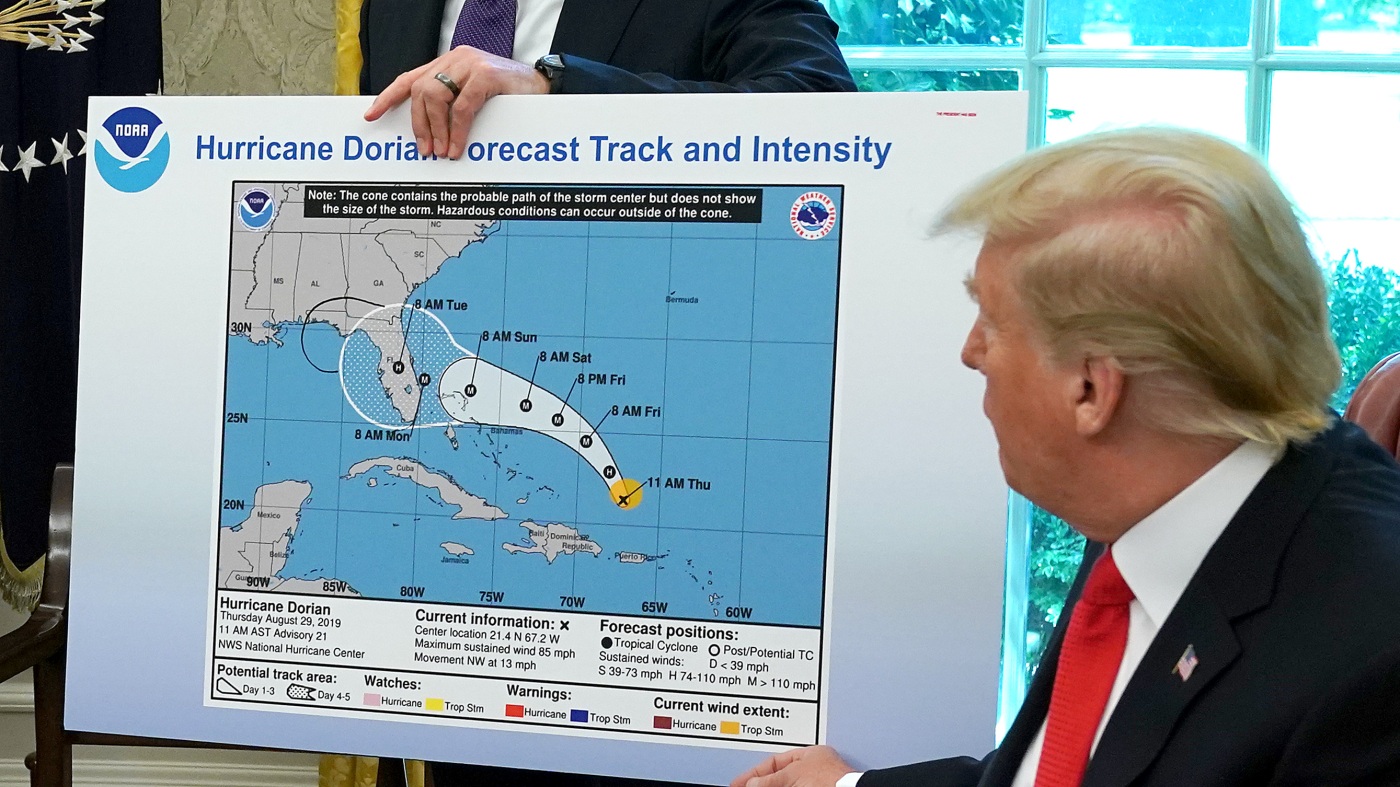
The White House’s decision is the latest in a series of actions by President Trump regarding climate policy, including budget cuts and personnel changes affecting climate research. Notably, Trump had previously altered a Hurricane Dorian forecast map, extending its predicted impact to Alabama, a move that was widely criticized.
White House Office of Management and Budget Director Russ Vought announced on X that the NCAR would undergo a “comprehensive review” and suggested that critical weather research activities might be relocated. Vought described the center as a “source of climate alarmism.”
Antonio Busalacchi, the head of the University Corporation for Atmospheric Research, expressed his concern about the decision, stating it appears to be politically motivated. “Our job is to state what the science is,” Busalacchi emphasized, affirming the importance of separating scientific research from advocacy.
Political Reactions and Allegations
Colorado’s political figures have reacted strongly against the proposal. Governor Jared Polis warned that the plan jeopardizes public safety and undermines scientific efforts. Meanwhile, Senator Michael Bennet and Representative Joe Neguse suggested that the move might be retaliatory, linked to Colorado’s handling of legal matters involving Tina Peters, a former county clerk.
Accusations of retaliation stem from President Trump’s pardon of Peters, who was involved in election tampering. Bennet commented that the administration’s actions resemble intimidation tactics, intended to punish the state.
The White House declined to provide detailed responses to inquiries but criticized NCAR’s contributions as straying from beneficial science.
NCAR’s Impact on Climate Research
NCAR has played a pivotal role in advancing atmospheric science, notably through innovations like dropsondes in the 1960s and wind shear technology in the 1980s. These developments have directly contributed to improved weather prediction and aviation safety.
With a staff of approximately 830, NCAR is also behind the widely used Weather Research and Forecasting Model (WRF) and the Community Earth Systems Model (CESM). These tools are essential for global weather prediction and climate research.
Jason Furtado, a meteorology professor at the University of Oklahoma, highlighted NCAR’s irreplaceable contributions to the scientific community. “A world-envied research center for atmospheric science,” he described it, underscoring the potential loss to future research.
Many researchers, including Ken Davis from Penn State, emphasize NCAR’s unique capabilities that support university-level research with advanced resources and expertise.
Ongoing Challenges and Future Implications
This isn’t the first time the Trump administration has faced criticism from the scientific community. Past actions include dismissing scientists and removing key climate reports from government websites.
Further budget reductions have been proposed for NOAA, including a significant cut to its core climate research branch. Such measures, scientists argue, could progressively weaken the nation’s ability to advance in understanding and predicting climate patterns.
Furtado warns that reducing scientific capabilities could leave the public unprepared for future climate challenges. “Having less accurate forecasts and being more in the dark about what is coming puts lives and property at risk,” he stated.




