
Trump’s Proposal to Overhaul Voting Methods Faces Legal and Practical Challenges
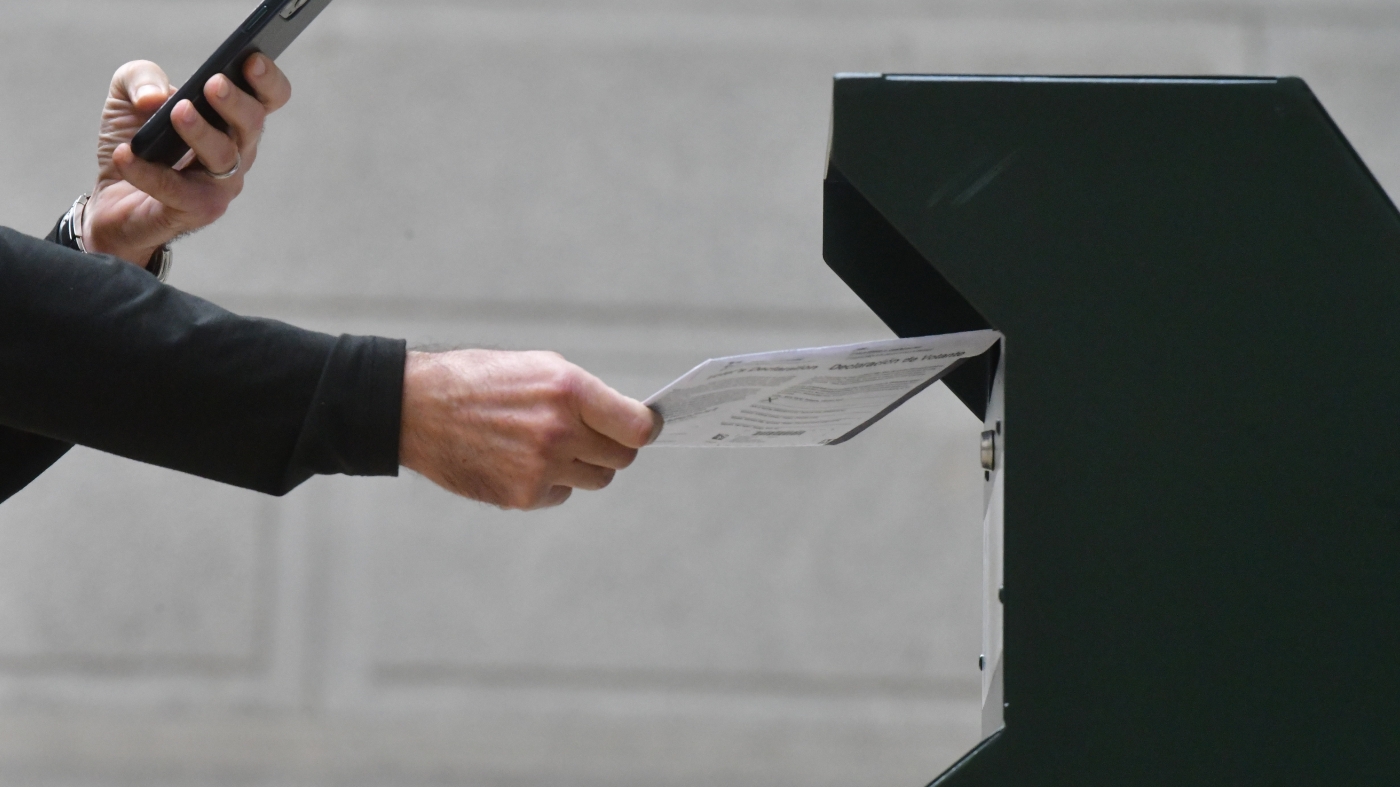
In a bold move to reshape the voting landscape, former President Donald Trump has announced plans to lead a campaign against mail-in ballots and certain voting machines, aiming to implement these changes before the upcoming midterm elections. Through his platform on Truth Social, Trump declared his intention to sign an executive order to restrict states from using these voting methods, claiming they are “highly inaccurate” and less dependable than paper ballots.
Trump has expressed a strong desire to eliminate mail-in ballots, describing them as “corrupt” during a White House meeting with Ukrainian President Volodymyr Zelenskyy. He stated, “And it’s time that the Republicans get tough and stop it because the Democrats want it. It’s the only way they can get elected.”
Despite Trump’s push for change, experts argue that he lacks the legal authority to enforce such measures, as the power to regulate federal elections resides with Congress, not the presidency. Michael Morley, a law professor at Florida State University, emphasized, “There’s really nothing that the executive branch can do on its own in terms of direct mandates.”
Richard Hasen, a UCLA law professor, echoed this sentiment, explaining that any substantial changes would require congressional backing. “Unless the president has some theory under which he could try to ban certain kinds of voting machines or tried to ban mail-in ballots by enforcing some existing federal law, he would need the cooperation of Congress,” Hasen noted.
In light of these legal obstacles, David Becker from the Center for Election Innovation & Research highlighted the founding principles that prevent presidential overreach in election processes, pointing to Federalist 59 as evidence of the intended separation of powers.
Logistical challenges also pose a significant barrier to Trump’s proposal. Matt Germer of the R Street Institute pointed out the complexities involved in altering state election procedures, including the necessity for new laws, training volunteers, and identifying additional polling locations.
Barbara Smith Warner, from the National Vote at Home Institute, warned that abolishing mail-in voting would be nearly impossible in the given timeframe, suggesting that the true motive might be to “destabilize” the upcoming elections. “Efforts to eliminate this are ignoring the facts and really are just trying to undermine confidence in our elections overall,” she asserted.
As the debate over voting methods continues, Hasen advises states and courts to prepare for potential attempts to interfere with election integrity, drawing parallels to previous efforts to overturn election results. He stressed the importance of ensuring fairness and integrity in the electoral process as the 2026 elections approach.




