Trump’s Bold Construction Plans Leave a Mark on Washington, D.C.
As President Trump pursues a legacy of development in Washington, D.C., the capital is undergoing significant transformations under his administration. Dubbed the “builder-in-chief,” Trump has dedicated his second term to reshaping the city’s landscape.
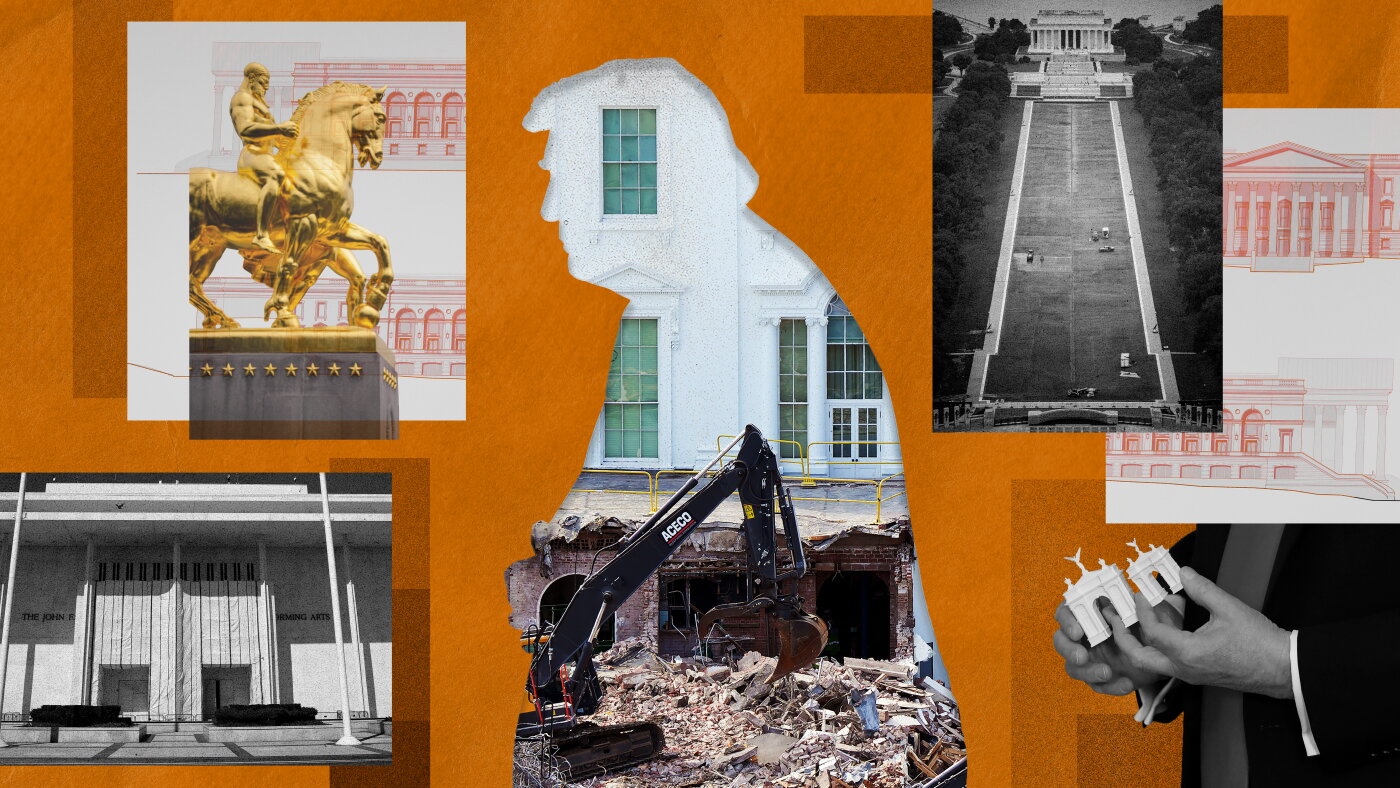
Trump’s ambitious projects include demolishing the East Wing of the White House to make way for a larger ballroom and military complex beneath. Additionally, the South Lawn now boasts a helipad, while the Rose Garden has been paved over. The Lincoln Memorial Reflecting Pool, intended to be revamped in “American flag blue,” remains incomplete after multiple delays and legal challenges.
Beyond these renovations, Trump has introduced new statues and restored old ones, such as the gilded equestrian statues. Plans for a sculpture garden in West Potomac Park and the transformation of East Potomac Golf Links into a championship-level venue are also in motion. Trump’s vision extends to the Kennedy Center, where he is either seeking naming rights or threatening demolition.
His most contentious proposal is a 250-foot arch near Arlington National Cemetery, initially meant to honor himself but later branded as a military complex. This project has faced lawsuits and protests, with critics expressing concern over Trump’s motivations to immortalize his legacy.
White House spokesperson Davis Ingle defended Trump’s endeavors, stating that the president is fulfilling campaign promises while enhancing the nation’s capital. Trump’s own words echo this sentiment: “The best thing I do in life is build,” he told reporters in May.
Greg Werkheiser, an attorney involved in several lawsuits against Trump’s projects, noted, “It would appear that much of his self-worth is tied to this mythology of Trump as a builder.” Meanwhile, critics argue that Trump’s actions set a problematic precedent, treating D.C. as his personal playground.
Barbara Res, former head of construction at the Trump Organization, observed that Trump’s approach to construction has always involved cutting corners. “There was no regard for the law back then,” she said, highlighting the continuity of this behavior into his presidency.
A History of Disregard for Historic Preservation
Trump’s history with construction projects is peppered with controversies, from his early days as a developer in New York City. In 1979, Trump acquired the Bonwit Teller building on Fifth Avenue, planning to replace it with Trump Tower. Despite agreements to preserve historic art on the building’s facade, Trump’s team demolished it, sparking public outcry and accusations of deceit.
Tim Naftali, a historian, commented on Trump’s approach, stating that previous presidents acted as custodians of the White House, seeking congressional approval for renovations. Trump’s unilateral decisions, however, deviate from this tradition.
Charles Birnbaum, president of The Cultural Landscape Foundation, criticized Trump’s disregard for historic preservation, emphasizing that current proposals threaten to diminish and alter D.C.’s heritage.
While Trump’s construction projects may seem inconsequential amid broader challenges, they raise concerns about the separation of powers and the lasting impact on the nation’s capital. As Trump looks to secure his legacy through physical structures, the debate over his approach continues to unfold.