Mounting Tensions: The Aftermath of U.S. and Israeli Strikes on Iran
In a dramatic escalation, recent satellite imagery has revealed the widespread impact of U.S. and Israeli military operations targeting Iran’s military infrastructure. From Tehran to Konarak, these strikes have left significant damage in their wake.
The conflict began with a high-profile strike in Tehran, where the U.S. and Israel launched a coordinated attack resulting in visible smoke rising from the compound of Iran’s Supreme Leader. This strike, which claimed the life of Ayatollah Ali Khamenei, marked a critical point in the unfolding crisis.
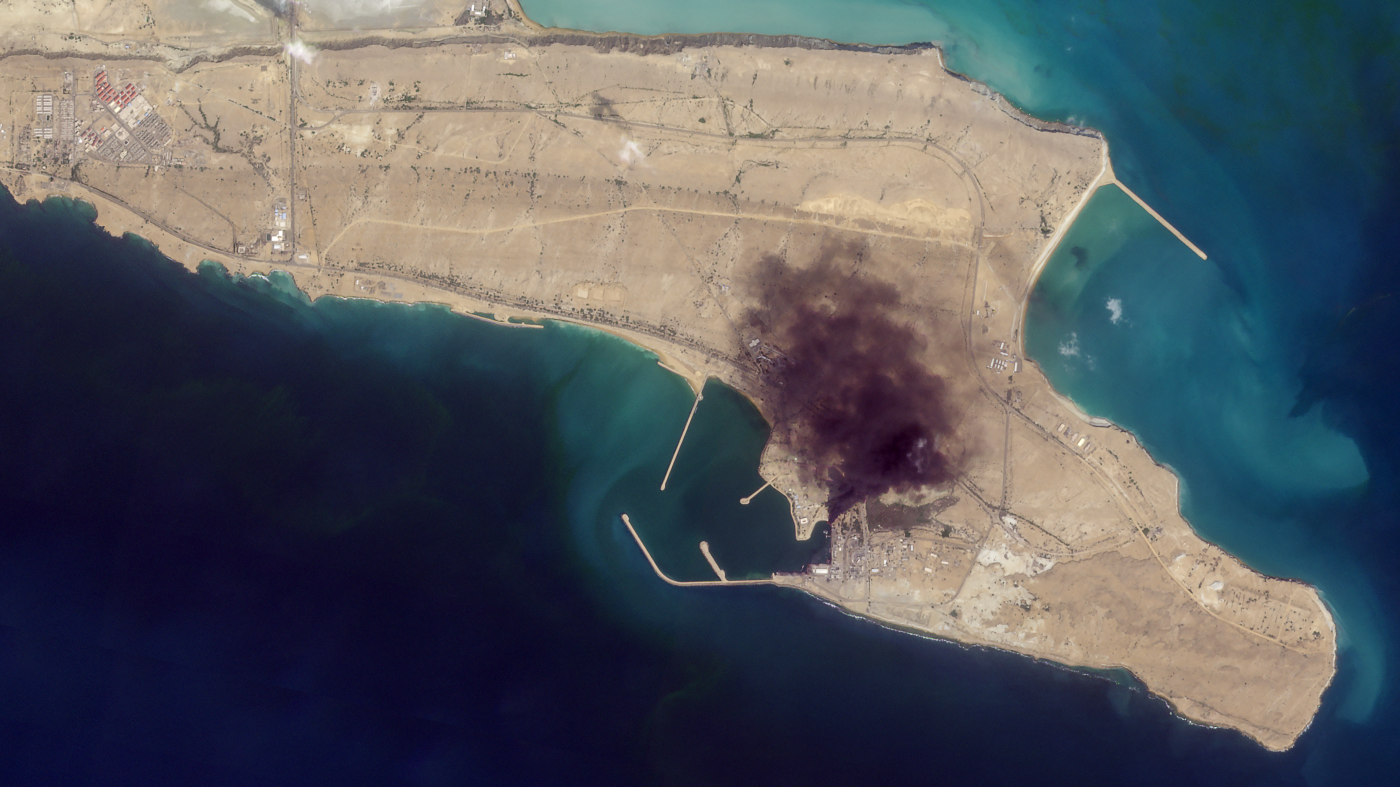
Smoke rises over Konarak naval base in southern Iran on Sunday. The base was one of hundreds of targets of U.S. and Israeli forces throughout the country.
Planet Labs PBC
Following the initial strike in Tehran, military actions have expanded across Iran, with reports of numerous bases being hit. In retaliation, Iran has launched its own attacks across the Middle East.
Targeting Iran’s naval capabilities, U.S. forces have reportedly struck several Iranian vessels. Former President Trump mentioned on his social media platform that nine ships were sunk, though official confirmation is pending. U.S. Central Command has acknowledged hitting a warship in port.

An image captured on Saturday shows a ship burning at Iran’s naval base at Konarak.
Satellite image ©2026 Vantor
Satellite imagery has been crucial in revealing the extent of the damage at various military sites in Iran. At Konarak, both naval and air facilities have been visibly damaged. The precision of the strikes is evident in the destruction of hardened aircraft shelters.
Iran has responded with missile and drone attacks across the region, targeting locations in Israel and U.S. bases in Bahrain, Kuwait, and Qatar. While many drones have been intercepted, some have caused damage, including an incident involving the iconic Burj Al Arab in Dubai.
Meanwhile, Iran’s long-range missile capabilities remain a concern. Imagery from northern Iran shows that some underground tunnels, housing these missiles, have been hit.
Following the death of Ayatollah Khamenei, a 40-day period of mourning has been declared, with large gatherings observed in Tehran. In response to these developments, Iranian officials have vowed to resist “foreign aggression,” while the U.S. maintains its strategic operations in the region.

A large crowd of mourners fill Enghelab Square in Tehran on Sunday, following the death of Iran’s Supreme Leader Ayatollah Ali Khamenei, who was killed in an Israeli airstrike.
Satellite image ©2026 Vantor