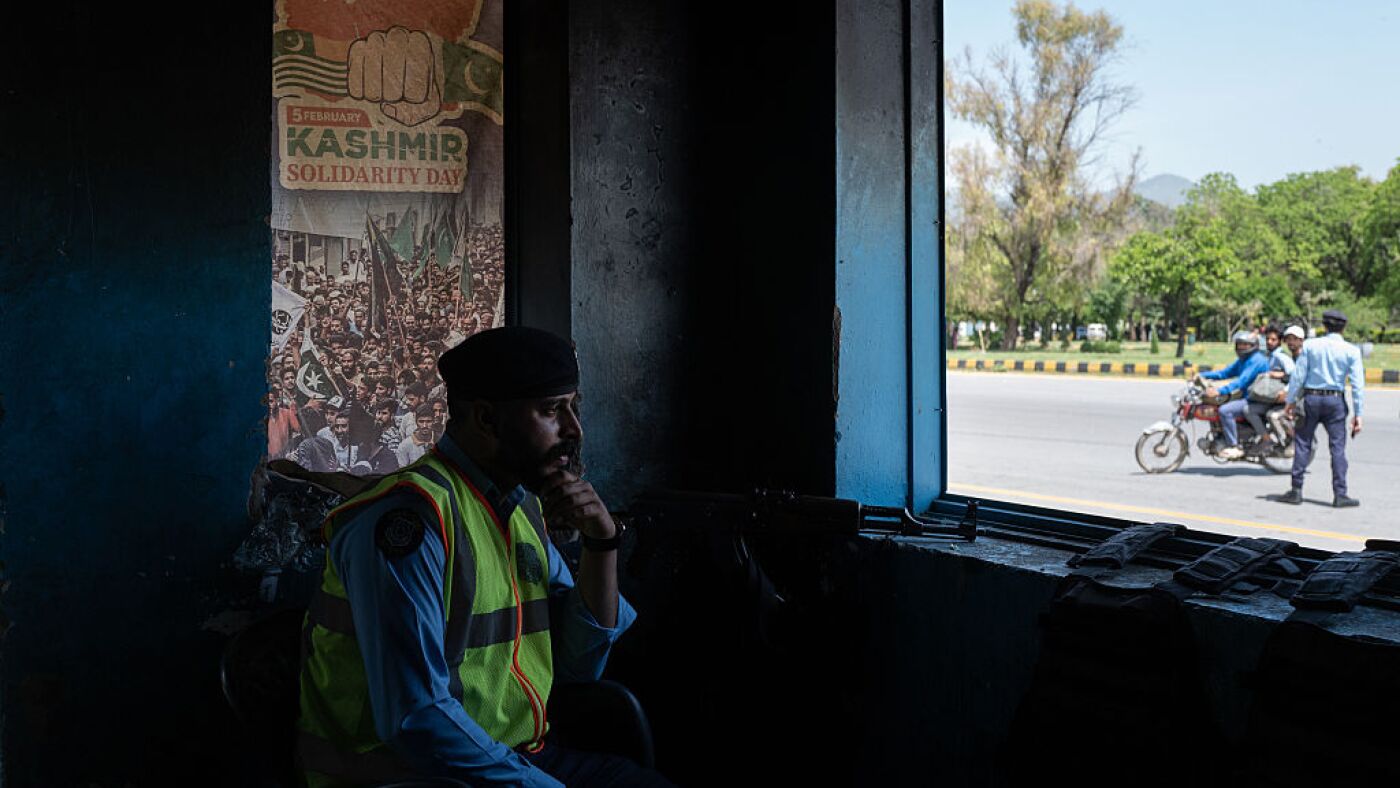
A member of Pakistani security personnel looks over a checkpoint from a police booth amid heightened security ahead of a potential meeting between U.S. and Iranian officials on April 20, 2026 in Islamabad, Pakistan. Rebecca Conway/Getty Images
With anticipation building, Vice President Vance is set to visit Islamabad for a second round of peace talks with Iran, as the countdown begins on a two-week ceasefire set to expire this Wednesday.
However, the situation remains uncertain. Iranian state media reported no current plans for an Iranian delegation to head to Islamabad, and President Trump deemed the extension of the truce as “highly unlikely” during a Bloomberg News interview.
Iran’s chief negotiator, Mohammad Bagher Qalibaf, criticized the U.S. on Monday night for pressuring Iran into talks, suggesting that Iran is ready to “reveal new cards on the battlefield.” He stated on social media, “We do not accept negotiations under the shadow of threats.”

Representatives from more than a dozen foreign diplomatic missions, United Nations offices, and the media view damage at sites previously targeted by US-Israeli strikes, on April 20, 2026 in Tehran, Iran. Majid Saeedi/Getty Images Europe
Islamabad remains ready to host the talks, yet Pakistan has not offered any updates on its mediation role. The first discussions in Islamabad a week ago ended without consensus, with Vice President Vance attributing the breakdown to Iran’s stance on nuclear enrichment.
The U.S. Perspective on Negotiations
For the United States, ensuring the Strait of Hormuz remains open and addressing Iran’s nuclear ambitions are key concerns. The Trump administration aims to restore commercial shipping through the strait, which sees about 20% of global crude oil and natural gas trade.
Iran’s control over the strait, including toll collection, has influenced global markets, causing the national average gas price to surge above $4 per gallon, according to AAA.
The U.S. also demands restrictions on Iran’s nuclear program, with President Trump asserting that Iran “will not have a nuclear weapon” in a recent radio interview. “They’re going to negotiate,” he stated, adding that failing to do so would lead to unprecedented consequences for Iran.

A commercial vessel is seen off the coast of Dubai on April 20, 2026. AFP via Getty Images
Iran’s Conditions for Ceasefire Extension
Iran’s demands include ending the U.S. blockade of its ports and securing assurances that hostilities between Israel and Hezbollah will not resume. A ceasefire between Israel and Lebanon, including Hezbollah, remains in place, temporarily halting the fighting.

Mourners carry the flag-draped caskets of members of the Iran-backed militant group Hezbollah who were killed in southern Lebanon during their funeral in the Kafaat area in Beirut’s southern suburbs on April 20, 2026. Fadel Itani/AFP via Getty Images
Previously, Iran demanded that Israel halt its attacks on Hezbollah before engaging in further negotiations with the U.S. Despite this, Israel has maintained its military presence in southern Lebanon, while Hezbollah asserts the Lebanese people’s “right to resist” Israeli forces.
In the conflict between Israel and Hezbollah that erupted after the war with Iran began, significant casualties have occurred. Israeli airstrikes and ground operations in Lebanon have resulted in over 2,100 deaths and displaced more than 1 million people there.
The U.S. blockade on Iranian ports remains a sticking point, with Iran insisting on its removal as a precondition for continued talks. The blockade, intended to pressure Iran into reopening the Strait of Hormuz and ending the conflict, has led to the U.S. Navy turning back 27 ships since its implementation.
Iran briefly reopened the Strait of Hormuz before closing it again, demanding financial relief, including access to $6 billion in frozen assets, as part of any negotiation process.
Reporting assistance from Rebecca Rosman in London.
This article was originally written by www.npr.org