
Utah’s Political Landscape Shifts: Democratic Race Heats Up in Newly Redrawn District
Utah’s political landscape is witnessing a historic shift as the state’s first safe Democratic congressional seat emerges, poised to potentially sway the balance of power in Congress. This unprecedented situation stems from a mid-decade redistricting, the outcome of a prolonged legal struggle against partisan gerrymandering, which led to the redrawing of Utah’s four congressional districts.
The newly defined 1st Congressional District, labeled as leaning +12 points Democratic by the Cook Political Report, is centered around Salt Lake City and its Democratic-leaning suburbs. This development has sparked enthusiasm within the Utah Democratic Party, revitalizing local political engagement.
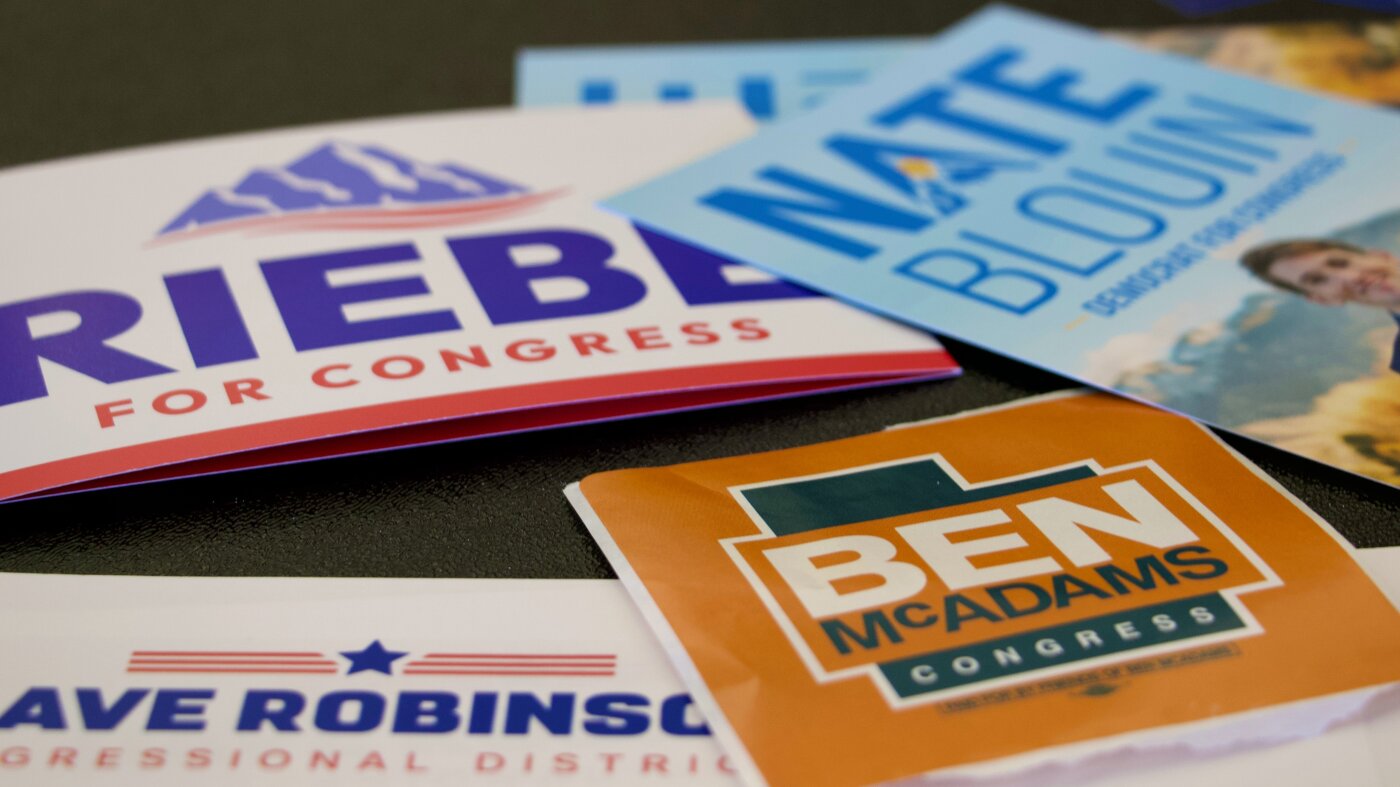
With the upcoming primaries, Utah is experiencing one of its most competitive Democratic races. Voters face a choice among four distinct Democratic candidates, representing a spectrum from moderate to progressive ideologies.
“Democrats are the odds on favorites to win this district. The question has shifted from can a Democrat win to the question of which Democrat will win,” stated Damon Cann, a political science professor at Utah State University. The leading contenders include state Sen. Nate Blouin, former Rep. Ben McAdams, and political newcomer Liban Mohamed, who each bring unique perspectives to the race.
National Implications of Utah’s Race
The new district presents a significant opportunity for Utah Democrats in a tightly contested Congress. Brian King, chair of the Utah Democratic Party, emphasized the potential impact: “We have the ability to add to the body and the Democrats in the House of Representatives in a way that may swing that chamber back to Democratic control.”
This shift comes at a time when excitement for the national Democratic party is waning, but Utah’s Democratic base sees an opportunity to influence national strategies. King argues that Utah exemplifies why the national party should invest in flipping red states, not just focusing on battleground areas.
Democratic Factions and Candidate Profiles
Former Rep. Ben McAdams, known for winning tough elections, is considered the moderate choice, appealing to independents and some Republicans. He describes himself as a “pragmatic” Democrat focused on coalition-building to address complex issues.
State Sen. Nate Blouin, endorsed by Sen. Bernie Sanders, presents a progressive agenda, advocating for affordable housing and Medicare for all. Despite past controversies, he remains a vocal critic of conservative policies.
Liban Mohamed, a political newcomer and son of Somali immigrants, gained significant momentum after winning a majority at the Utah Democratic convention. His platform emphasizes education, healthcare affordability, and working-class concerns, identifying with progressive and Democratic Socialist ideals.
The fourth candidate, tax attorney Michael Farrell, also represents a progressive stance in the race.
Potential Outcomes and Lessons for the Democratic Party
The primary election outcome could influence the direction of Democratic strategies nationwide. If progressive candidates Blouin and Mohamed secure a combined majority, it might signal a shift towards more progressive policies.
Cann suggests, “It would be wise for future candidates to read this as a matter of a majority of the district looking for a more progressive option.” The election illustrates the diverse interpretations of Democratic values in the U.S. and may guide the national party’s future tone and priorities.
In Utah, the 1st Congressional District’s race presents a choice for Democrats: to maintain strong policy stances or to pursue bipartisan cooperation. This decision echoes the broader debate within the party across the nation.




