Ad Spending Surges as Midterm Elections Approach
With the 2026 midterm elections just days away, the strategic allocation of ad spending is painting a vivid picture of the political landscape. The focus of the electoral battle is shifting from preventing a Democratic surge in the House to gauging its potential magnitude.
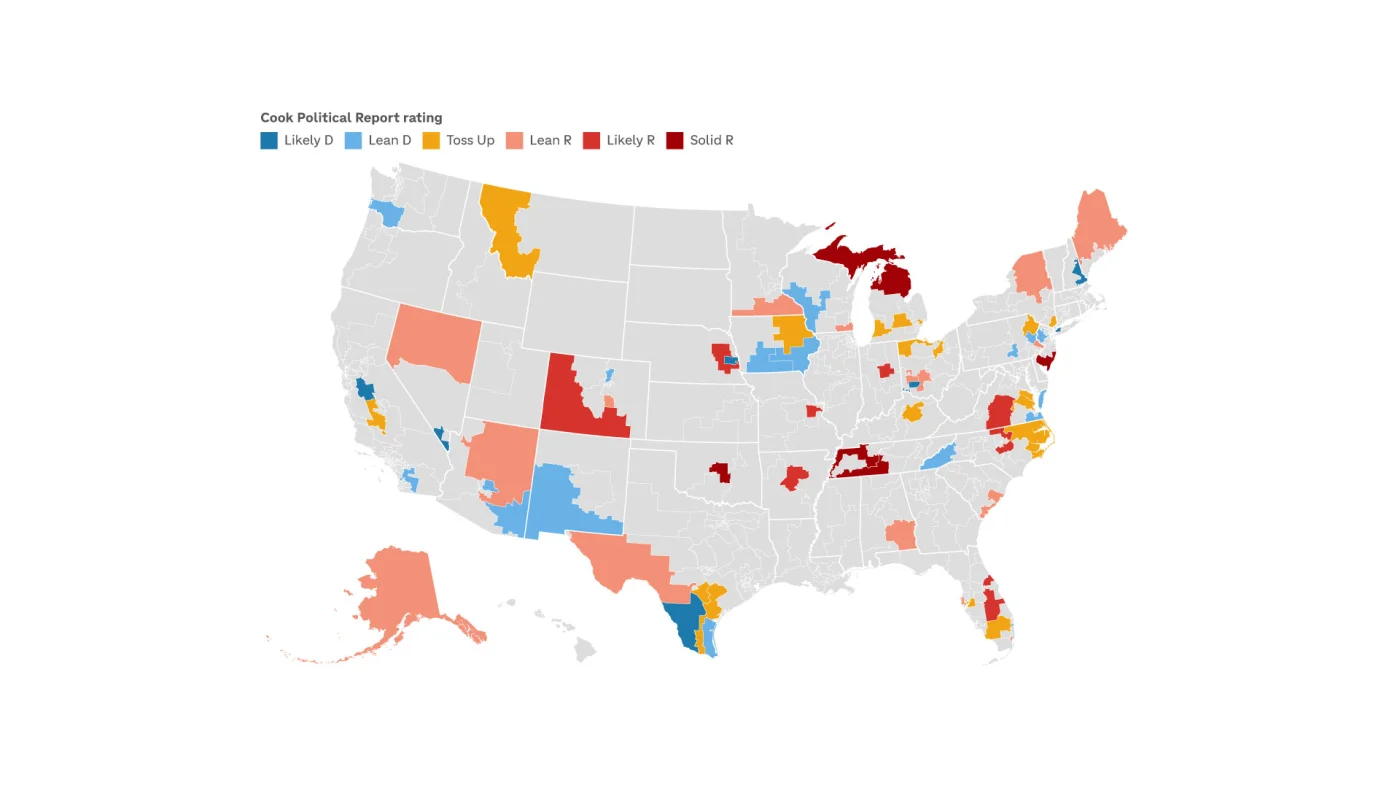
According to an NPR analysis, there are currently 70 House districts where both parties are heavily investing, indicating a broad, competitive field. In these districts, campaign spending has reached six figures as each party races to deliver their message in the final days.
Particularly notable investments exceeding $10 million are being funneled into key swing districts in Michigan, North Carolina, New York, and Florida. Meanwhile, significant ad buys are also taking place in traditionally Republican areas in Tennessee, Oklahoma, and Arkansas, as well as in regions affected by Republican-led gerrymandering efforts that may not yield the expected results.
Despite a political climate generally unfavorable to the ruling party, the Democrats appear poised to gain control of the House, where Republicans currently hold a slim 218-214 seat majority. The Cook Political Report indicates Democrats are favored in 220 seats, with 17 considered “toss-ups” and an additional 30 leaning Republican.
Competitive Races on the Horizon
The Democratic Party is gaining ground in districts that saw close margins during the 2024 presidential cycle, particularly in areas that previously voted for one party’s presidential candidate and the opposing party’s House nominee. This includes districts represented by Democratic Reps. Adam Gray (CA-13), Nellie Pou (NJ-09), and Marie Gluesenkamp-Perez (WA-03), as well as retiring Republican Rep. Don Bacon (NE-02).
Recent weeks have seen a decrease in Republican ad spending in these districts, as reported by AdImpact data. The latest NPR/PBS News/Marist poll gives Democrats a 10-point lead among registered voters and an 8-point lead with likely voters on the generic congressional ballot, suggesting a wider range of competitive districts beyond what is visible on paper.
Voter concerns are primarily centered on cost of living issues, exacerbated by rising gas prices, tariffs, and the ongoing conflict in Iran. Additionally, there has been a surge in Congressional retirement announcements, which, coupled with an anti-incumbency sentiment in primaries, further complicates the electoral map.
Redistricting efforts following a Supreme Court decision that reduced elements of the Voting Rights Act have added another layer of complexity. Republicans have redrawn boundaries to introduce more conservative voters into districts held by Democratic Reps. Marcy Kaptur (OH-09), Don Davis (NC-01), Shomari Figures (AL-02), and Darren Soto (FL-09). Conversely, Democrats have made similar changes in California for seats held by Republican Reps. James Gallagher (CA-01), David Valadao (CA-22), Ken Calvert (CA-41), Darrell Issa (CA-48), and independent Kevin Kiley (CA-06).
Significant Investment in Key Districts
As early voting continues, both Democrats and Republicans are making substantial last-minute investments in numerous races to influence outcomes. Notable spending includes over $12 million in Michigan’s 7th District and North Carolina’s 1st District, as well as significant sums in various Florida and New York districts.
Efforts are also being directed towards districts redrawn to reduce Democratic influence, such as Alabama’s 2nd District and Tennessee’s 9th District, and areas where Trump secured a strong lead in 2024, like Kentucky’s 6th District and Arkansas’ 2nd District.
Overall, the 70 races receiving substantial ad spending from both parties leaned towards Trump by an average of 9 points in the previous election cycle. Sixty of these districts are prioritized by Democratic and Republican House campaign arms, showcasing the impact of the Trump administration’s declining voter approval.
However, not all races are anticipated to be closely contested or result in a shift of power. Many of the Democratic Congressional Campaign Committee’s “Districts In Play” recorded high support for Trump in 2024, with little subsequent ad investment from either party.