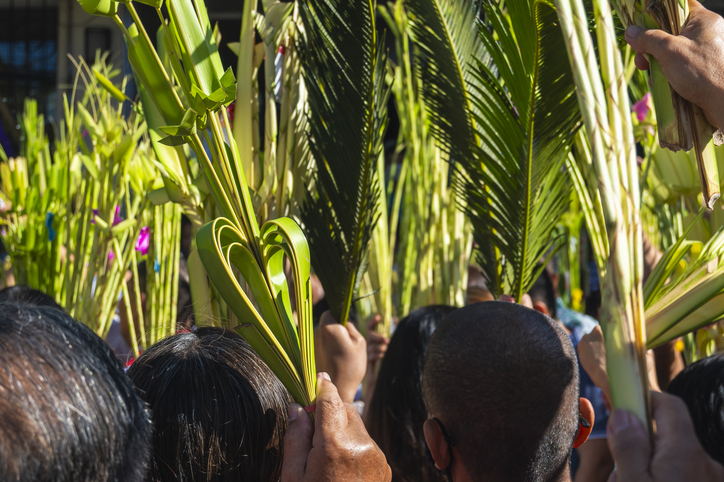
As March 29 approaches, marking the celebration of Palm Sunday in 2026, many Christians will commemorate an event deeply rooted in both religious tradition and historical narrative. This day, which heralds the beginning of Holy Week, reflects a pivotal moment in the life of Jesus Christ, intertwined with echoes of a Jewish historical struggle.
Palm Sunday: A Triumphal Entry
Palm Sunday, a significant event in the Christian liturgical calendar, marks the sixth Sunday of Lent. This day is celebrated by recounting Jesus’ triumphal entry into Jerusalem, a story recorded across all four Gospels (Matthew 21:1-11, Mark 11:1-11, Luke 19:28-44, and John 12:12-19). As Jesus entered the city, he was met with throngs of people laying palm branches and cloaks on the road, a gesture of honor and messianic hope. The crowd’s cries of “hosanna” echoed Psalms and recalled moments of Jewish liberation under figures like David and Solomon, fulfilling prophecies such as Zechariah 9:9.
Historical Parallels: The Maccabean Revolt
Understanding Palm Sunday requires looking back nearly 200 years before Christ, to a time when Jewish identity was under siege by the Seleucid Empire. King Antiochus IV Epiphanes sought to impose Greek customs, banning Jewish practices such as circumcision and Sabbath observance. This cultural assault led to the rise of the Maccabees, a group determined to reclaim their religious freedom. Led by Mattathias and his sons, this movement successfully resisted Seleucid oppression, restoring the Temple and establishing the annual celebration known today as Hanukkah.
The Symbolism of Palm Branches
The use of palm branches as a symbol of Jewish national independence gained prominence following the Maccabean victory. This imagery persisted into the time of Jesus, where it was employed by the people as a sign of their messianic hopes, hoping for liberation from Roman rule.
Significance in the Gospel of John
In the New Testament, the Gospel of John uniquely ties Jesus’ activities to the Jewish Feast of Dedication, or Hanukkah (John 10:22-23). This connection, along with John’s specific mention of palm branches during Jesus’ entry into Jerusalem (John 12:12-13), highlights the historical resonance of these symbols. Furthermore, John’s Revelation describes a vision of heaven where multitudes hold palm branches, symbolically linking past, present, and future redemption (Rev 7:9).
Understanding the Context
Despite its significance, the story of the Maccabees is often overlooked in modern Christianity, as these accounts are found in the Apocrypha, not included in all Bible editions. Recognizing this history provides a richer understanding of Palm Sunday, revealing layers of meaning within Jesus’ actions and the anticipation of a messianic deliverer.
This article was originally written by www.christiantoday.com