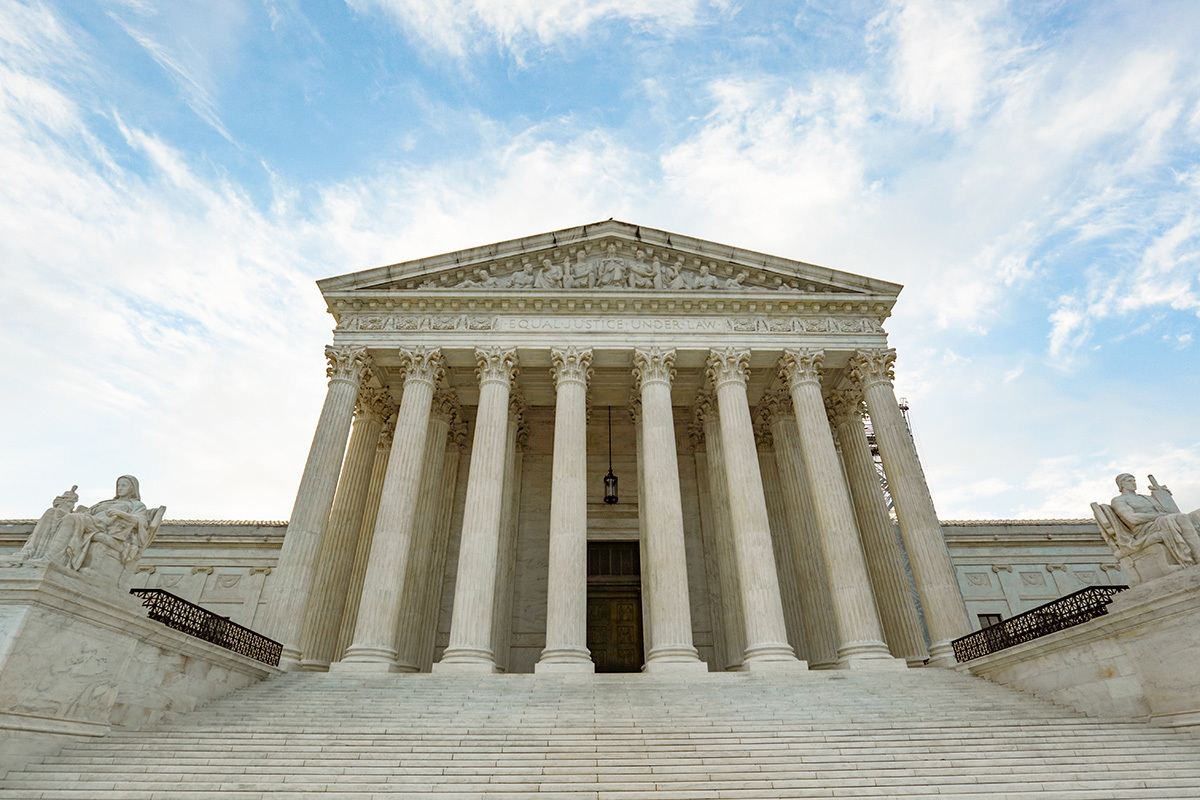
Supreme Court Sides with Pro-Life Center on Donor Privacy
The U.S. Supreme Court has reached a unanimous decision, ruling against New Jersey’s attempt to mandate that a pro-life pregnancy care center reveal its private donor information, marking a significant victory for First Amendment rights.
In the case of First Choice Women’s Resource Centers, Inc. v. Matthew J. Platkin, Attorney General of New Jersey, the Court’s decision, delivered on Wednesday morning, asserts the primacy of associational rights under the First Amendment. Read more about the decision here.
Justice Neil Gorsuch, writing for the Court in a 9-0 opinion, emphasized that the issue at hand is the continuation of First Choice’s federal lawsuit, rather than the lawsuit’s merits. He noted, “First Choice has established that the Attorney General’s demand for private donor information injures the group’s First Amendment associational rights.”
The opinion further stated, “An official demand for private donor information is enough to discourage reasonable individuals from associating with a group. It is enough to discourage groups from expressing dissident views.” Gorsuch highlighted a historical context, noting that similar demands have been consistently struck down by the Court since the 1950s.
New Jersey Attorney General Matthew Platkin had issued a subpoena in November 2023 seeking donor lists and private communications from First Choice, under the assertion that the center might be violating the New Jersey Consumer Fraud Act. Platkin, alongside 15 other Democratic attorneys general, accused pro-life centers of spreading “misinformation and harm.” Details of the subpoena can be found here.
In response, First Choice filed a lawsuit, claiming the subpoena was overly broad and unconstitutional. Despite the U.S. District Court dismissing the case as “not ripe,” the Third Circuit Court of Appeals later rejected First Choice’s emergency request to block the subpoena. The Supreme Court’s recent decision overturns these lower court rulings and sends the case back for further proceedings.
During oral arguments, Justice Clarence Thomas questioned the foundation of the state’s concerns, asking if there were specific complaints against First Choice’s fundraising activities. Sundeep Iyer, New Jersey Chief Counsel, acknowledged the absence of complaints but defended the state’s proactive investigation stance. See the oral arguments here.
This article was originally written by www.christianpost.com