Oxford Doctor Advocates for Thoughtful Abortion Debate
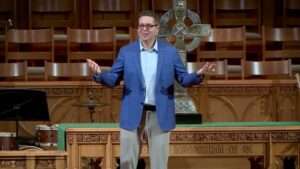
In a call for more considered discourse, an Oxford-educated doctor and philosopher has emphasized a need for Christians to engage more deeply with the abortion debate, moving beyond simplistic slogans and emotional responses. Dr. Calum Miller, an Oxford research fellow, shared his perspectives during a conversation on the Evangelical 360 podcast, urging for a focus on scientific, ethical, and philosophical inquiries.
Dr. Miller’s conversation with podcast host Brian Stiller delved into complex issues such as the commencement of human life, personhood, and the intersection of faith with ethical beliefs. He recounted how his pro-life stance was solidified during his medical studies at Oxford.
“I saw what the baby looks like in the womb,” Dr. Miller remarked. “I saw that it is a human life, that life begins at conception. This is just a scientific fact. I then saw what abortion does … it’s not just a simple procedure to remove a piece of tissue, it’s the taking of a human life.”
Dr. Miller’s position is grounded more in scientific and philosophical thought rather than religious doctrine. He champions the idea of human equality, proposing that worth is intrinsic to being human, rather than being based on abilities, traits, or developmental stages.
He posed the question, “Are all human beings equal? Because if all human beings are equal and life begins at conception, then we have to say that that baby in the womb is also equal.”
Dr. Miller’s advocacy extends to supporting families and parents, highlighting the vulnerability of unborn children: “Who could be more vulnerable than a voiceless, powerless baby that is totally at the mercy of somebody else?”
He draws on biblical references and early Christian teachings, citing Psalm 139 and the Didache, as part of Christianity’s historic valuation of life before birth. Moreover, he stresses the importance of family, noting the benefits to children when families remain intact.
During the podcast, Dr. Miller identified three main arguments supporting abortion rights: the belief that an unborn child is not fully human, the notion of bodily autonomy, and legal or political considerations that override moral objections. He acknowledged, however, that personal experiences often shape people’s views more than abstract arguments.
He emphasized the necessity for empathy, especially when addressing sensitive issues such as pregnancies resulting from rape, advising Christians to approach such discussions with understanding rather than detachment.
Dr. Miller also discussed the role of faith in public life, advocating for Christians to engage in societal debates using medical, human rights, and ethical reasoning accessible beyond religious communities. He underscored the historical influence of Christian values in shaping Western societies.
He asserted, “If we believe in a democracy where everyone has an opinion and should have their opinion taken into account, you have to take religion into account because that’s what most people feel is important to them.”
According to Dr. Miller, the political arena should be viewed as a platform for Christian witness and love for one’s neighbor. He noted a shift in attitudes among younger generations in the UK, with many under 30 becoming more pro-life, potentially reflecting a broader skepticism towards secular progressivism.
He observed that societal issues such as loneliness, anxiety, and family breakdown are prompting some to reconsider the foundational values of faith and family. “Christians need to be there ready with the arguments done in a truthful and gracious way,” he stated, advocating for churches and pro-life groups to offer community and support.
Dr. Miller also expressed concern about external pressures on developing nations, particularly in sub-Saharan Africa, to adopt liberal abortion laws, highlighting the role of Western governments and international organizations in tying aid to such policies.
This article was originally written by www.christiantoday.com