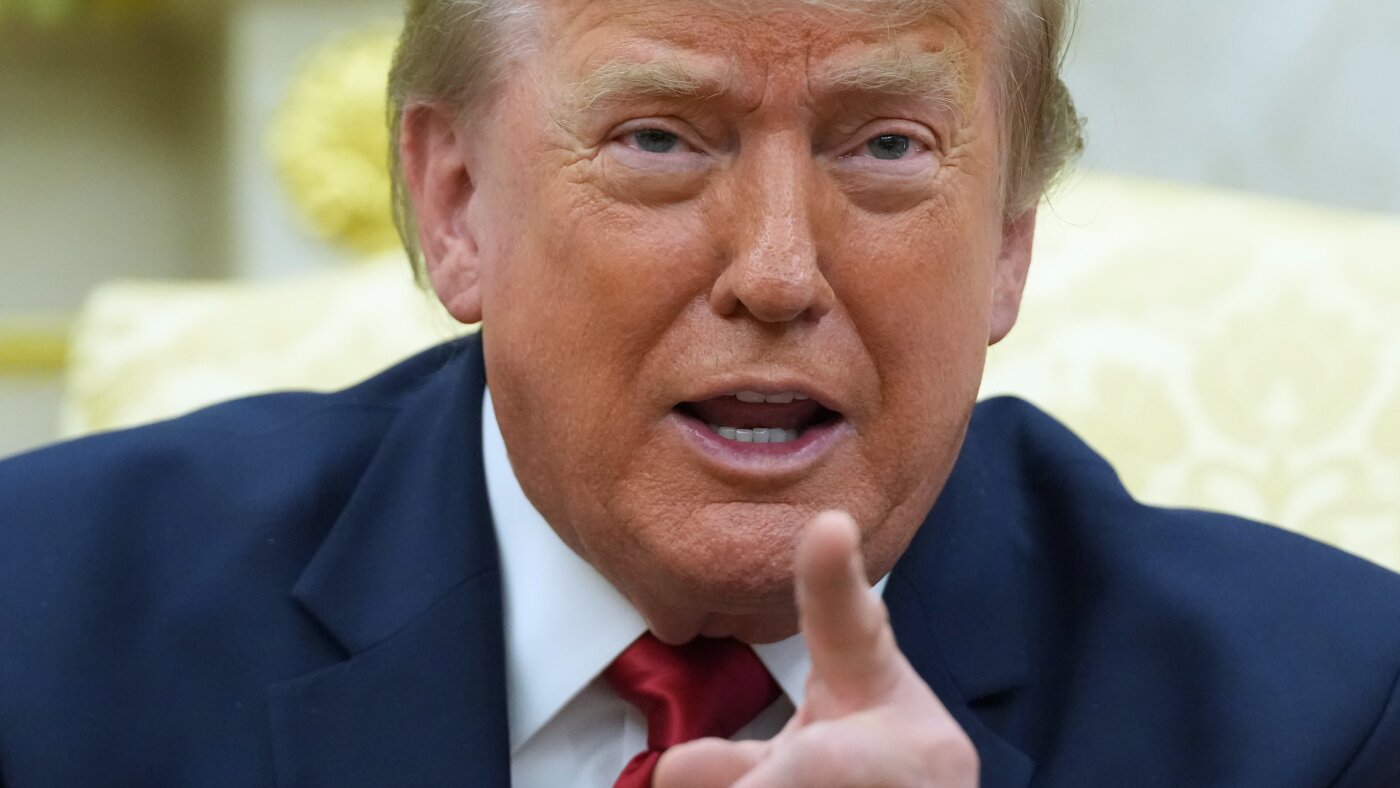
President Trump’s Upcoming Primetime Address: Focus on Elections and More
Amidst a backdrop of ongoing political tension, President Donald Trump is set to deliver a highly anticipated primetime address this Thursday. The speech, scheduled for 9 p.m., is expected to revolve around elections, potentially revisiting the disputed narratives of his 2020 election defeat to Joe Biden.
Trump’s upcoming address is part of a broader effort to push for more stringent voting laws ahead of the midterm elections. The President has been vocal about his desire for Republicans to enact tighter federal voting regulations. Despite the anticipation, Trump has remained tight-lipped about the specifics of his speech, teasing, “It doesn’t get bigger, because without free and fair elections, you don’t have a country.”
The timing of this address is critical as Trump faces domestic challenges, including a faltering deal to end the conflict with Iran and recent incidents involving Immigration and Customs Enforcement officers. “It’s going to be a very big announcement,” Trump hinted, though he refrained from revealing details.
This isn’t the first time Trump has utilized a primetime address to make political statements. In December, he attributed economic difficulties to Democrats. The forthcoming speech is anticipated to extend these themes, potentially amplifying election-related narratives to sway Republican prospects in the upcoming midterms.
Recently, Trump reiterated unsubstantiated claims of election fraud in the Los Angeles mayoral primary. He alleged that Spencer Pratt, a Republican, lost due to fraudulent activities, citing California’s slow vote count as evidence. Federal prosecutors have since initiated investigations into these claims.
Election Fraud Allegations Persist
Trump’s focus on election integrity traces back to his 2016 campaign against Hillary Clinton. Although he won, he alleged widespread voter fraud and formed a voting integrity commission, which failed to find substantial evidence before disbanding.
After his 2020 loss to Biden, Trump fixated on Georgia’s results, pressuring officials to “find 11,780 votes” to overturn the outcome. Although charges related to this were later dropped, his claims spurred multiple audits, which found no significant fraud.
Returning to power in 2024, Trump prioritized voting regulation, advocating for voter ID laws and restrictions on mail-in voting. This agenda remains central as midterm elections approach, with Trump continuing to cast doubts on election outcomes.
Georgia and Beyond: The Focus on Mail-In Voting
Earlier this year, FBI agents searched election offices in Georgia, seizing 2020 election materials. Tulsi Gabbard, Trump’s director of national intelligence, oversaw the search. Meanwhile, Maryland Gov. Wes Moore, campaigning for Democrats in Georgia, criticized Trump’s focus on past elections, describing it as a “strategy for losers.”
Trump has also targeted states allowing mail-in voting, contacting a U.S. attorney in California to scrutinize the governor’s primary as votes were counted. Additionally, he recently removed members of the federal Election Assistance Commission, which had opposed his citizenship documentation requirements for voter registration.
As the nation awaits Trump’s address, the anticipation centers on how these election-related themes will be further developed and what impact they might have on the political landscape.