A New Generation Takes on AI Policy for Schools
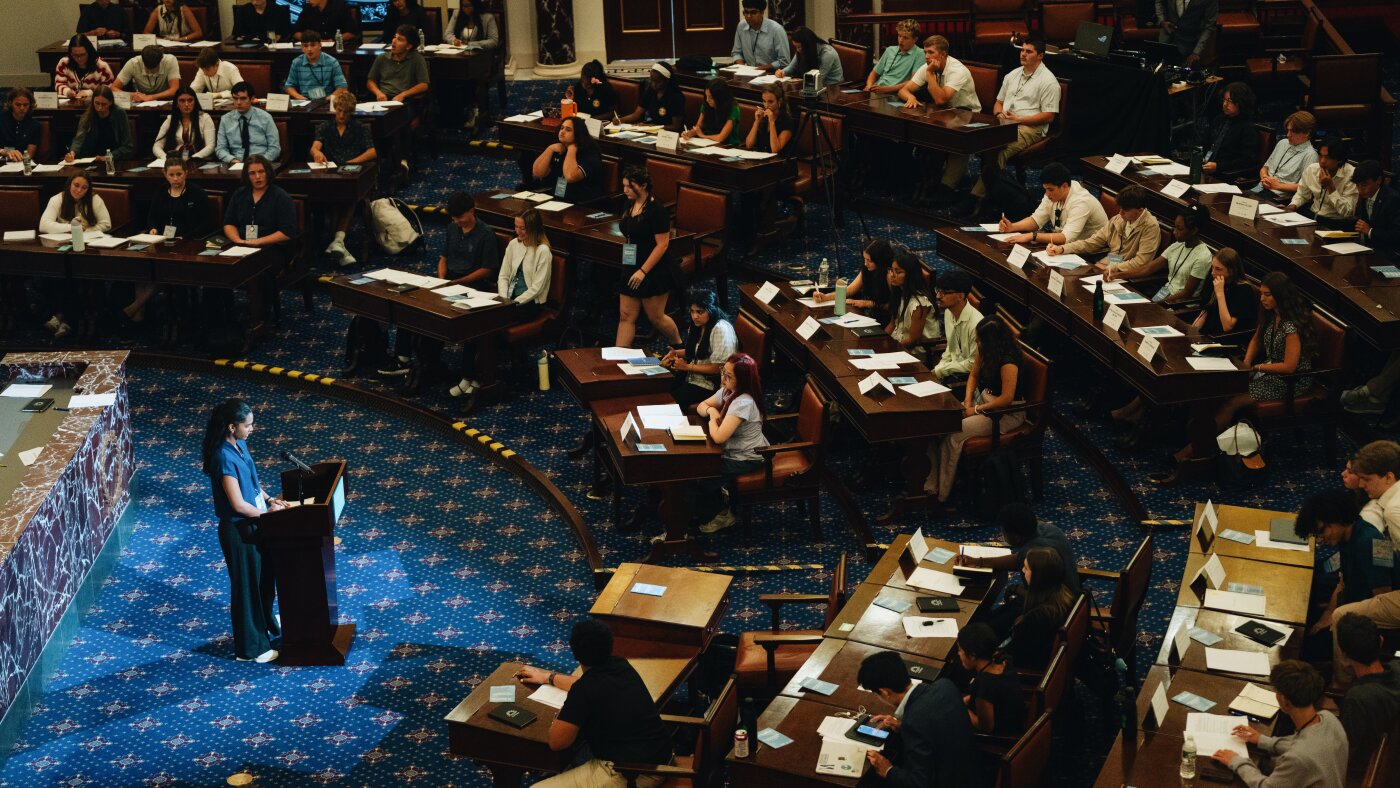
At a pivotal gathering in Boston, 98 high school students from across the United States stepped into a replica of the U.S. Senate chamber to tackle an issue that has perplexed policymakers: the role of artificial intelligence in education. This ambitious endeavor aimed to create a framework for AI use in K-12 schools, a task that has eluded the adult Congress.
The questions were profound: Should AI be allowed in student assignments or exams? Is it the responsibility of schools to educate students about AI? With no national guidelines in place, schools have been left to create their own policies on AI usage.
Representing South Carolina, student Gabriel Sutphin remarked, “This is a once-in-a-lifetime opportunity for us to actually help and try to change the country for the better.”
Teen Senators Tackle AI Challenges
During this spirited weekend, the students, selected by their schools and supported by educational organizations such as the Edward M. Kennedy Institute and Day of AI, engaged in negotiations and debates. Despite initial setbacks, their collaborative efforts led to the passage of the Students First Act, with an overwhelming 82-16 vote.
The act outlines several key provisions: AI literacy should be taught alongside the introduction of classroom devices, AI is banned in graded assessments, and students must defend their work if suspected of AI misuse. The full text of the bill can be accessed here.
Jeffrey Riley from Day of AI emphasized the significance of the students’ leadership, stating, “The adults themselves haven’t been able to come to consensus on this, right? And so now it falls to the kids. Let them lead the way.”
Provisions and Debates
Among the bill’s student-focused rules are guidelines on AI usage: AI can aid in brainstorming and study activities post-eighth grade, but not in writing assignments. Students must cite AI usage and demonstrate understanding via discussions or tests.
The debate on when to introduce AI education was intense. Lucia Herrera from Missouri advocated for proficiency before usage, leading to a proposal for early AI literacy education covering misinformation, plagiarism, and other key topics.
Another heated discussion revolved around AI’s role in emotional support. While some students feared privacy breaches, others, like Dylan Dornack from Iowa, argued for human intervention in potential crises, stating, “This could be lifesaving.”
Broader Impact and Future Steps
The Students First Act also addresses educators’ AI use, requiring clear policies each semester. It suggests, rather than mandates, parental guidance on AI usage, acknowledging the complexity of legislating parenting practices.
Despite differing opinions, the students’ efforts culminated in a unified bill sent to AASA’s 10,000 school leaders for consideration in their own AI policy-making processes.
Kendall Terao-Toma of Hawaii captured the mood, saying, “This is for our future — not just for education but for the workforce we will join, the economy that we will build and the communities we will lead.”
Edited by: Nirvi Shah and Nicole Cohen; audio story produced by: Lauren Migaki
Visual design and development by: LA Johnson