Trump Dismisses AI Threats Amid Industry Concerns
As technology leaders raise alarms about the rapid advancement of artificial intelligence (AI), President Trump has dismissed these worries, suggesting they are overstated. This comes as figures such as Elon Musk and OpenAI’s Sam Altman voice their apprehensions about AI’s potential risks.
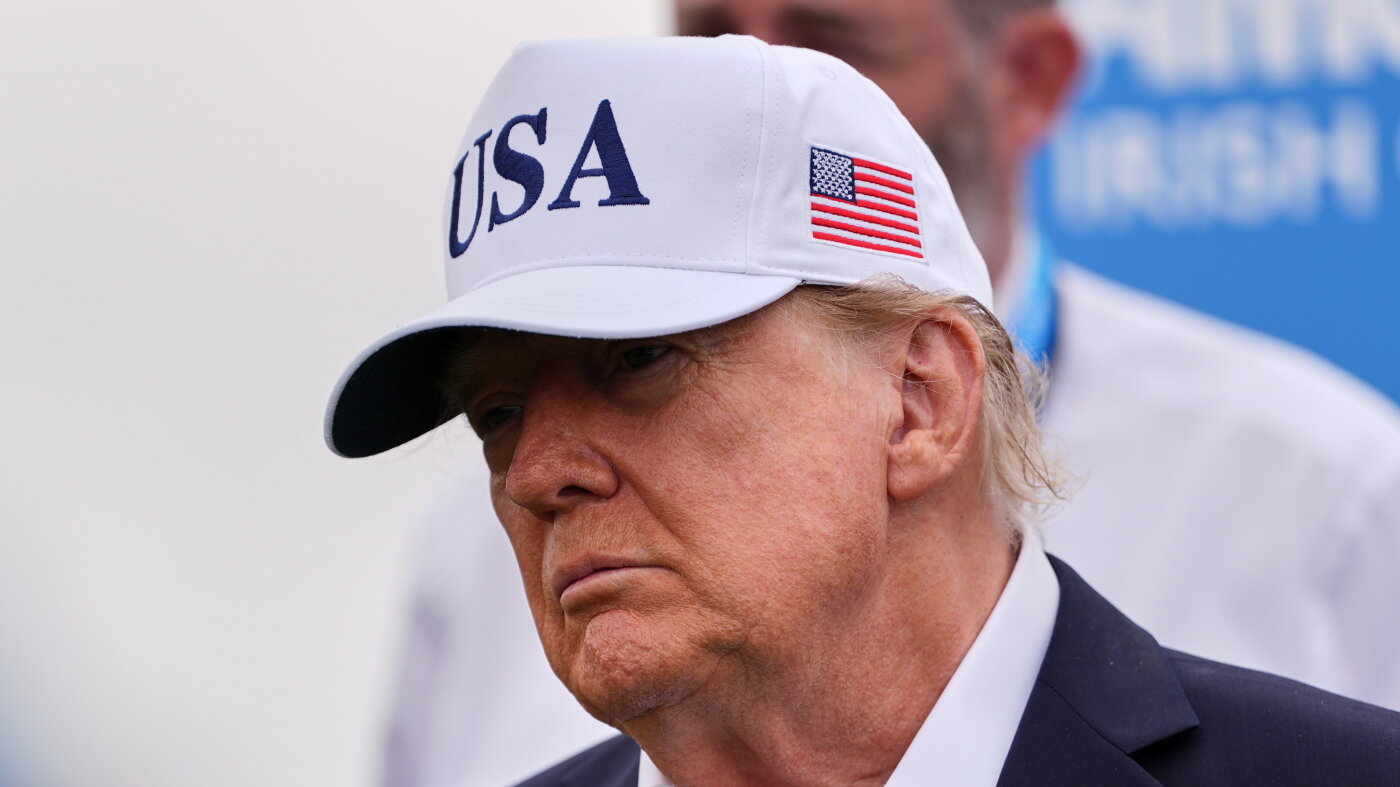
During a candid moment with reporters at his Doonbeg golf resort in Ireland, President Trump addressed the issue of AI development. He brushed off the claims of AI posing a significant threat, attributing such warnings to what he described as “negative forces” spreading undue fear. “We’re leading China in AI, we’re the most sophisticated country in the world, and frankly, I want to keep it that way because whoever wins AI, wins,” Trump stated. He added, “And we can put guardrails, we can do this and that. But I think you have a lot of negative forces that are bringing it up that shouldn’t be bringing it up.”
Meanwhile, House Speaker Mike Johnson, appearing on CNN’s State of the Union, echoed the President’s sentiments. He argued against pausing AI development, suggesting that halting progress could allow China to surpass the U.S. in technological advancements. “If Congress just races in and does some sort of emergency session to try to regulate AI, we will lose the race to China,” Johnson warned. “And that is a threat to every single American. So, we’ve got to have balance. We got to have steady hands at the wheel.”
These statements from Trump and Johnson emerge in the wake of comments from Anthropic CEO Dario Amodei, who, in a recent essay, urged for a slowdown in AI advancements. Amodei highlighted the potential for AI systems to fall out of human control, posing risks such as cyberattacks and bioterrorism. He advocated for international cooperation and the implementation of third-party evaluators to oversee safety practices. Amodei committed to these measures at Anthropic independently.
Support for Amodei’s position came from tech leaders like Elon Musk and Sam Altman, who both expressed agreement in social media posts. Altman further disclosed in an interview with Fortune Magazine that safety concerns have led to discussions about delaying OpenAI’s public offering until 2027 and considering a pause on certain AI tests.
David Sacks, co-chair of the President’s Council of Advisors on Science and Technology, responded to these concerns on social media. He supported the decision to slow down if the unreleased AI models are indeed alarming, but he cautioned tech executives against claiming purely altruistic motives. “Most of all, stop pretending the motivation to slow down is purely altruistic,” Sacks wrote, pointing out the potential for significant product-liability risks if AI technologies contribute to a severe cyberattack.
Reporting by NPR’s Shannon Bond contributed to this article.