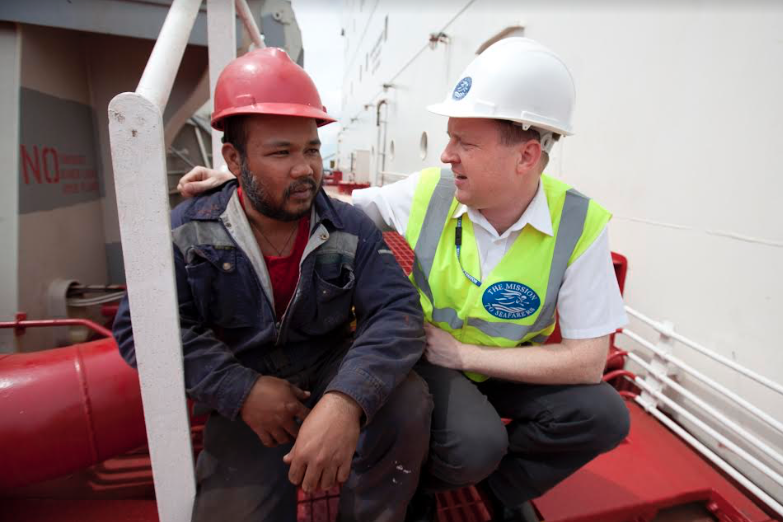
Seafarers globally are experiencing a notable decline in morale, as highlighted in recent findings by The Mission to Seafarers. This trend is attributed to increasing workloads, limited shore leave, and prevailing pay concerns.
The Christian maritime welfare group’s Seafarers Happiness Index, in collaboration with Idwal and Inmarsat Maritime, reported a decrease in overall happiness to 6.87 out of 10 for the second quarter of 2026, down from 7.18 in the first quarter and 7.26 at the end of 2025.
This index, derived from voluntary and anonymous input from seafarers worldwide, assesses 10 different domains of life and work at sea, serving as a “window into the human realities behind international trade.”
The report highlights a transition from the “acute shock” of earlier in the year, marked by conflict and security issues, to a “chronic strain” affecting crew morale.
Aligning with the 2026 Day of the Seafarer theme, “Carrying world trade. Carrying the risks,” the report emphasizes the psychological burden crews bear amidst geopolitical threats and operational pressures.
Each of the 10 categories in the survey reflected a downturn compared to the previous quarter. Notably, shore leave saw the largest decline, dropping from 6.78 to 5.72, the lowest rating among seafarer life aspects.
Seafarers reported that port calls have become so demanding that they rarely have time to disembark. “Access to shore leave is impossible since port calls are always hectic,” one seafarer commented.
The report underscores the critical nature of shore leave, arguing it is essential for mental health and dignity, rather than being an occasional luxury.
Workload management emerged as the second-lowest rated category at 6.20, with some seafarers questioning the accuracy of official work and rest hour records. “Rest hours are just for authorities and filing,” a respondent noted.
Furthermore, training and development scores dropped from 7.52 to 6.97, with some questioning the relevance of mandatory training in light of modern threats. “We train to check ID, which seems lame when we are facing missiles and drones,” said one respondent.
Pay also remains a contentious issue, as seafarers are increasingly comparing their earnings with land-based opportunities. “Salary is stuck in year 2000s range,” a respondent stated, noting the lack of wage growth in line with inflation.
Despite these challenges, some areas offered encouragement. Shipboard relationships and connectivity scored well, at 7.49 and 7.46 respectively, providing crucial support and enabling seafarers to maintain family ties.
However, the report cautions that connectivity can also bring stress, especially when seafarers must reassure families during conflicts or severe weather events.
Significant disparities were evident among different groups, with female seafarers recording a lower happiness score of 6.06 compared to 7.13 for males. Mid-career seafarers showed particularly low morale, while those aged 55 to 65 reported stronger satisfaction levels.
Vessel type and region also influenced scores, with cable ship crews averaging 5.05 and Middle East-based seafarers at 4.94.
Mission to Seafarers’ Ben Bailey emphasized that the resilience of seafarers should not be mistaken for inexhaustible endurance, advocating for basic needs like rest, connectivity, and fair pay.
Inmarsat Maritime’s Gert-Jan Panken and Idwal’s Thom Herbert echoed the need for industry-wide commitment to crew welfare, emphasizing the role of leadership and supportive environments.
The report highlights a “profound moral and operational crisis” due to a gap between compliance and human reality, urging the industry to prioritize people over paperwork.
Despite the challenges, the report expresses optimism, noting that improved leadership and management can lead to better seafarer experiences, and announces a new Shore-based Happiness Index for maritime professionals on land.
This article was originally written by www.christiantoday.com