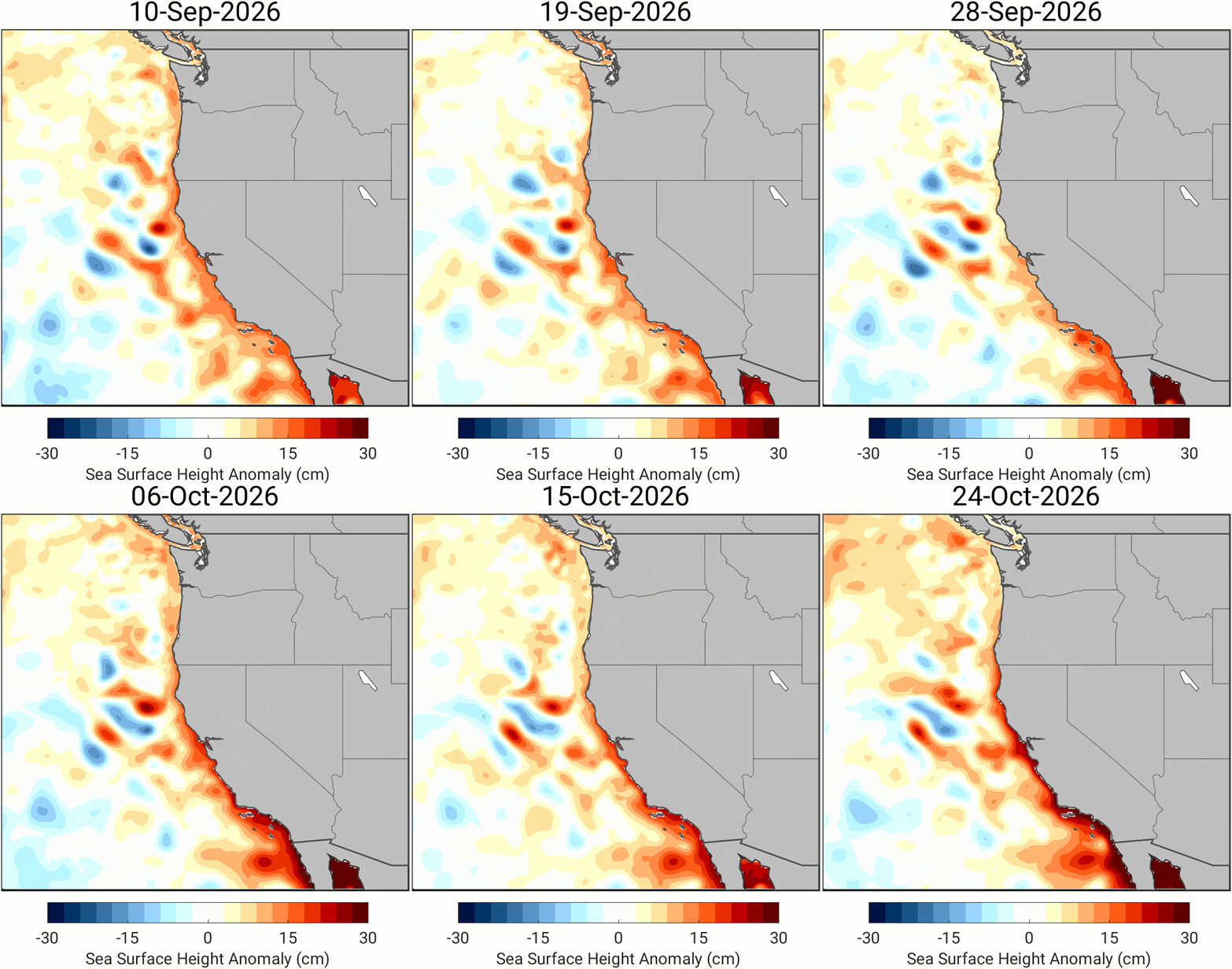
In a striking display of nature’s complexity, a deep ocean phenomenon known as a Kelvin wave is currently affecting the U.S. West Coast, raising sea levels and garnering attention across social media platforms like TikTok and X. This event is a part of this year’s “Super El Niño,” a weather pattern known for its significant global impacts.
Understanding Kelvin Waves
Kelvin waves are massive, deep ocean waves that typically form during El Niño years, when Pacific Ocean waters become unusually warm. These waves travel eastward along the equator before reaching South America, where they split and move north and south along the coasts. “It’s like an enormous bathtub sloshing around,” remarked Mark Cane, a prominent figure in climate science who contributed significantly to El Niño forecasting.
Despite their size, Kelvin waves are not the type of waves one might surf or see crashing on a beach. Instead, they are a “planetary-scale wave,” impacting sea levels gradually as they travel, according to Dillon Amaya from North Carolina State University.
Potential Risks and Impacts
The passage of Kelvin waves raises the risk of coastal flooding and erosion by increasing sea levels. While they do not directly cause flooding, as Amaya notes, “It makes the background conditions more favorable towards coastal flooding,” especially when combined with other factors like storms or high tides.
NASA’s Josh Willis warns of a potential “triple whammy” for California, where El Niño, high tides, and storm surges could combine. Early October saw this prediction come true as Tropical Storm Rachel coincided with higher sea levels due to Kelvin waves, leading to significant flooding in Southern California.
Environmental Consequences
Beyond impacting sea levels, Kelvin waves can also lead to warmer coastal waters, which can disrupt marine ecosystems. “We’ve seen tropical fishes in places that we don’t normally see them,” Amaya pointed out, highlighting an unusual sighting of a whale shark off San Diego. Such shifts can stress marine life, including seabirds, which have been observed dying due to these changes.
What’s Next?
Typically, five to six Kelvin waves occur during a strong El Niño year. Amaya anticipates the next wave to reach San Diego by late October or early November, with more expected through fall and winter. These waves usually dissipate before El Niño peaks, which this year is projected to be strong until early 2027 according to NOAA forecasts.
This article was originally written by www.npr.org