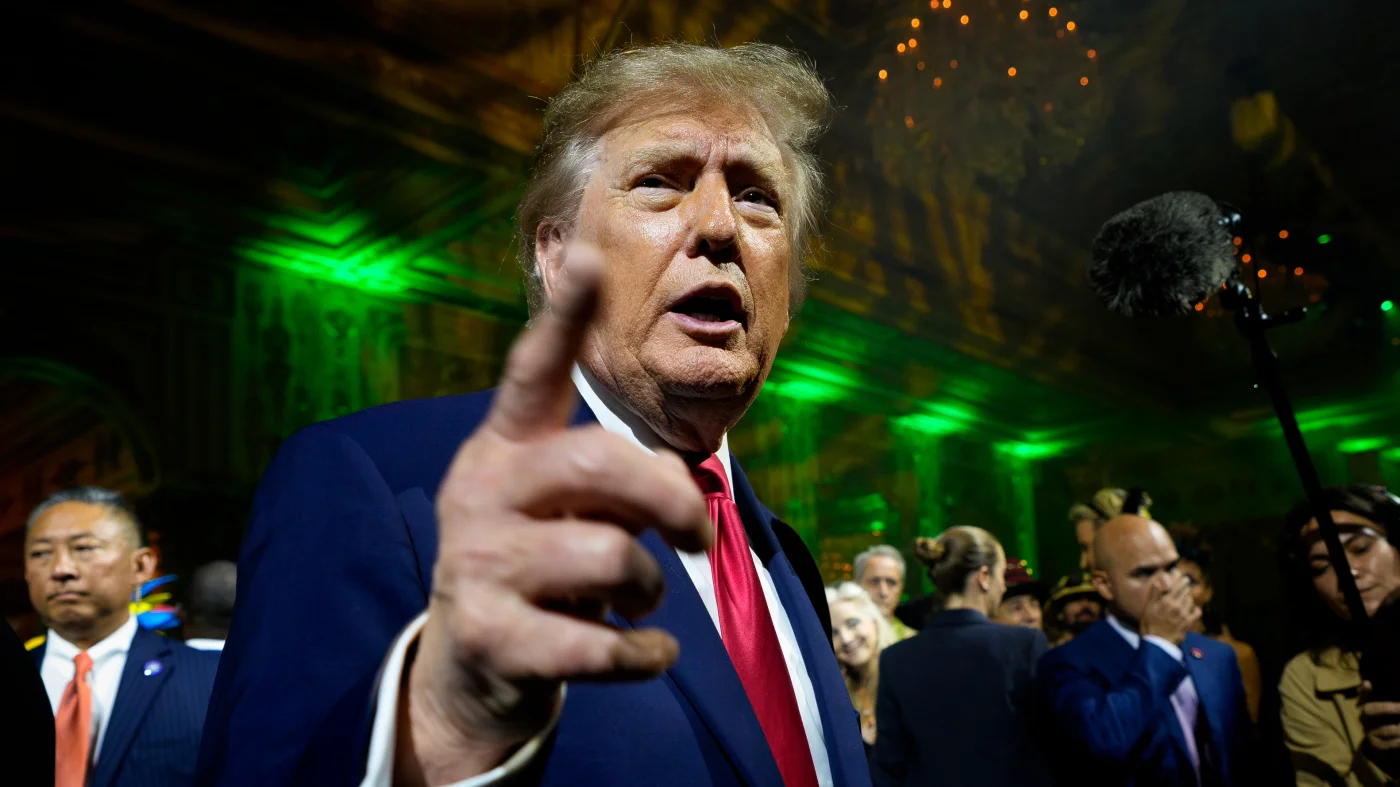
President Donald Trump spoke to members of the media during a Halloween party at his Mar-a-Lago club on October 31, 2026 in Palm Beach, Florida.Andrew Harnik/Getty Images North America
Andrew Harnik/Getty Images North America
📲 Get the latest on the midterms & more in the NPR App
Amid rising costs and escalating disapproval, President Trump, who came into office in 2024 with promises to reduce prices, now confronts a challenging political climate. His approval ratings have plummeted, and the American electorate holds him accountable for the upward trajectory of prices during his second term.
While presidents often receive more blame or credit for the economy than warranted, Trump’s policy decisions, including tariffs and the conflict with Iran, have undoubtedly contributed to increased goods and energy costs.
The nation’s economic divide is becoming more pronounced. Wealthy individuals benefit from AI-driven stock market gains, whereas everyday Americans grapple with inflation outpacing wage growth, a tepid labor market, and rising interest rates affecting their ability to purchase homes or vehicles.
According to a recent NPR/PBS News/Marist poll, 44% of people feel their financial situation has remained unchanged, and 38% believe it has deteriorated. Only 15% report an improvement in their financial circumstances.
Disapproval of the current administration extends beyond economic issues. Tough immigration policies, domestic spending cuts on programs like Medicaid, and deregulation are alienating swing voters and energizing Democratic opposition.
Republicans Face Historical Challenges
Historically, the president’s party struggles during midterms. Since World War II, there have only been two instances where the president’s party gained House seats in midterms. Typically, the president’s party loses 26 seats, a figure that worsens if the approval rating is below 50%. In such cases, the average seat loss is 35, compared to 15 when approval is above 50%.
Trump’s acknowledgment of these historical trends reflects his awareness of the potential challenges his party faces in the upcoming elections.
Democrats have seen success in the Trump era, consistently outperforming in special elections and achieving significant victories in the 2025 off-year contests. The unpopular Iran war and surging gas prices have further strained the Republican position.
These factors position Democrats favorably to gain control of the House and potentially the Senate, a prospect initially seen as unlikely.
Democratic Limitations and Challenges
Despite the favorable landscape for Democrats, the extent of potential gains remains uncertain due to structural factors. The current political climate features approximately 30 fewer competitive districts than in 2018, when Democrats gained more than 40 seats.
Mid-decade redistricting has marginally insulated Republicans. An NPR analysis indicates a net Republican advantage of eight seats due to redistricting efforts.
Latino voting patterns, particularly in South Texas, could impact these projections.
While the Democratic Party contends with internal challenges, including voter dissatisfaction, the latest NPR poll reveals strong engagement among self-identified “democratic socialists,” who express significant disapproval of Trump’s performance.
The upcoming 2028 election, the first post-Trump, will kick off soon after the midterms, with potential candidates expected to announce their intentions in early 2027.
As midterm results approach, much will depend on Republican turnout. Trump has focused efforts in red states to mobilize his base, as a lack of GOP turnout could significantly impact Senate races.
While Democrats are expected to gain control of the House, a failure to do so would represent a significant polling miscalculation.
Expect Delays and Potential Controversies
While most races will conclude on election night, some may remain undecided, delaying the final outcome. In light of narrow margins, particularly in the Senate, party control may not be determined for days or weeks.
Trump has already laid groundwork for potential claims of election rigging, a tactic he has employed in past elections. Following the 2020 election, his unfounded fraud claims contributed to the January 6 Capitol siege.
The latest NPR poll indicates a broad belief in fair elections, but a quarter of Republicans expressed reluctance to accept results, potentially leading to post-election chaos if results are close.
Trump’s role as both a driving force and a liability for the GOP is evident in the current election cycle. While necessary for mobilizing the base, his influence poses challenges with swing voters.
Polls consistently show declining support for Trump among those who backed him in 2024, complicating prospects for Tuesday’s election and beyond. Despite potential claims of election fraud, neither party is likely to achieve overwhelming majorities, necessitating compromise for future progress.
This article was originally written by www.npr.org