Behind the Scenes: How Delta Air Lines Manages Luggage at the World’s Busiest Airport
Alyssa Pointer for NPR
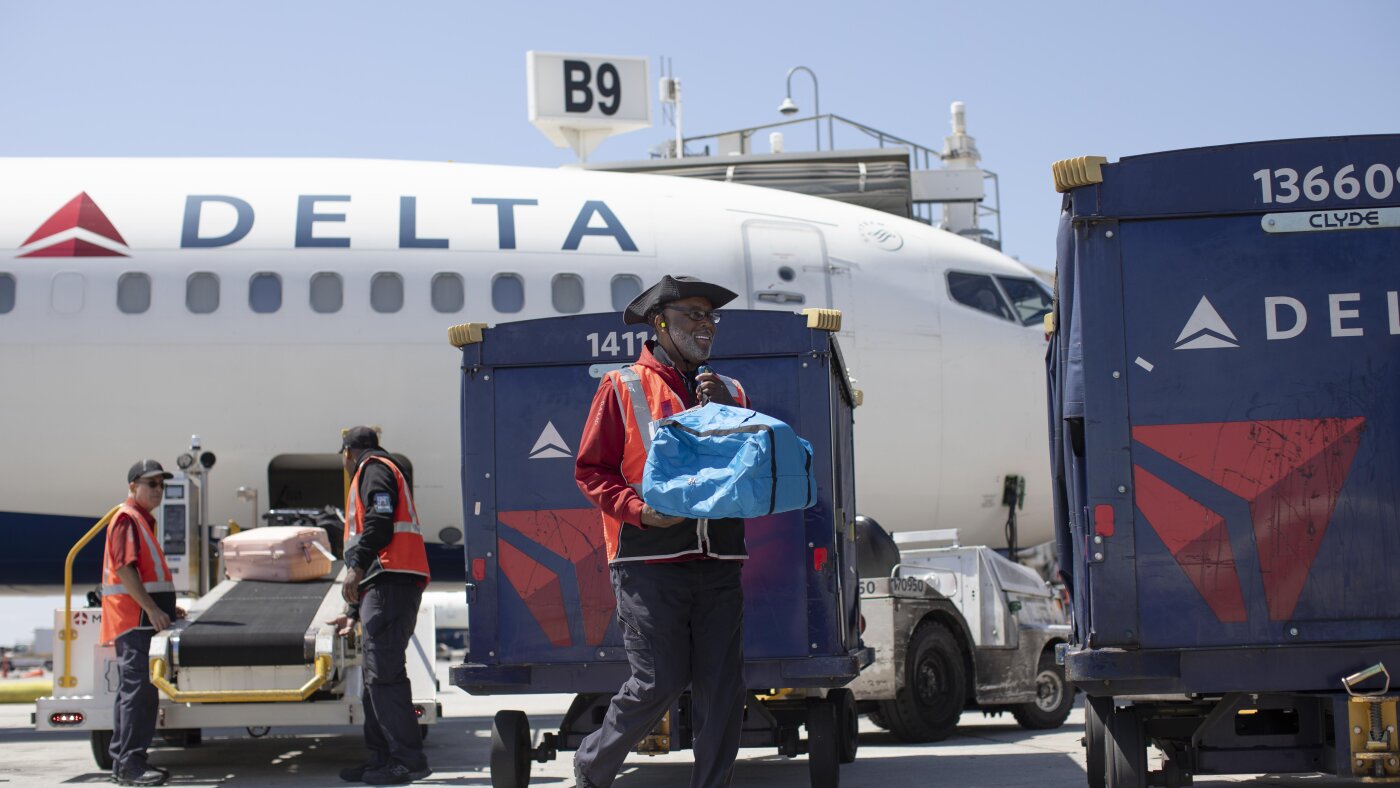
In the bustling environment of Hartsfield-Jackson Atlanta International Airport, Delta Air Lines ramp agent Mike Davis navigates the tarmac with precision. As Delta’s largest hub, the airport manages a staggering number of passenger bags daily, especially during peak travel times like Memorial Day weekend.
Mike Davis, an experienced baggage handler, describes the process: “So we have two bags to pick up, with one stop,” he says while maneuvering his baggage tug. This vehicle is essential in transporting luggage between planes and terminals.
Delta’s operation at Atlanta is immense, handling over 100,000 bags on busy days. Each piece of luggage might be managed by up to nine employees throughout its journey. With such volume, efficiency is crucial.
Innovation with AI
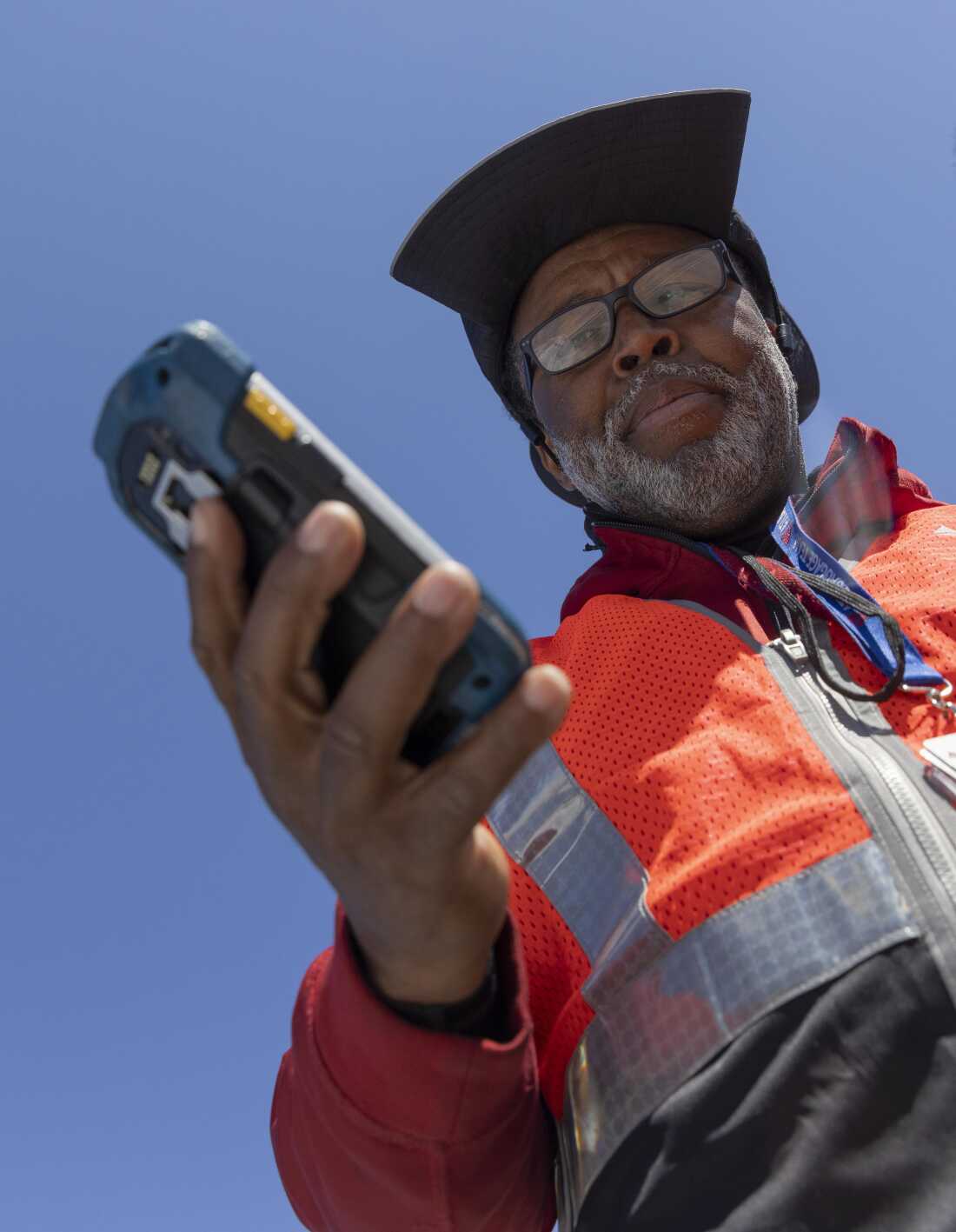
Paul Buckley, Delta’s director of operations in Atlanta, highlights how the airline has incorporated artificial intelligence to streamline the baggage handling process. The AI system prioritizes the order in which bags are delivered, similar to a ridesharing algorithm. “Now we have consistency, because we know exactly what order we’re delivering them in,” Buckley explained.
Mike Davis appreciates the new system: “I don’t have to focus on crunching numbers and trying to figure out my own route. It does all that for me,” he says. However, Davis notes that sometimes the AI assigns tight connections, which can be challenging but rewarding when successful.
Alyssa Pointer for NPR
Efficiency and Human Element
Despite technological advancements, Delta emphasizes that AI will not replace human ramp employees. “We see AI as an enabler, an enabler of performance, and giving the tools to our people to go produce at an even better level,” Buckley stated.
The AI system has notably improved baggage transfer success rates by up to 20%, and Delta plans to implement it at other hubs, including Detroit and Minneapolis-Saint Paul, later this year. For both seasoned and new employees, the AI provides significant support, reducing the need for manual problem-solving.
As for Mike Davis, he welcomes the change. “You know how they say, ‘out with the old and in with the new?’ That’s what it is. It’s called continuous improvement,” he reflected. “You have to change with the times to be relevant.”
This article was originally written by www.npr.org