Historic Discovery Unveils Early Christian Heritage in Northern Italy
(Photo: YouTube/ArchaeoReporter)
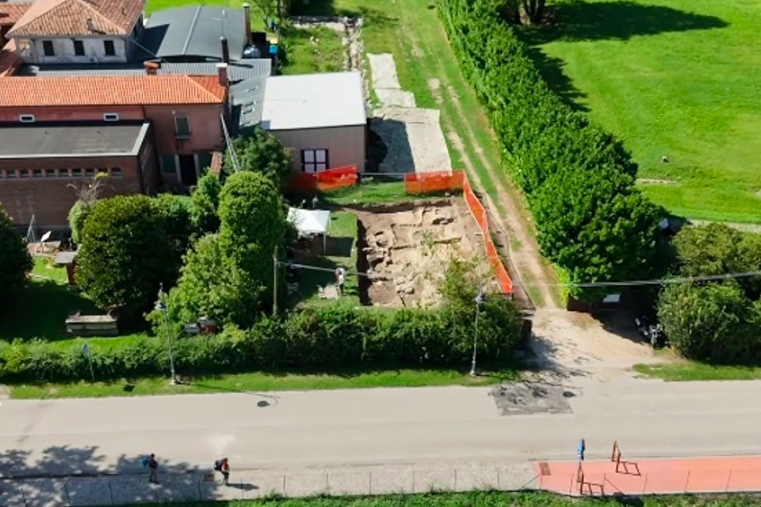
In a remarkable find, archaeologists in northern Italy have pinpointed the site of what is believed to be an early Christian church mentioned by St. Jerome in a letter dated A.D. 396. This discovery, made in the ancient city of Altino, also includes a nearby structure thought to be the bishop’s palace, offering vital physical evidence of the city’s early Christian roots.
Announced by Ca’ Foscari University of Venice on October 15, this revelation confirms historical accounts of Altino’s Christian heritage, which were previously known only through written records. Excavations conducted in September and October 2026, along with findings from 2025, have led to this significant identification.
Diego Calaon, the excavation director at Ca’ Foscari University, stated, “For the first time, we can say with a very high degree of confidence where the church and the bishop’s palace of Altino stood. Written sources told us they must have existed; now we have archaeological evidence to support this.”
This investigation sheds light on the transition from Altino to Torcello and Venice, highlighting it as a gradual transformation rather than a sudden migration, with the ancient city’s materials contributing to new settlements in the lagoon.
The archaeological project is a collaborative effort with the Altino Archaeological Park and the National Archaeological Museums of Venice and the Lagoon.
The historical narrative of Altino’s church emerges from St. Jerome’s writings, particularly Letter 60 addressed to Heliodorus, Altino’s first bishop, detailing the devotion of young priest Nepotian. Jerome’s description of the church’s altar, walls, and sacred items corresponds with the era when the church is believed to have been constructed.
The newfound structure is a rectangular hall approximately 30 by 20 meters, dating from the late fourth to the early fifth century. Its orientation deviates from the Roman street grid and lacks an apse, aligning with regional architectural styles like those in Aquileia.
Researchers reassessed existing archaeological data from the Roman and Late Antique periods to identify the church, linking earlier excavation finds with new evidence.
Adjacent to the church lies a substantial building, presumed to be the bishop’s palace, featuring a portico and internal partitions. Its robust foundations suggest it might have been a two-story structure, potentially housing clergy and providing burial spaces for prominent individuals, as indicated by Late Antique mosaic remnants.
While the baptistery remains undiscovered, researchers suspect it may be located within unexplored sections of the insula or city block.
Notably, the complex’s foundations incorporate paving stones from Roman roads, indicating the bishop’s significant public authority, as Roman law protected such infrastructure. The reuse of these stones points to the church’s influential role in Altino’s governance.
Earlier excavations in the 1980s uncovered parts of the complex. However, a comprehensive analysis of the foundations and underlying archaeological layers has connected previously scattered evidence.
This article was originally written by www.christiantoday.com