A Subway Tragedy: Examining the Complexities Behind the Jordan Neely Incident
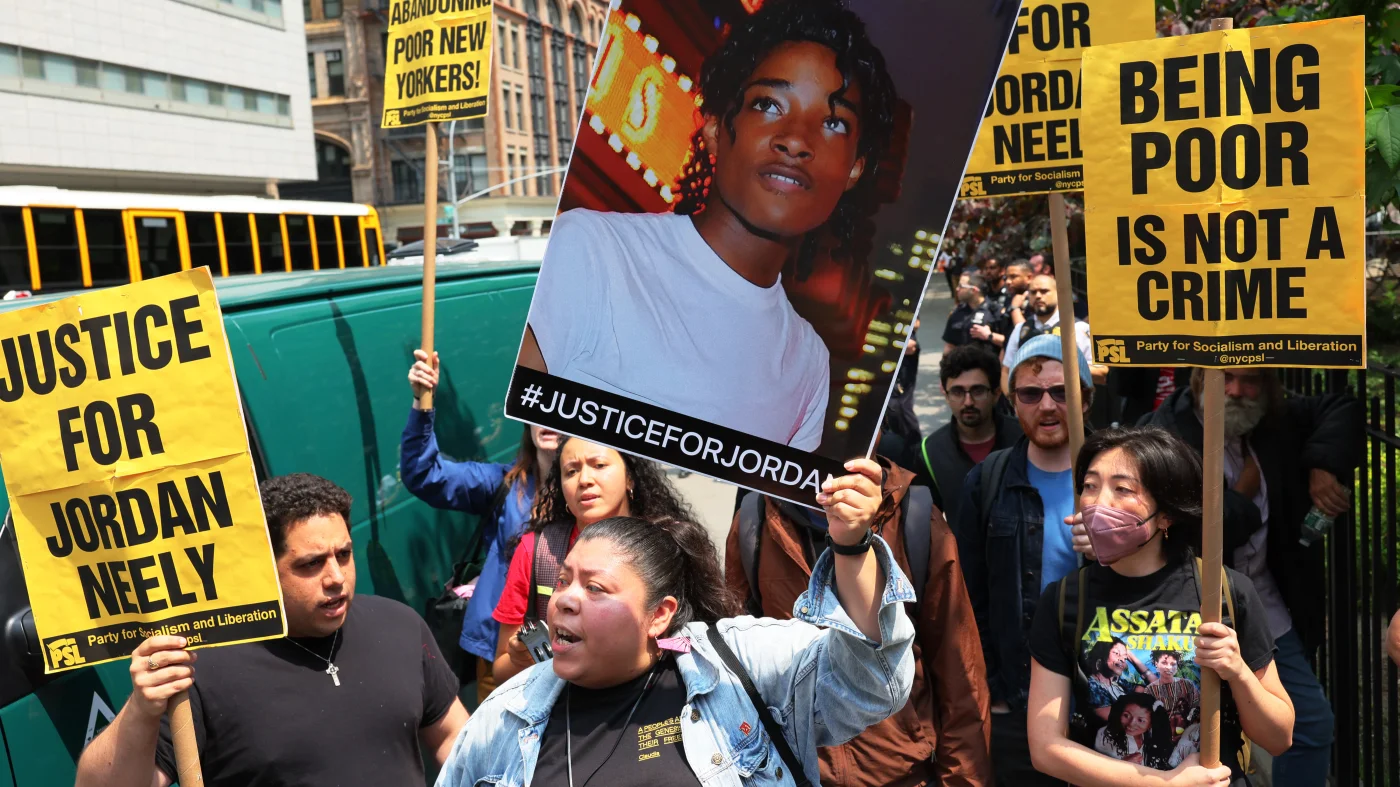
In a subway encounter that sparked national debate, Jordan Neely, a homeless Black man, was killed by Daniel Penny, a former Marine, on May 1, 2023. This incident, captured on video, quickly became a symbol of societal failures, highlighting issues of race, justice, and the struggles of marginalized individuals.
Neely, known for his Michael Jackson impersonations, was in distress on the New York City subway, shouting threats and alarming passengers. Penny intervened, restraining Neely in a chokehold for six minutes, resulting in his death. The incident polarized public opinion, with some viewing Penny as a figure stepping in where the police were absent, while others saw Neely’s death as another instance of racial injustice.
Journalist Anand Giridharadas has investigated this event extensively, seeking to uncover deeper societal truths. He notes that such viral incidents often reduce individuals to mere caricatures, overshadowing the human experiences behind them. In his book, Man in the Mirror: Hope, Struggle, and Belonging in an American City, Giridharadas argues that both Neely and Penny were failed by the systems meant to support them.
Following the incident, Penny was acquitted of criminal charges in December 2024. His subsequent rise in political and corporate circles, including an invitation to an Army-Navy game by Vice President-elect JD Vance and a job offer from a Silicon Valley firm, further complicated the narrative.
“I think Jordan Neely had felt abandoned for a very long time, and had reason to feel that way,” Giridharadas explains. He adds that Penny also “felt abandoned in terms of law enforcement not being there,” reflecting a broader sense of societal neglect.
This theme of abandonment, Giridharadas suggests, is a critical factor leading individuals to take drastic actions. “It behooves us to think about the condition in which we’ve left people,” he states, emphasizing the urgency of addressing systemic issues that leave individuals feeling compelled to act independently, often with tragic outcomes.
Interview Highlights
Neely’s Criminal History and Rehabilitation Efforts
Neely’s interactions with the law spanned over a decade, initially involving minor offenses typical of those surviving homelessness. However, his record escalated to include violent acts. Despite being offered rehabilitation as an alternative to incarceration, Neely ultimately left the program, remaining vulnerable on the streets.
Penny’s Background and Influences
Hailing from West Islip, Long Island, Penny’s upbringing in a community marked by white flight from New York City shaped his perspectives. These towns, often seen as refuges from urban challenges, have complex relationships with the city, influencing residents’ views on urban life and its struggles.
Remorse and Political Symbolism
Penny’s apparent lack of remorse and his subsequent embrace of a political identity have raised questions. Despite this, he became a symbol within MAGA circles, reflecting broader societal divides and the allure of political narratives.
Broader Implications and Future Considerations
Giridharadas draws parallels between Penny’s case and other instances of perceived systemic failure, such as the Luigi Mangione case. These scenarios reflect widespread feelings of abandonment and a call for individual action, a sentiment echoed across political spectrums. “The system’s rigged, no one’s listening,” he notes, highlighting the pervasive desire for decisive action in a seemingly indifferent world.
This article was originally written by www.npr.org