(Photo: Lambeth Palace)
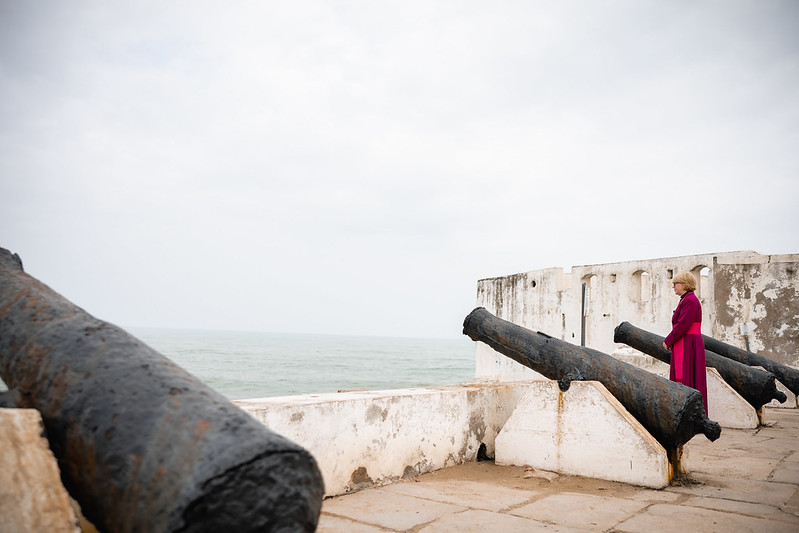
In a historic visit to West Africa, the Archbishop of Canterbury engaged in a poignant moment of reflection at Cape Coast Castle in Ghana, a site deeply intertwined with the transatlantic slave trade. This journey was marked by prayers lamenting the Church’s past connections to slavery.
Archbishop Sarah Mullally’s itinerary included significant stops, such as the infamous Cape Coast Castle, known as the last African departure point for many enslaved people headed to the Americas, and a meeting with the King of the Ashanti Kingdom.
During her visit, Archbishop Mullally prayed in a former Anglican chapel, now an educational library, located above the dungeons that once held male prisoners in deplorable conditions. “Being at Cape Coast Castle today and seeing the horrific conditions that thousands of people were kept in, it is impossible not to feel the weight of the immense evil that drove the transatlantic slave trade,” she remarked.
She continued, “We have a God who loves each one of us, who created each of us with an individual value and worth, and yet that was not recognised here. I pray not only in lament for the Church’s involvement in the slave trade, but also for hope – hope that the God of healing can bring justice and reconciliation to all who are still impacted by its legacy.”
The Archbishop reiterated her commitment to Project Spire, a £100m initiative by the Church of England aimed at providing reparative justice for its historical ties to slavery. This effort, officially named the Fund for Healing, Repair and Justice, was launched in 2023 following research that linked a predecessor endowment fund to chattel slavery.
However, the establishment of this fund has faced challenges, with its registration being delayed due to legal opposition. The Church has already invested £1.15m in the project, despite some parishes expressing concerns over financial priorities during tough economic times.
Critics have emerged, questioning the Church’s focus on reparations. Oxford professor Nigel Biggar criticized African nations for “cynical opportunism” regarding their own involvement in slavery, while theologian Ian Paul questioned the Church’s narrative, highlighting the historical complicity of the Ashanti Kingdom in the slave trade.
Paul expressed skepticism, “I wonder when leaders in the Church of England will talk about the role we played in eradicating slavery with confidence? … I find it very odd when church leaders talk of the need for repentance, as if we are the first generation to be horrified by slavery.”
Historian Bijan Omrani posed a query about the absence of gratitude for those who fought to abolish slavery, while Conservative MP Nick Timothy criticized the Church’s financial decisions in light of struggling parishes needing support.
Former chaplain Gavin Ashenden argued that the Archbishop’s actions could tarnish the reputation of those who successfully ended slavery, such as William Wilberforce and the Clapham Sect, who were instrumental in the abolition movement.
British military historian Robert Lyman also voiced his concerns, questioning, “£100m for reparations? At the parish level we are ignored, treated as though we don’t understand the problem. Oh, but we do. We’ve read the reports and can drive a coach and horses through the arguments, and yet it’s as if we don’t exist, or matter.”
This article was originally written by www.christiantoday.com