(Photo: Neil Turner)
A recent event at Lambeth Palace has sparked controversy and raised questions about the Church of England’s political standing. On the solemn occasion marking the 25th anniversary of the 9/11 attacks, the Archbishop of Canterbury, Sarah Mullally, presented an award for reconciliation and interfaith cooperation to Hafiz Muhammad Tahir Mehmood Ashrafi. Ashrafi, a Muslim cleric from Pakistan, has been accused of praising Osama bin Laden, the mastermind behind the attacks.
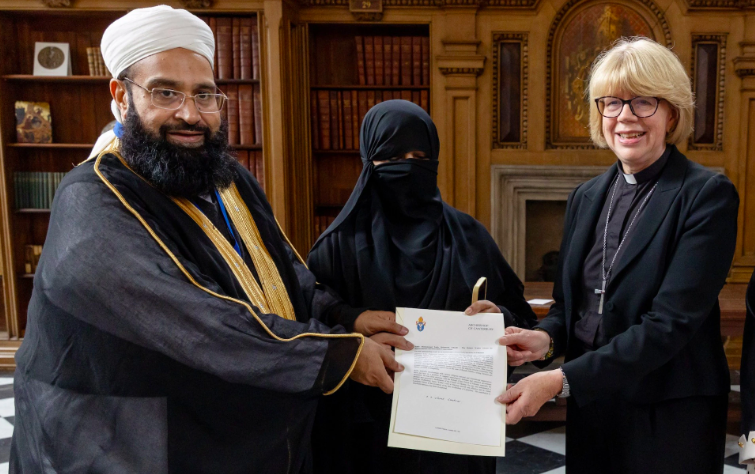
The ceremony, held at the Archbishop’s official residence, included a photo that has become a focal point of criticism. It shows Archbishop Mullally standing beside Ashrafi and his wife, who is wearing a full Islamic niqab with only her eyes visible. The award was subsequently withdrawn, but the repercussions continue to be felt in the political landscape.
This incident has polarized two significant segments of the British electorate. One group, primarily right-leaning, is concerned about the increasing influence of Islamist ideologies. The other, leaning left, is worried about the threats to women’s rights, particularly in relation to transgender issues. The image of the ceremony has managed to alienate both sides, highlighting their shared concerns.
Politicians from various parties have voiced their discontent. Notably, Conservative MPs Nick Timothy and Rebecca Paul expressed their concerns in a letter to Archbishop Mullally. They stated, “The Church of England teaches the equal dignity and worth of both men and women. Yet you presented the award alongside Mr Ashrafi’s wife, whose face was concealed by a niqab so that only her eyes were visible, and Lambeth Palace subsequently published that image.”
The letter continued, “This could appear to condone one of the most repressive manifestations of Islam, one that denies women basic freedoms over how they dress, whether they may show their faces and how they interact with others.”
The political future of the Church of England’s established status is now under scrutiny. Should a right-wing government come into power in the 2029 General Election, the Church’s position with its bishops in the House of Lords could be jeopardized. The Reform UK party, known for its radical stance, could challenge the Church’s traditional privileges, especially if it forms a coalition with the Conservatives.
In contrast, a Labour-Green coalition might offer more stability, given the left-leaning tendencies of the Church’s bishops. However, in a politically divided nation, even this scenario offers no guarantees.
Archbishop Mullally, with several years left before her mandatory retirement, faces significant challenges. A focus on core Christian teachings and pastoral care might help stabilize the Church’s position amidst these turbulent times.
This article was originally written by www.christiantoday.com