A Legacy of Prevention: Unveiling the American Thalidomide Story
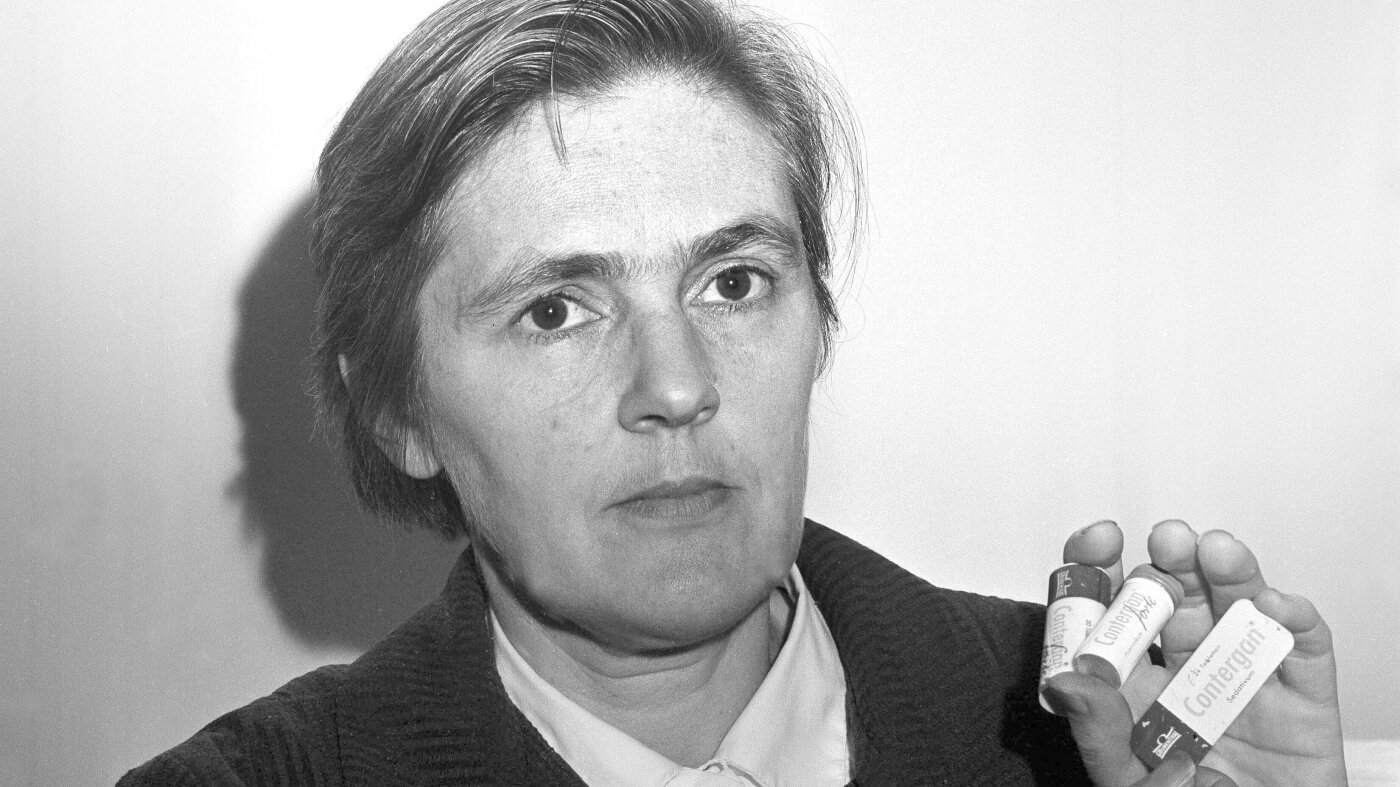
In the early 1960s, the pharmaceutical landscape in the United States was on the brink of a major transformation. At the heart of this shift was the drug thalidomide, a sedative developed in Germany that promised relief from common ailments like insomnia and morning sickness. Despite its potential, thalidomide was never approved for widespread use in the U.S., thanks to the vigilance of Dr. Frances Oldham Kelsey of the FDA.
When the Cincinnati-based company William S. Merrell applied for FDA approval of thalidomide, the drug’s approval seemed imminent. However, Kelsey’s insistence on rigorous testing halted its progress, a decision that President John F. Kennedy later praised for sparing the U.S. from a significant tragedy.
Contrary to public belief, thalidomide had already been distributed to thousands of U.S. patients, including pregnant women, leading to cases of children born with severe limb deformities known as phocomelia. These children, now adults, are seeking formal recognition from the government for the consequences they faced.
Gwen Riechmann, a thalidomide survivor, highlights the ongoing struggle for acknowledgment. “We go to doctors today who say it didn’t happen here in the United States. Oh yeah, it did,” she asserts. The issue lies in the lack of documentation and communication from doctors who administered the drug during unregulated clinical trials.
Jennifer Vanderbes, in her book Wonder Drug, reveals how Merrell distributed thousands of doses without proper tracking or reporting. “This was such a sloppy investigation,” noted John Swann, a former FDA historian, emphasizing the overwhelming amount of unaccounted thalidomide that surfaced during FDA investigations.
The impact of thalidomide on the FDA was transformative, necessitating more stringent drug testing and approval processes. Despite this, many women were unaware they had been given the drug, and their children’s birth defects were not linked to thalidomide by their physicians.
Estimates suggest up to a hundred U.S. survivors, but only 17 have been officially recognized by the FDA. In response, Riechmann co-founded USA Thalidomide Survivors, advocating for recognition and financial support for American survivors, including a proposed $150,000 compensation per individual.
Riechmann emphasizes, “The U.S. is the only country that has not provided any kind of support or even recognition that they have thalidomide survivors. We are looking for, first, recognition that, yes, we do exist. And then, secondly, support.” As survivors age and face health challenges, the urgency for acknowledgment and assistance grows ever more critical.