
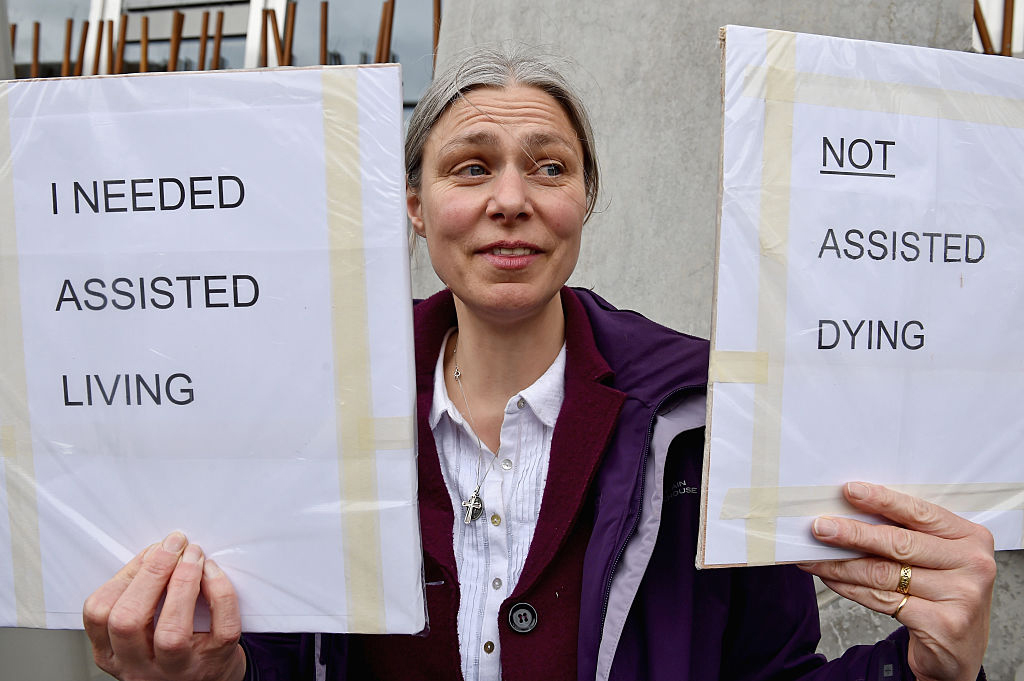
Scottish Assisted Suicide Bill Sparks Concerns Over Rejected Safeguards
The debate over assisted suicide in Scotland has intensified as the Catholic Parliamentary Office voices apprehension regarding the rejection of several proposed safeguards in the Assisted Dying for Terminally Ill Adults (Scotland) Bill. The bill is currently under scrutiny by the Scottish Parliament’s Health and Sport Committee at Stage 2 of the legislative process.
This Scottish legislation is distinct from the discussions ongoing in the House of Lords at Westminster. Concerns have been raised about the rapid pace at which the committee is examining the 287 proposed amendments, allocating only three weeks with a single session per week for the task.
Among the amendments dismissed was a significant proposal to limit assisted suicide to individuals expected to live six months or less. The rejection of this amendment has drawn criticism, especially from Independent MSP Jeremy Balfour, who argued that the current definition of terminal illness is “extraordinarily broad.”
Balfour highlighted that the bill’s current wording could encompass individuals with chronic conditions, those undergoing stabilizing treatments, and others who may have substantial time left to live. “As it stands, it could include individuals who would live not for weeks or months, but for years,” Balfour explained.
Labour MSP Pam Duncan-Glancy echoed these concerns, using her own experience with juvenile idiopathic arthritis to illustrate potential misclassifications under the bill. Despite the permanence of her condition, she noted, it could mistakenly classify her as “terminally ill.”
Another contentious rejection involved Balfour’s proposal to exclude non-terminal conditions from qualifying for assisted suicide. Without this safeguard, conditions such as eating disorders, societal issues like loneliness, financial hardship, and Down syndrome could potentially be grounds for opting for assisted suicide.
Anthony Horan, director of the Catholic Parliamentary Office, expressed grave concerns about the committee’s decision to overlook these protective measures. He stated, “These amendments were clearly designed to protect some of the most vulnerable people in our communities from being coerced into a premature death; disabled people, those with poor mental health, and people struggling with financial hardship. Their rejection is deeply troubling and suggests a direction of travel that should alarm MSPs right across the Parliament.”
This article was originally published by Christian Today.
Christian Today is an independent and inter-denominational Christian media company that serves churches worldwide with the latest Christian news. It has editions in India, Australia and the United Kingdom.
This article was originally written by www.christianpost.com




