Religious Tensions Rise in Armenia Amid Legal Actions Against Church Leader
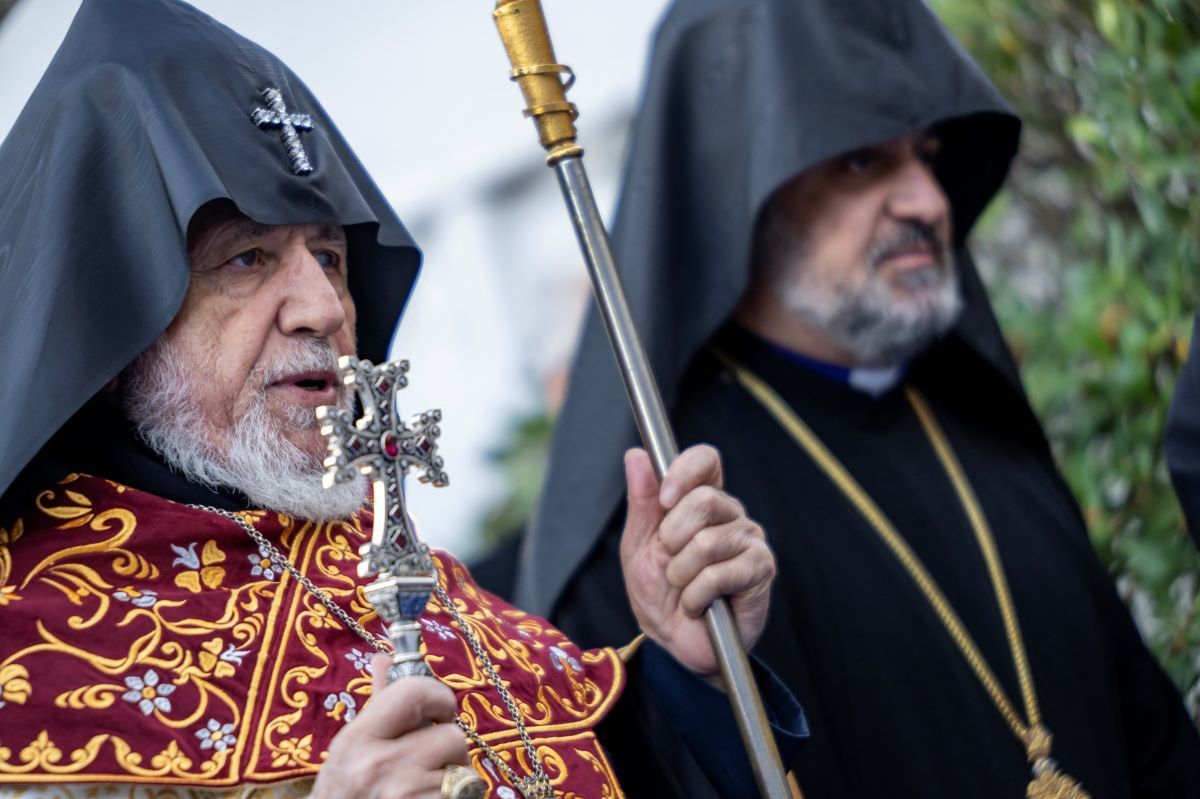
In a dramatic turn of events in the world’s first Christian nation, legal proceedings have been initiated against Catholicos Karekin II, the head of the Armenian Apostolic Church. This move has sparked concerns from human rights groups and has further strained relations between Prime Minister Nikol Pashinyan and the church hierarchy.
The Armenian Prosecutor’s Office has imposed travel restrictions on Karekin II, barring him from leaving the country and thus preventing his participation in a scheduled church assembly in Austria. This development follows a series of government actions against church leaders, which rights organizations warn could undermine religious autonomy.
The Armenian Center for Political Rights has connected Karekin II’s legal troubles to the recent defrocking of Bishop Gevorg Saroyan. Saroyan, a former primate of the Masyatsotn Diocese with ties to Pashinyan, has been vocally calling for Karekin II’s resignation. The center noted that after Saroyan’s removal in January, the Apostolic Church was instructed by the Court of General Jurisdiction of Armavir Marz to allow Saroyan to continue his diocesan duties until the legal process concludes.
Shortly after Saroyan’s defrocking on January 27, Armenia’s Investigative Committee charged six bishops with defying a judicial order, subsequently restricting their travel as well. The charges against Karekin II, filed on February 14, mirror those against the bishops, suggesting an attempt to hinder their involvement in the Austrian Episcopal Assembly.
“This prohibition results from a grave violation of the Constitution and of the ECHR, particularly the State’s obligation not to interfere with the autonomy of religious organizations,” warned the Armenian Center for Political Rights. The center emphasized that these actions infringe on the Armenian Apostolic Church’s rights under Article 9 of the European Convention on Human Rights, as well as the rights to peaceful assembly and association as defined by Article 18.
Several religious freedom advocacy groups have voiced opposition to the government’s recent arrests of church leaders, including prominent figures like Archbishop Bagrat Galstanyan and Archbishop Mikael Ajapajyan. The government has charged these leaders with various offenses, such as plotting against the government and coercing public participation in protests.
Archbishop Galstanyan, a leading critic of Pashinyan and head of the Sacred Struggle opposition movement, has been particularly vocal. In a recent letter to the International Religious Freedom Summit in Washington, he claimed his only crime was expressing “an unwelcome truth” and warned of Armenia’s potential transformation into a “vassal state.”
Pashinyan, who rose to power in 2018 through a pro-democracy platform, is now facing criticism for allegedly resorting to “Soviet-era tactics.” This sentiment was echoed in a statement by the Forum for Religious Freedom Europe, which expressed serious concerns over the government’s actions, describing them as a violation of religious freedom in a nation proud of its Christian heritage dating back to 301 AD.
The Forum for Religious Freedom Europe highlighted a “broader pattern of persecution” since mid-2025, citing the detention of four bishops on charges perceived as fabricated by critics. The organization contends that the Armenian government’s demand for the removal of Karekin II and calls for state-driven “reforms” represent unprecedented interference in church affairs, reminiscent of past attempts to subordinate religious institutions.
This article was originally written by www.christianpost.com