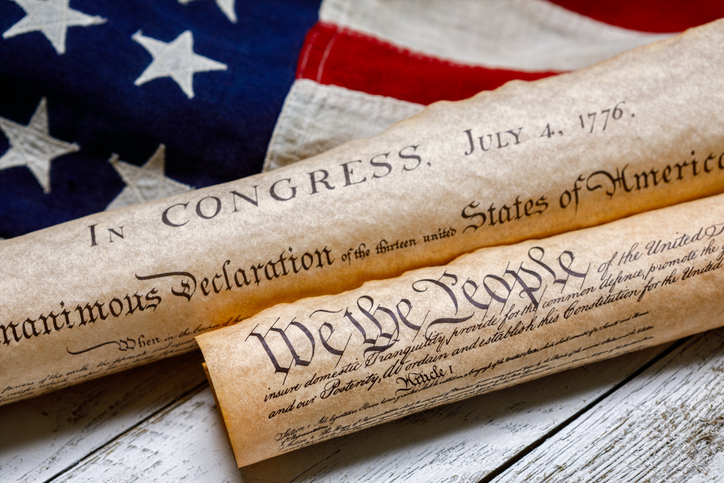
Commemorating a Historic Milestone: The 250th Anniversary of the American Declaration of Independence
The 250th anniversary of the American Declaration of Independence marks a pivotal moment in history, not only for North America but also for the world. This event is celebrated on July 4, 1776, but there are other significant dates associated with the formal separation from British rule. On July 2, 1776, the Continental Congress approved the ‘Lee Resolution’ for independence. John Adams believed this date would become a national anniversary. However, it is July 4, the day Congress finalized the Declaration, that is celebrated today. The formal signing occurred on August 2, 1776, when most delegates endorsed the document.
Powerful Words with a Lasting Impact
The Declaration of Independence begins with words that have echoed through history with authority and purpose: “We hold these truths to be self-evident, that all men are created equal, that they are endowed by their Creator with certain unalienable Rights, that among these are Life, Liberty and the pursuit of Happiness.” Another notable line asserts the colonies’ right to break away from British rule, highlighting the entitlements given by “the Laws of Nature and of Nature’s God.”
These phrases have inspired many, yet they have also been subjects of debate. John Adams, in a letter to Abigail Adams on July 3, 1776, wrote, “The Second Day of July 1776, will be the most memorable Epoch, in the History of America.” Benjamin Franklin famously remarked at the signing, “We must all hang together, or, most assuredly, we shall all hang separately.”
Historical Controversies and Interpretations
While the Declaration heralded a new era, not everyone was included in its promise of equality. Figures such as Frederick Douglass challenged its claims, questioning what the Fourth of July meant to enslaved individuals. The rights mentioned in the Declaration did not extend to Black slaves, Native Americans, or women, highlighting contradictions between its ideals and reality. The fight for equality, particularly for African Americans, would continue through the Civil War and beyond.
The Notion of a ‘Christian Nation’
The spiritual identity of the United States has been a topic of considerable debate. Some later leaders, like Woodrow Wilson and Ronald Reagan, asserted that America was founded as a Christian nation. This perspective has been echoed by conservative evangelical Christians, including Pat Robertson, who reportedly stated, “The founding document of the United States of America acknowledges the Lordship of Jesus Christ because we are a Christian nation.”
However, the Founding Fathers were influenced by Enlightenment ideas. The Declaration’s references to a “Creator” and “Nature’s God” reflect a non-confessional approach. The Treaty of Tripoli in 1797 explicitly stated, “The government of the United States of America is not in any sense founded on the Christian Religion.”
A Complex Relationship with Faith
Christian values did influence the early colonies, but the relationship between religion and government evolved. The Massachusetts Bay charter was annulled in 1684, and voting rights were extended to non-Puritans, effectively ending semi-theocratic governance. The First Amendment, adopted in 1791, ensured freedom of religion and a separation between church and state, principles that continue to shape modern secular democracy.
Throughout the 19th century, Christianity, particularly Protestantism, played a significant role in American politics. The ‘Great Awakenings’ contributed to the spread of evangelical denominations, and political alliances formed to promote a Protestant-based moral order. These movements laid the groundwork for the modern culture wars and the ongoing debate over America’s Christian identity.
Reflecting on 250 Years of Independence
The Declaration of Independence was a transformative event that influenced democratic ideals worldwide. However, as the United States celebrates this milestone, it is essential to acknowledge those who were initially excluded from its promises and to appreciate the complex interplay between faith and governance in shaping the nation. The history of the United States is intricate, and understanding it requires careful consideration of its multifaceted legacy.
This article was originally written by www.christiantoday.com