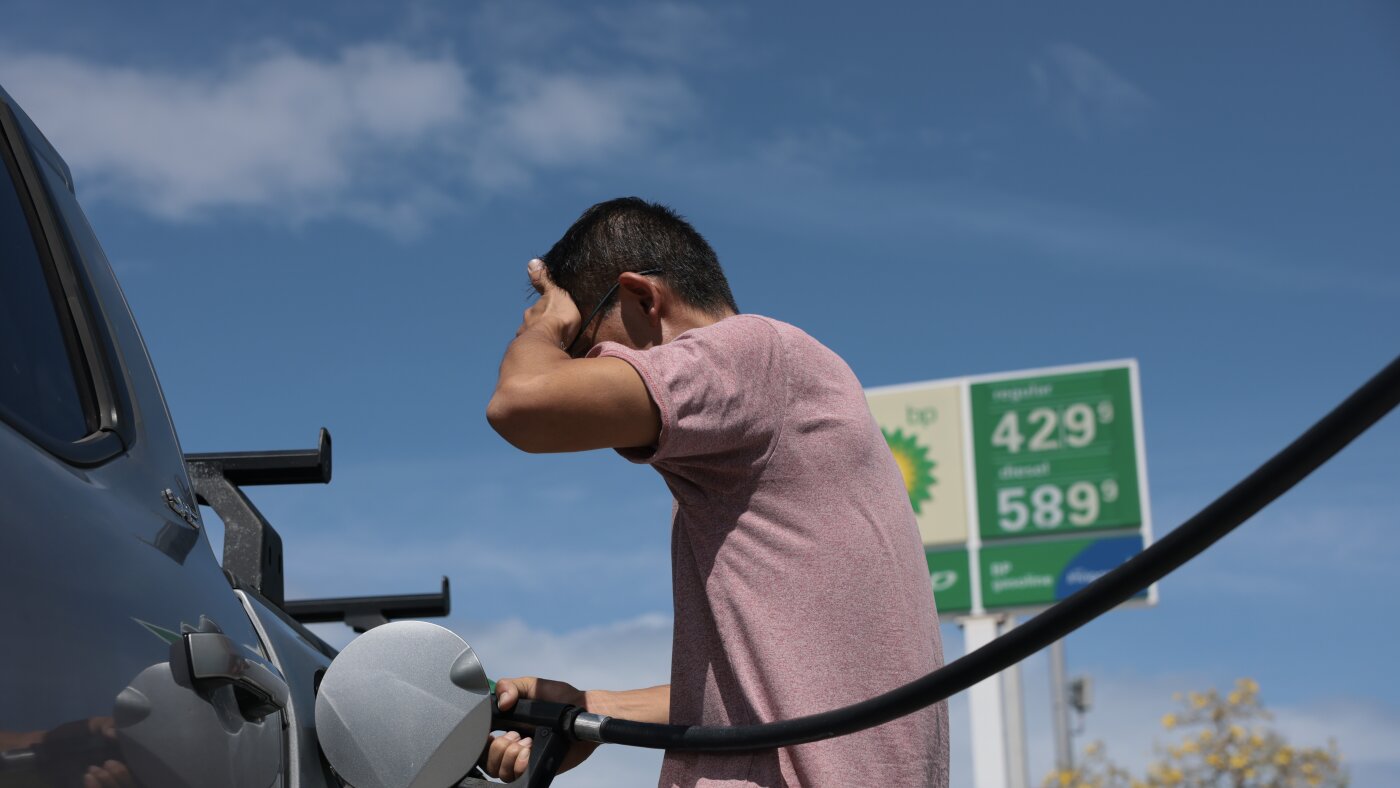
Gas Prices See-Saw Amid Global Tensions, Affecting Consumers Nationwide
As gas prices continue to fluctuate dramatically across the United States, drivers find themselves navigating an unpredictable market. On Thursday, the average cost for a gallon of regular unleaded stood at $3.85, as reported by AAA.
The year’s high of $4.56 per gallon in May contrasts sharply with January’s low of $2.79, illustrating the volatility that has become the norm for consumers.
Recent geopolitical events, particularly the conflict involving the U.S., Israel, and Iran, have contributed significantly to the erratic nature of fuel prices. The disruption of shipping routes through the Strait of Hormuz has led to a rollercoaster of price changes, with costs rising during times of heightened conflict and dipping when peace talks commence.
“How bad is it going to be this time? Is it going to be not as bad as I think, or is it going to be worse than I think?” questioned Emily Blain, a financial counselor in Minnesota. She highlighted the stress such unpredictability can impose on consumers, who frequently encounter varying costs at the pump.
Impact on Consumer Behavior
Gasoline stands out as one of the most variable consumer expenses, with U.S. motor fuel prices having swung between a 35.8% increase and a 27.8% decrease annually over the past two decades, according to the USDA’s Economic Research Service.
During the initial weeks of March, as prices escalated, data from the Upside app revealed consumers were visiting gas stations more frequently yet purchasing less fuel per visit. “Some drivers can’t afford to fill up their tank at a given time, so there’s definitely some cash constraints,” explained Thomas Weinandy, principal research economist at Upside. He also noted some drivers maintain a habit of spending a fixed amount on fuel, regardless of price changes.
When prices drop, a corresponding increase in fuel purchases per visit is often observed, according to June data. Experts anticipate ongoing price fluctuations, with Lauren Swift from Autotrader pointing out that historically, price increases due to global conflicts can take years to normalize.
Strategies for Drivers
The financial impact of rising gas prices can add up, with NerdWallet estimating that a $0.50-per-gallon increase might cost some drivers an additional $500 annually. “There is not much control you have over the prices, so all we can really do is to prepare to pay more at the pump,” said Kimberly Palmer, a personal finance expert at NerdWallet. However, she emphasized that drivers still have options to manage their fuel expenses.
- Budget for higher prices: Anticipate elevated fuel costs in your budget, and any savings from price drops can be redirected elsewhere.
- Shop around: Use apps and websites to find cheaper fuel prices, even if it means traveling a bit further.
- Reduce fuel consumption: Consider driving less, adopting fuel-efficient driving habits, or switching to an electric vehicle if feasible.
Blain pointed out that while gas expenses may be dwarfed by other costs like housing, the unpredictable nature of fuel prices can have a significant psychological and financial impact on consumers.
This article was originally written by www.npr.org